Scotland's King Blamed a Storm at Sea on Witches and Hunted Them
James VI believed witches conjured the tempest to avenge his mother, Mary, Queen of Scots, and to stop him from ruling.
 No One Saw It Coming · The queen behind the witch hunts
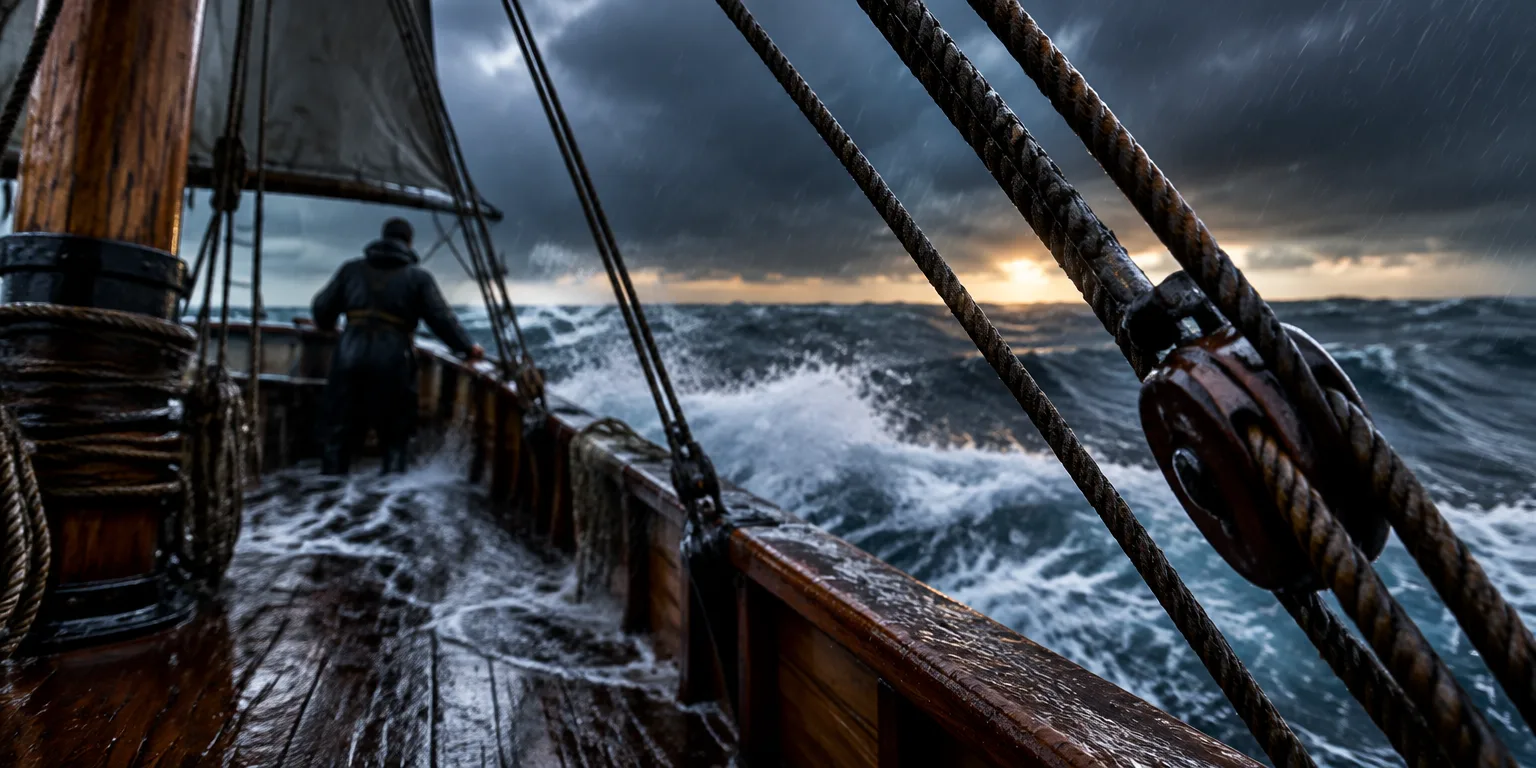
Rain lashed the rigging and wind battered the hull as King James VI of Scotland sailed into a violent storm in the North Sea.
He was on his way to find his bride, the Princess of Denmark. Her voyage to join him had been delayed again and again by intense weather, her ship had been blown miles off course, and many of the vessels bringing her dowry had gone down.
James, the son of Mary, Queen of Scots, had boarded a ship to fetch the princess himself. He almost died in the tempest.
Mary had spent about 20 years as a prisoner in England before she was beheaded for treason. James had been raised to fear and hate her, and to link her with witchcraft.
He returned convinced that the storm was not natural at all, but conjured by witches. He believed a community of evil witches had raised it to avenge his mother, who had been beheaded two years earlier, and to keep him from ruling.
After he returned to Scotland with his bride in 1590, he began hunting witches. The effort became Scotland's first large scale persecution of alleged witches, famous for its brutality and for how many people were brought to trial.
Hundreds of women were arrested and tortured. Many confessed to worshipping Satan and to other acts of demonism.
Torture also forced them to name others. The accused named neighbors, friends, and relatives, and the accusations spread from one household to the next.
In the end, more than 100 women died. Most were strangled and then burned, while a few were burned alive.
The killing did not stop there. Witch trials continued in Scotland until 1736, and 2,500 to 4,000 people died in the hunts altogether.
Questions people ask
Who was Mary, Queen of Scots?
Mary was the Catholic queen of Scotland in the 1560s and the mother of James VI. After political conflict forced her to abdicate, she fled to England, where her cousin Elizabeth I held her prisoner for about 20 years before she was beheaded for treason.
What was the Scottish Witchcraft Act?
It was a Scottish law passed in 1563 that made witchcraft, sorcery, and necromancy punishable by death. It defined none of those terms, so judges and local officials applied their own standards, and almost anyone could be accused.
Did Scotland ever acknowledge the witch hunts?
The last Scottish witchcraft law was repealed in 1736. In 2022, more than three centuries later, Scotland’s first minister formally apologized for the injustice, after campaigners sought pardons and memorials for the accused.