Sea powers win by letting rivals get rich, then cutting them off
Britain did it to Germany in World War I, America did it again after 1945, and China now fears it would face the same cutoff in a fight over Taiwan.
 Invest Like the Best with Patrick O'Shaughnessy · Walter Russell Mead - How America Keeps Winning - [Invest Like the Best, EP.490]
The trick, says Walter Russell Mead, the author of God and Gold, is to get your enemy hooked on your shopping mall, then lock the doors.
For about 300 years, he argues, world politics has been a contest between an English-speaking, sea-based trading order and a string of land-based rivals who thought a tightly managed state could beat messy democracy. First Louis XIV's France, then Napoleon, then Prussia and Germany, then the Soviet Union. Each time the centralized power looked stronger and more organized. Each time the smaller, messier sea powers, the hobbits in his telling, somehow won.
The method started with Holland in the 1600s, was copied by the British, and then copied again by the Americans. After getting rich through open societies and global trade, the sea power does something Mead calls "extremely treacherous": it invites everyone else in.
Spain, he notes, told the rest of the world to stay out of Latin America after it conquered the region, and its empire stagnated. Britain did the opposite in the 19th century. It allowed free trade across the seas its empire controlled, and the Royal Navy suppressed piracy for everyone, not just for British ships. The United States traded happily inside that system, and so did newly unified Germany, which built up trade and holdings in South America and in some places started pushing British merchants aside.
That prosperity was the trap. When Germany went to war against Britain in World War I, it discovered it could no longer get the imported food that fed its people, or the rubber from Malaya that made tires for war. A trading partner had become a dependent, and the dependency could be switched off.
Washington repeated the play starting around 1947, telling defeated Germany and Japan to come in and benefit, and both became pillars of the system. After the Cold War, the same offer went to Russia and China. The hope was cooperation, the path taken by Konrad Adenauer, the postwar West German chancellor who tied his country to the West. Instead, in his view, Russia and China chose confrontation, the path of Kaiser Wilhelm II, the German emperor who challenged Britain.
Chinese scholars and officials understand the danger very well from conversations at Chinese universities. One of the things that keeps China's leader Xi Jinping awake is the fear of being cut off from raw materials and markets in any conflict with the United States. The Taiwan scenario shows why: if China sealed off the island, the United States could answer with its own blockade farther out at sea, stopping oil from coming in and manufactured goods from going out.
That fear explains much of Chinese energy policy. The solar farms, the dams and the heavy coal digging are, in his argument, an effort to reduce dependence on the outside world so China could keep fighting a long war if it is ever cut off.
Questions people ask
What would an American counter-blockade of China actually look like?
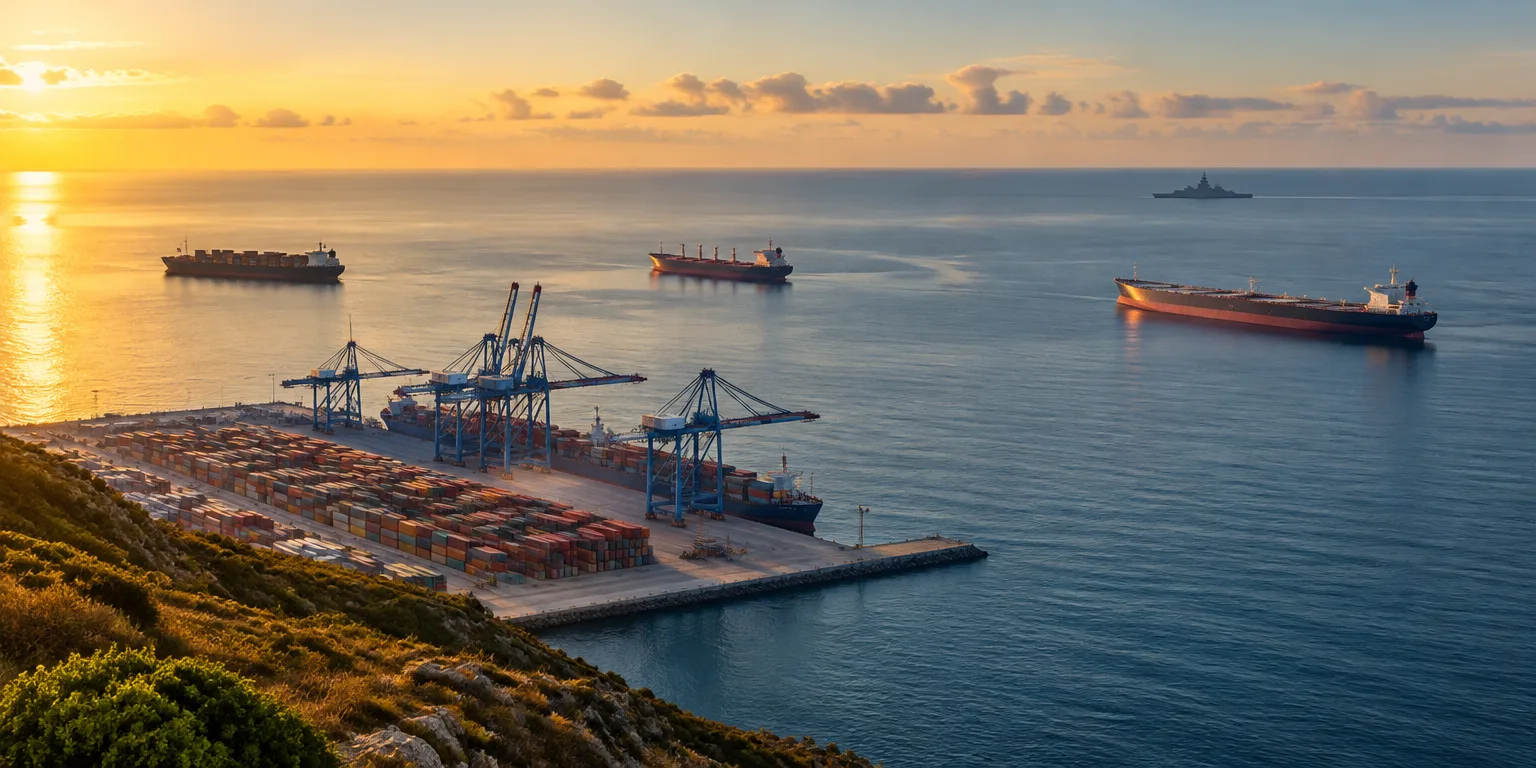
A naval blockade stops ships from reaching specific ports, usually close to shore. A counter-blockade in this case would use American sea power farther out in the Pacific and Indian oceans to stop oil tankers, food shipments, and container ships from ever reaching China, even if China had sealed off Taiwan itself.
Why are oil and soybeans China's weak points?
China imports most of its oil by sea, largely from the Middle East, and imports huge amounts of soybeans from Brazil, Argentina, and the United States to feed pigs and people. Those shipments matter because without fuel, factories and trucks stop, and without feed and food, prices spike and social pressure grows quickly.
Did Germany and Japan really go from enemies to partners?
Yes. After World War II the United States decided West Germany and Japan had to be rebuilt as prosperous democracies. Washington waited until about 1947 to fully commit, but the result was two former enemies that became anchors of trade and alliance rather than threats.