Selling Old Weapons Barely Moves GDP, Even When the Sale Is Huge
Exports go up when old shells leave the bunker, but the country's stock of inventories falls by the same amount.
 Economics Explained · How Kim Jong Un "Accidentally" Fixed North Korea's Economy
In theory, North Korea could send an estimated $7.7 billion to $14.4 billion worth of old artillery shells to Russia, with about $10 billion as a working middle estimate, without lifting its measured output much at all. The exact totals are secret and estimates vary, but the accounting effect holds either way. It comes down to the way national accounts treat a sale out of storage.
Gross domestic product is meant to capture the value of finished goods and services turned out inside a country during a single year, from haircuts to artillery shells. No statistics office can watch every workshop moment by moment, so officials tally where finished output lands, combining purchases by households, spending by businesses and government, then adjusting for trade by adding overseas sales and subtracting overseas purchases.
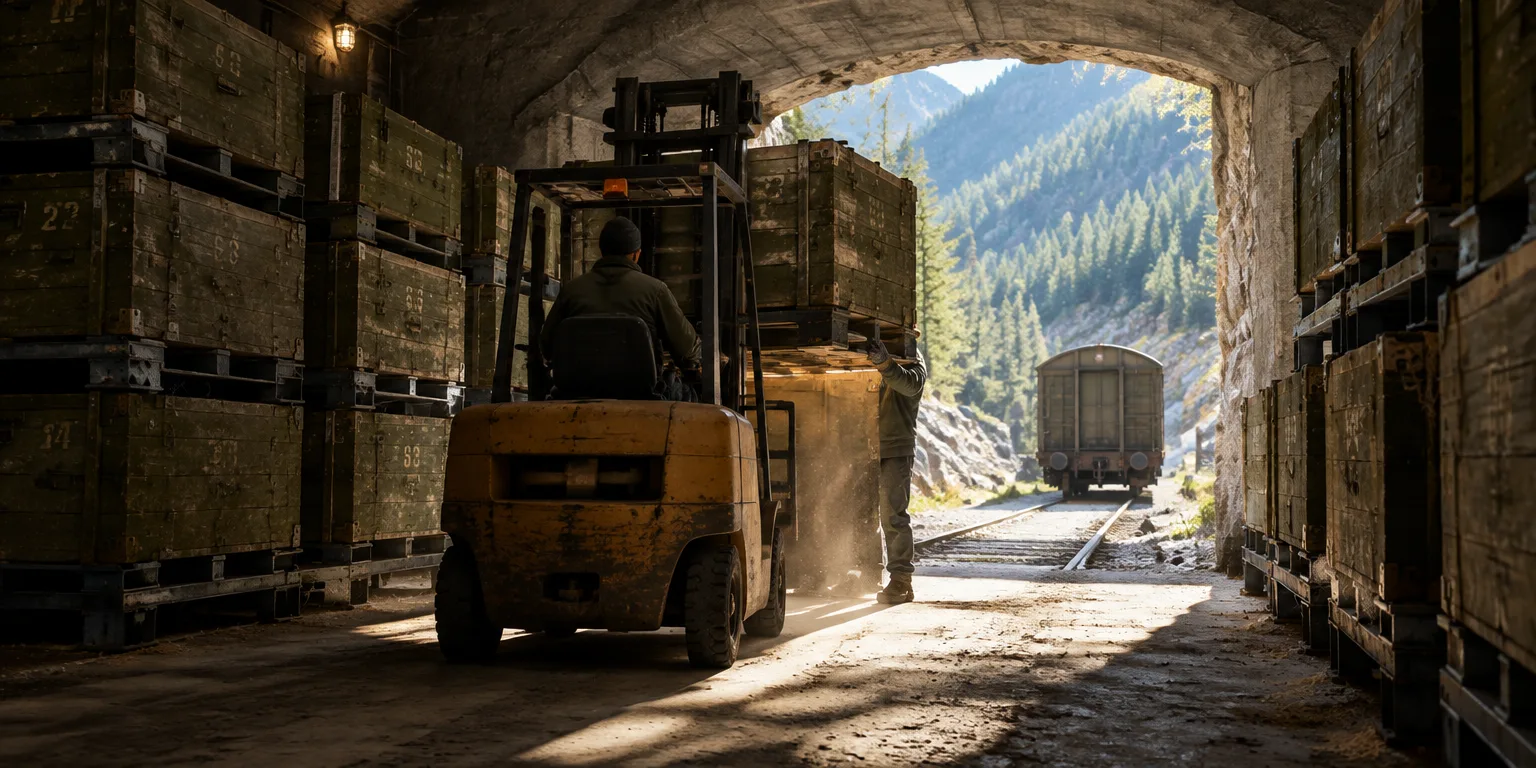
That shortcut produces an odd outcome for aging arms. Much of the ammunition Pyongyang has delivered abroad was manufactured long ago, from depots built across decades when the country was braced for a conflict that never came. Those rounds had already been tallied as output back when they rolled off the line, logged then as additions to stored holdings. That entry is called investment in inventories, meaning the value of goods held in stock.
Consider a maker of refrigerators that assembles one unit in December but finds a buyer only the next year. The appliance still counts toward output for the earlier year, as the company building up goods on its shelves. Selling from a stockpile works in reverse. Exports rise, but investment in inventories falls by the same amount, so the two cancel each other out.
As a hypothetical, suppose the United States sold off its emergency oil holdings all at once. Overseas shipment numbers would surge, even though no fresh drilling or refining had occurred. The drop in stored holdings would wipe out the trade gain on paper, leaving the official growth tally almost unchanged.
The same arithmetic covers Pyongyang drawing shells valued at perhaps $10 billion out of mountain depots packed away decades ago. In theory, the net effect on measured output is roughly zero. It can look even stranger because North Korea receives food, fuel, and building materials in return, and those inbound goods count as imports, which are subtracted, so the barter on paper could make the economy look smaller.
Questions people ask
Does making new weapons count toward GDP?
Yes. The factory workers, steel, electricity, and other inputs used that year count as new production. The confusion only arises when a country sells weapons made years or decades earlier, because those were already counted when they entered the stockpile.
What is an inventory drawdown in plain terms?
An inventory drawdown records the reduction in stored goods. When old stock is sold abroad, exports increase GDP by the sale value, while the smaller stockpile reduces business investment by about the same amount. The two entries largely offset each other.
If a country pumped oil and immediately exported it, would GDP rise?
It would rise because the oil was recently extracted and refined. Selling newly produced goods adds to exports without an equal decline in old inventories. The cancellation happens only when the seller is liquidating something produced and counted in a previous year.