Seven Minutes With a Countdown Is Less Frustrating Than Four Without One
On the London Underground, showing riders when the next train would come made a seven-minute wait less frustrating than four minutes with no information.
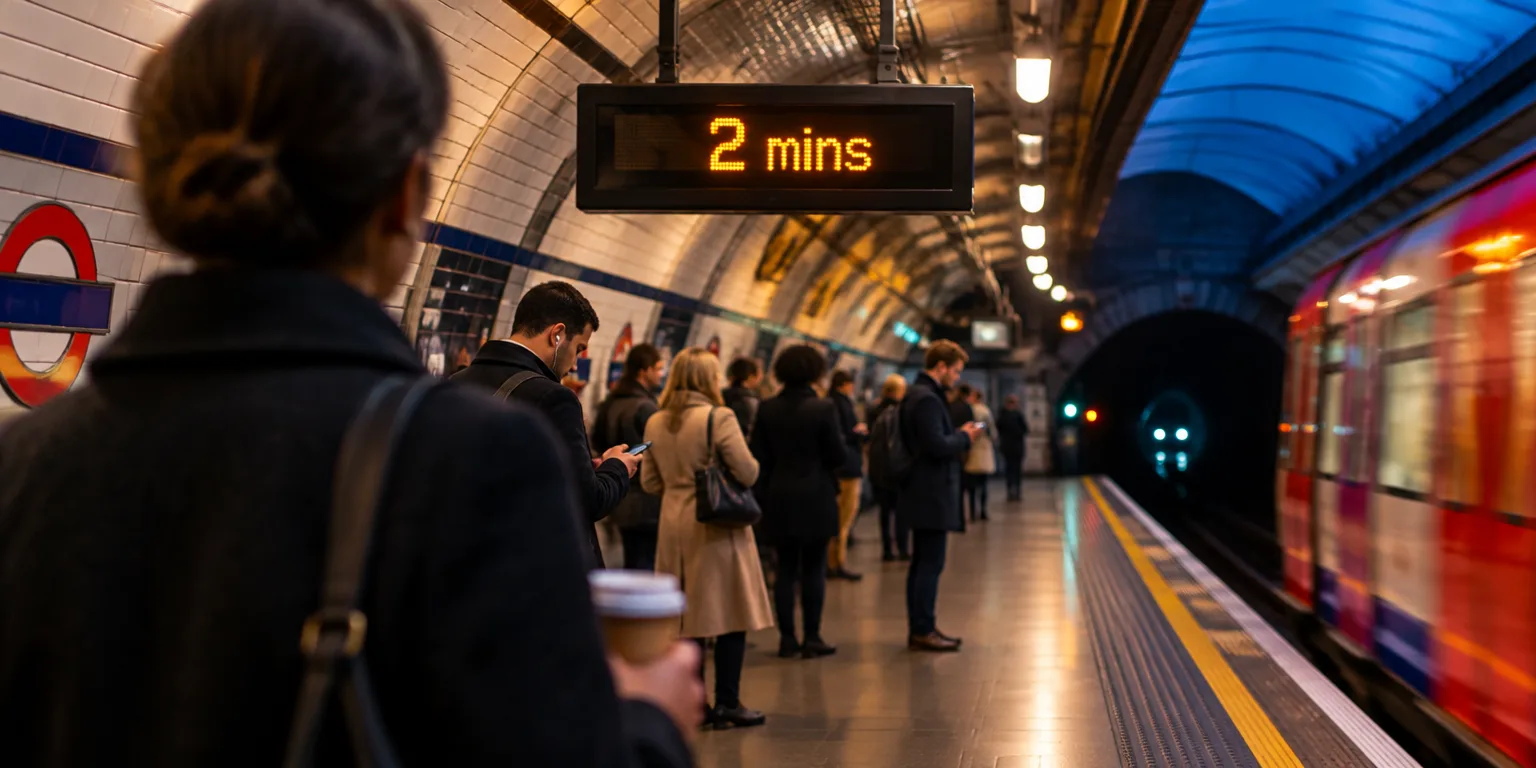
 TED · Rory Sutherland: Perspective is everything
Picture a subway platform at rush hour with no information about when the next train will arrive.
That doubt is part of what makes waiting hard, says Rory Sutherland. The length of the wait in minutes matters, but so does the uncertainty felt during it.
His example comes from the London Underground. The biggest gain in rider happiness for the money spent did not come from adding trains or changing how often they ran. It came from installing display boards on the platforms that showed when the next train would arrive.
Sutherland puts it this way: "Waiting seven minutes for a train with a countdown clock is less frustrating and irritating than waiting four minutes, knuckle biting, going, 'When's this train going to damn well arrive?'"
The countdown makes the wait less frustrating by removing the uncertainty inside it.
Questions people ask
Does this work anywhere besides train platforms?
Often, yes. Airlines show boarding times and queue numbers, restaurants quote wait times and send texts when tables are ready, and software shows progress bars. In each case, a predictable wait often feels easier than a shorter wait with no information.
Why does uncertainty feel so bad?
Psychologists link it to loss of control. When you cannot predict what happens next, your brain stays on alert and keeps checking for change. A countdown gives information and a sense of control, so that vigilance can switch off.