Seventy-Two Elders Alone in Seventy-Two Rooms Wrote the Same Translation, Tradition Says
The story, told in the Letter of Aristeas, Philo, Josephus, and the Talmud, was meant to explain a Greek Torah fit for Alexandria’s great library.
 en.wikipedia.org · Septuagint
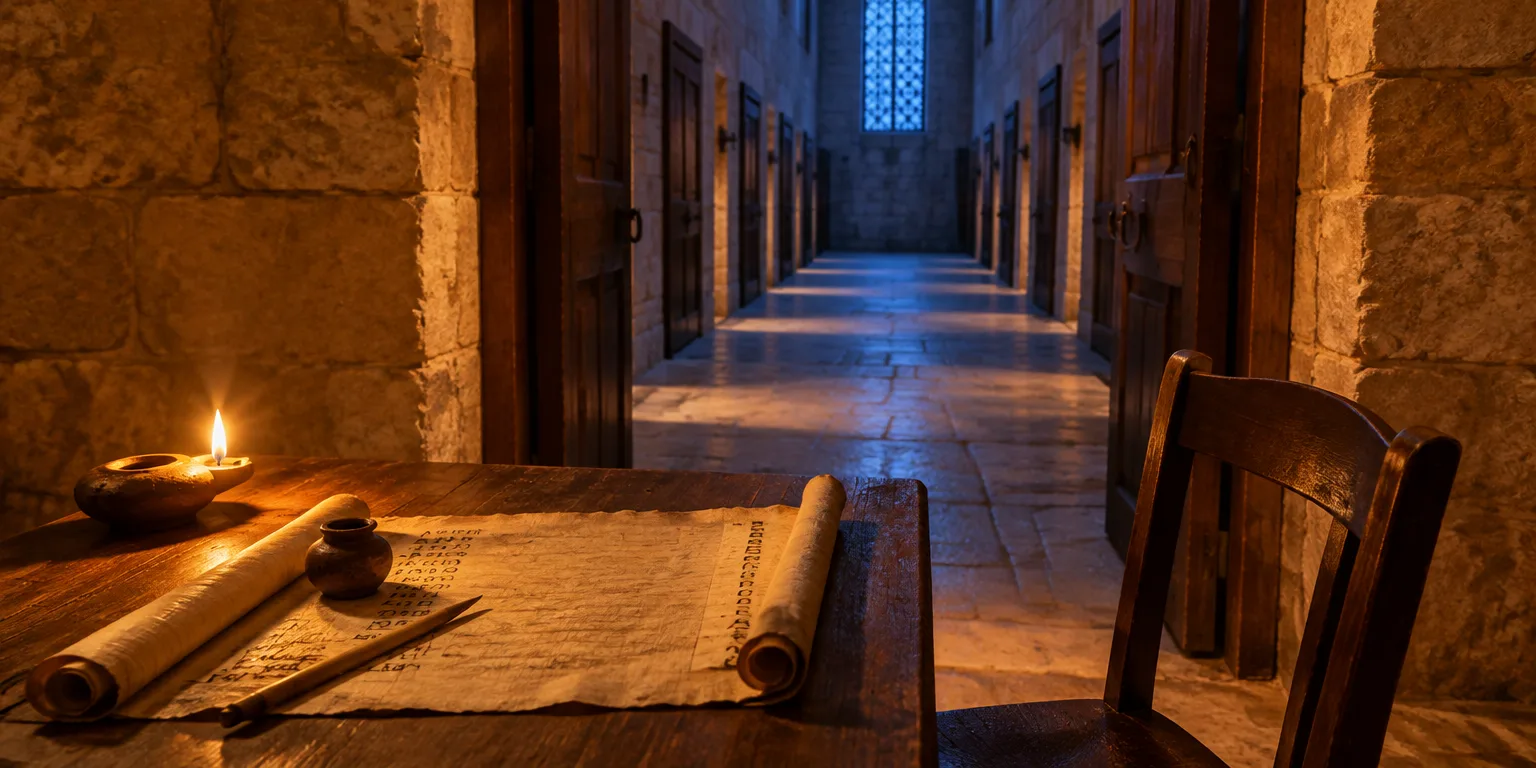
The door closed, and the elder was alone. He had been brought from Jerusalem to Alexandria without being told why he had been summoned.
Then King Ptolemy entered his chamber and gave the order: “Write for me the Torah of Moshe, your teacher.” In 71 other chambers, 71 other elders were hearing the same command.
According to tradition, that is how the Greek Torah came to be, prepared for the Library of Alexandria because Ptolemy II Philadelphus wanted it for his collection. The king was the Greek-descended ruler of Egypt, and the plan called for 72 translators, half a dozen drawn from every Israelite tribe.
The account comes from a letter addressed to Philocrates and signed in the name of Aristeas, a work many scholars regard as pseudepigraphical, or written under a false name. It was repeated by the Jewish thinkers Philo and Josephus in his Antiquities of the Jews, and later by Christian writers including Augustine, Bishop of Hippo.
The most dramatic version appears in Megillah, a tractate in the Babylonian Talmud, a central collection of Jewish law and lore. There, Ptolemy deliberately keeps his purpose secret and isolates each elder in his own room.
The Talmud says God then intervened: “God put it in the heart of each one to translate identically as all the others did.” So each elder rendered the Hebrew into everyday Koine Greek in matching form.
Philo writes that the number reflects six scholars chosen from every Israelite tribe. That detail raises a historical puzzle, because the ten northern tribes had been carried into exile by Assyrian conquest nearly five centuries before Ptolemy’s reign.
Caution is needed because Philo’s account implies the twelve tribes still existed in Ptolemy’s time. The qualification is that not every member was scattered, with many having fled to Jerusalem and lived on, keeping a remnant of each tribe’s line alive.
Separated without counsel or copying, the 72 were said to have produced matching texts, according to tradition. The story presents the translation as made to join the holdings of the great Alexandrian library.
Questions people ask
What exactly was being translated?
The Torah is the first five books of the Hebrew Bible, traditionally attributed to Moses. The Greek version is commonly called the Septuagint, from a Latin word for seventy, a rounded reference to the 72 translators.
Who was Ptolemy II and why did he want the book?
Ptolemy II Philadelphus was the Macedonian Greek ruler of Egypt in the third century BCE. Alexandria, his capital, was famous for its library, an ambitious attempt to collect the world’s learning in one place.
Do historians think the 72 rooms episode really happened?
Most scholars treat the Letter of Aristeas as pseudepigraphical, meaning it was written later under another person’s name. They read the identical-translation miracle as a story about authority and divine approval, not as a record of procedure.