She Had No Way to Charge Users, So She Faked a Pay Button and 15% Clicked
A dating app founder skipped building payments and tracked taps instead, then took that number to investors.
 This Week in Startups · Pregame Your Launch Before Your App Exists (w/ Amanda Bradford) | E2355
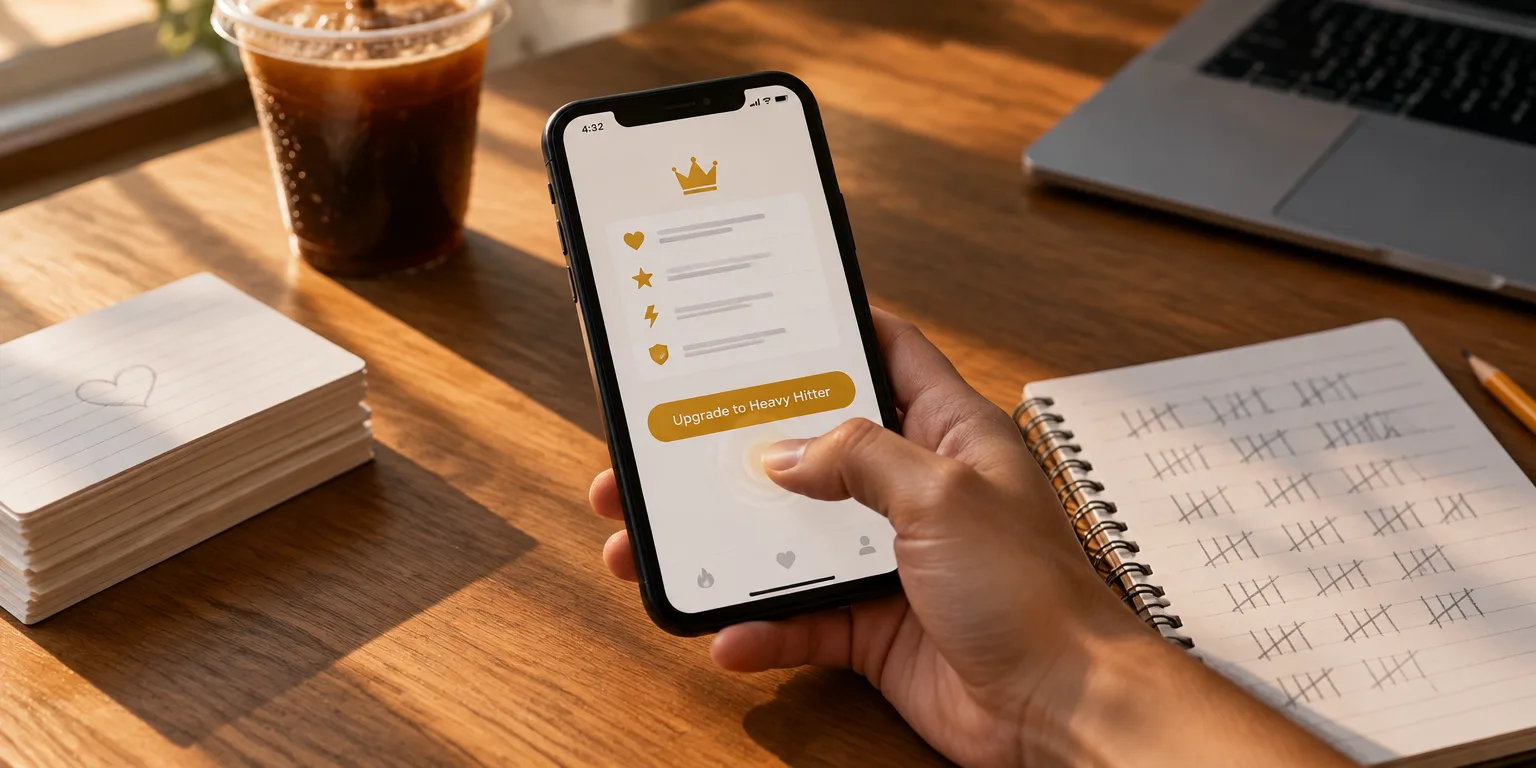
The button offered an upgrade to Heavy Hitter, the name the app used for its paid tier. If a user wanted it, the screen invited a tap, and then came the message: we charged your card, and now you are a Heavy Hitter.
Amanda Bradford, the founder of The League, a selective dating app she later sold to Match Group in 2022, put that button inside the app when there was no way to charge anyone at all. Her engineer did not know how to build billing yet, and she had not tried to make money from users.
The trick was a test. Instead of building payments to learn whether daters would pay, Bradford faked the payment and watched what strangers did. About 15% tapped the button and said they would pay about $15, and she gave them the features anyway. No money moved, but the taps gave her a number: about 15% of users were willing to pay before billing existed.
That number became her proof. When she went to raise money, she could tell investors she had run an experiment, that roughly 15% of users, or perhaps 13% in reality, would pay for membership. The result helped investors feel okay that the company could monetize even though it hadn't yet.
Bradford herself described the move as “a smoke and mirrors thing” and “a total fake out.” She did not have a billing system, but she had evidence that strangers would click to pay, and that was enough to turn a missing feature into something she could take into fundraising meetings.
Questions people ask
Is it risky to show a fake pay button that says you charged someone?
It can confuse and anger users if they think money actually left their account. Founders who test demand this way often make clear that no charge occurred, or frame the offer as a preorder or waitlist, and track interest without telling users money moved. Bradford described telling users they were charged, which is why this is best read as a war story, not a template to copy exactly.
What do founders call this kind of test?
They often call it a smoke test, a fake door test, or concierge test. The idea is to offer a feature, measure clicks or signups, and then build only what people actually want. It is common for pricing, new features, and landing pages, where a button can link to a coming soon message while the team records demand.
Did The League eventually charge users?
Yes. The company later charged for memberships, after about a year and a half without monetization, per the talk. Bradford used the test to show investors that about 15%, or perhaps 13% in reality, might pay a membership fee. She later said revenue from cities 21 to 155 was negligible, which is why she would have capped expansion at 20.