She Refused to Write With Her Mouth Until Another Patient Shamed Her Into It
Paralyzed at 17, Joni Eareckson Tada kept spitting out the pencil, until a young man who could barely move his head took his without protest.
 Not Dead Yet · Joni Eareckson Tada
The occupational therapist, who helps patients relearn daily tasks, held out a pencil and asked Joni Eareckson Tada to grip it with her teeth.
Tada was then 17 and newly paralyzed in a 1967 diving accident that crushed her spinal cord. She knew how to draw, but as she put it, "I did not want to learn how to draw with my mouth." She said she "did not want to learn how to write with my mouth or type with a mouth stick." Still in the hospital and deep in depression, she kept spitting the pencil out.
The loss behind that refusal was enormous. After doctors told her that total paralysis then meant perhaps 10, 15, or 20 more years, she understood that horseback riding, tennis, swimming, and hiking would never return. That loss became concrete when a friend laid a guitar on her chest in the hospital and she could not move her arm to reach the strings, and she fell into deep depression. She had prayed to be healed, and slowly understood that healing was not coming.
The therapist told her she could keep refusing if she wanted, but she would still have to sit through the therapy session and watch the other patients work.
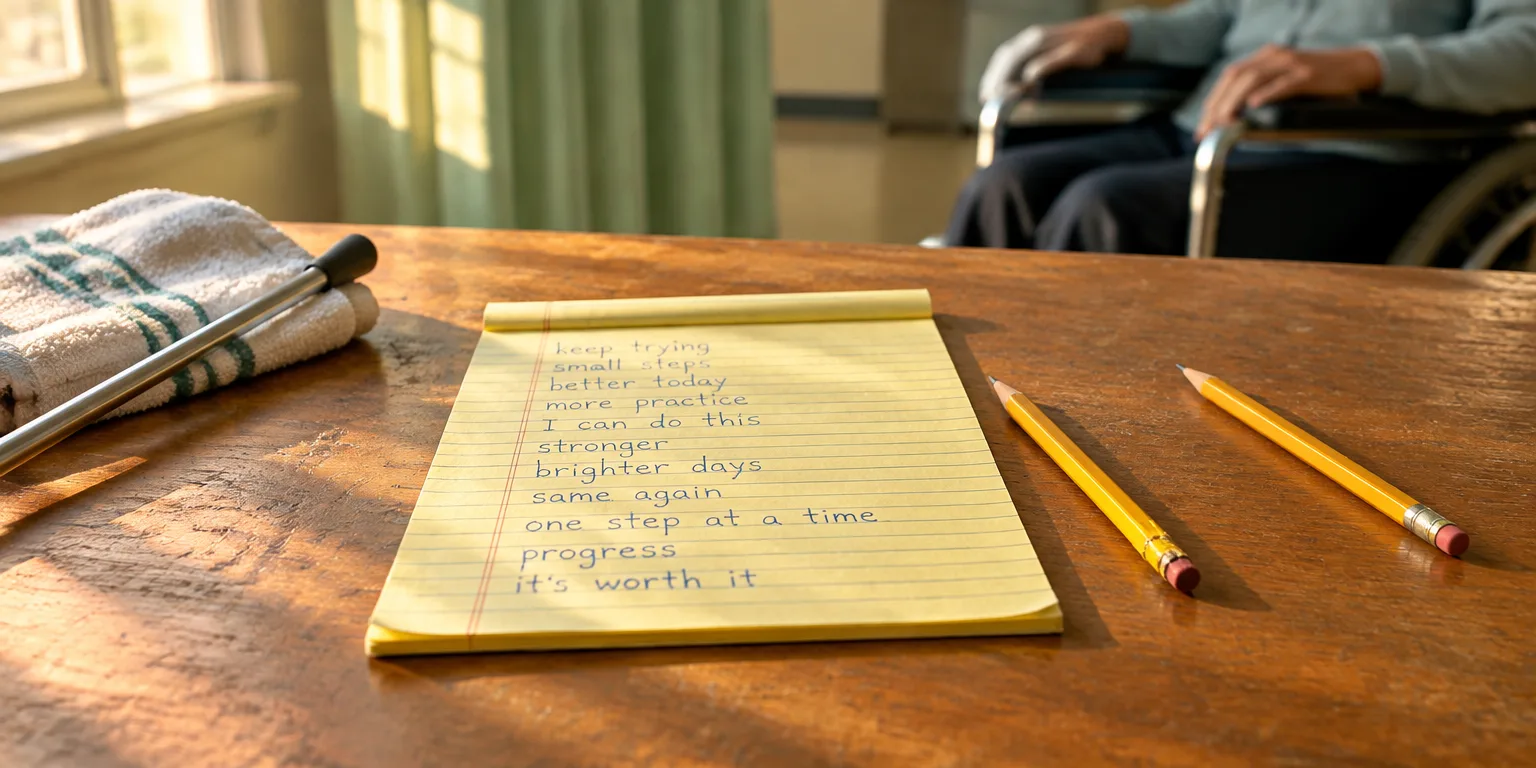
Then a young man named Tom was brought into the room. He had been paralyzed in a motorcycle crash and could barely turn his head, with his arms supported upright. The therapist gave him the same lesson in using his teeth to manage tools. Tada watched from her corner.
He accepted the pencil and began forming words on the writing pad on his table.
Watching him left Tada ashamed. She realized the shame came from pride. She put that pride into words herself: "I'm normal. I'm not like these people." She said Tom put her to shame.
Tada quoted Philippians 2:14, which says, "do everything without complaining."
Questions people ask
What is a mouth stick, exactly?
It is a lightweight rod, usually plastic or aluminum, that fits in the mouth and has a tip for pressing keys, turning pages, or holding a pen or paintbrush. For people with little or no use of their arms and hands, it works like an extension of the head and neck muscles. Therapists still teach it alongside newer voice and head tracking tools.
What happened to her after rehab?
She learned to paint and write with her mouth, wrote a best selling autobiography, and started a disability ministry called Joni and Friends. She also served on the National Council on Disability, which drafted what became the Americans with Disabilities Act. She is now in her late 70s and has lived with quadriplegia for almost 60 years.
Who was Tom?
The source names him only as Tom, a young man paralyzed in a motorcycle accident who was in the same therapy room. No last name or later history is given. In the story he functions as a fellow patient whose quiet compliance confronted her pride.