Ships Plow the Seafloor to Bury Internet Cables in Sand
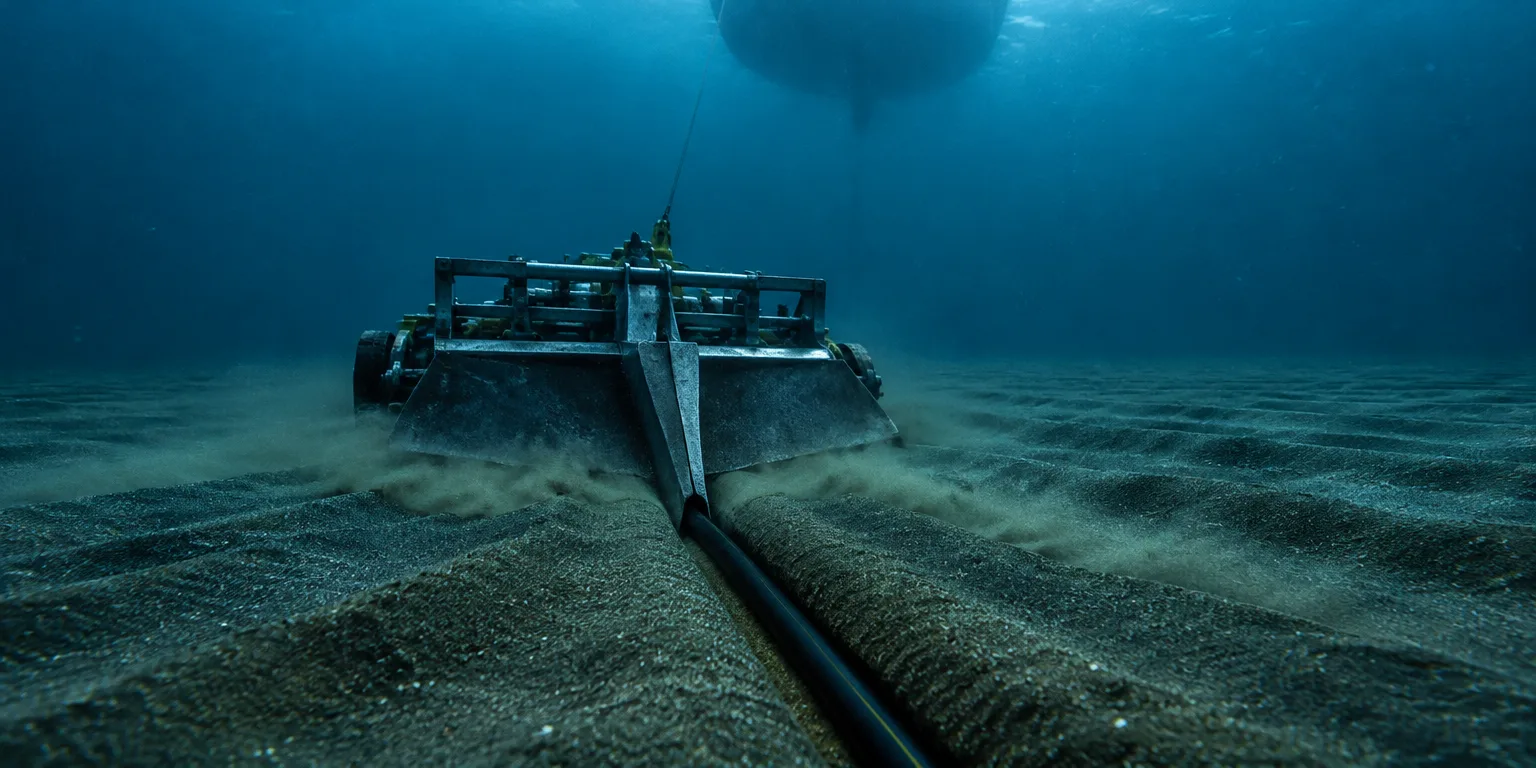
A plow cuts the groove, the cable drops in, and the ocean current covers it with sand.
 Vox · Thin underwater cables hold the internet. See a map of them all.
In some places, the water above the cables that carry the internet between continents is as deep as Mount Everest, the world's tallest mountain, is high.
Those cables rest on or under the ocean floor, where they face risks. Earthquakes can damage them, and confused sharks have bitten them at least a few times. To protect them, many cables are buried just under the seabed instead of being left exposed on the bottom.
The burial starts with a ship at the surface. The ship lowers a plow, a cutting tool, to the ocean floor. As the ship moves forward, the plow cuts a narrow trench in the seabed, and the cable is laid inside that small cut.
Think of it like plowing a farm field, except the field is the dark ocean floor and the furrow only needs to be wide enough to hold a cable.
The crew then lets the ocean do the covering. Currents moving along the bottom stir up sand and sweep it over the open trench. The sand settles into the cut, so the cable ends up buried naturally under the seabed.
The idea is straightforward, but carrying it out across long stretches of ocean is difficult work. The result, a web of buried lines crossing oceans, is part of what lets the internet reach around the world.
Questions people ask
How deep is Mount Everest high, in ocean terms?
Mount Everest stands about 29,032 feet, or 5.5 miles, above sea level. Many internet cables cross deep ocean plains that are two to five miles down. Only the deepest routes approach Everest scale.
Why bury the cable near shore but not in the deep ocean?
Most damage happens in shallow water from fishing boats, anchors, and animal bites. Burying protects the cable where the risk is highest. In very deep water there is less activity, so cables are often simply laid on the bottom.
What happens if an earthquake breaks a cable?
Internet traffic is rerouted to other cables while a specialized repair ship goes to the break. The crew pulls up the damaged ends and splices in a new section. A deep water repair can take one to three weeks, depending on weather and location.