Shoppers buy unknown brands because they trust Amazon, not the name
The shift opened the door for thousands of small sellers, and filled search results with look alike names shoppers have never seen before.
 Alexis Investigates · How Did Amazon Become This? From Online Bookstore to Shopping Beast l Alexis Investigates
Shoppers will buy from a company they have never heard of because they are not really trusting the company at all. Alexis Knight argues they are trusting Amazon to vouch for it, through stars, reviews, Prime shipping, and a clean listing with a convincing photo.
Her shorthand for the shift is: "Amazon made it possible for an unknown brand to borrow trust from the marketplace itself."
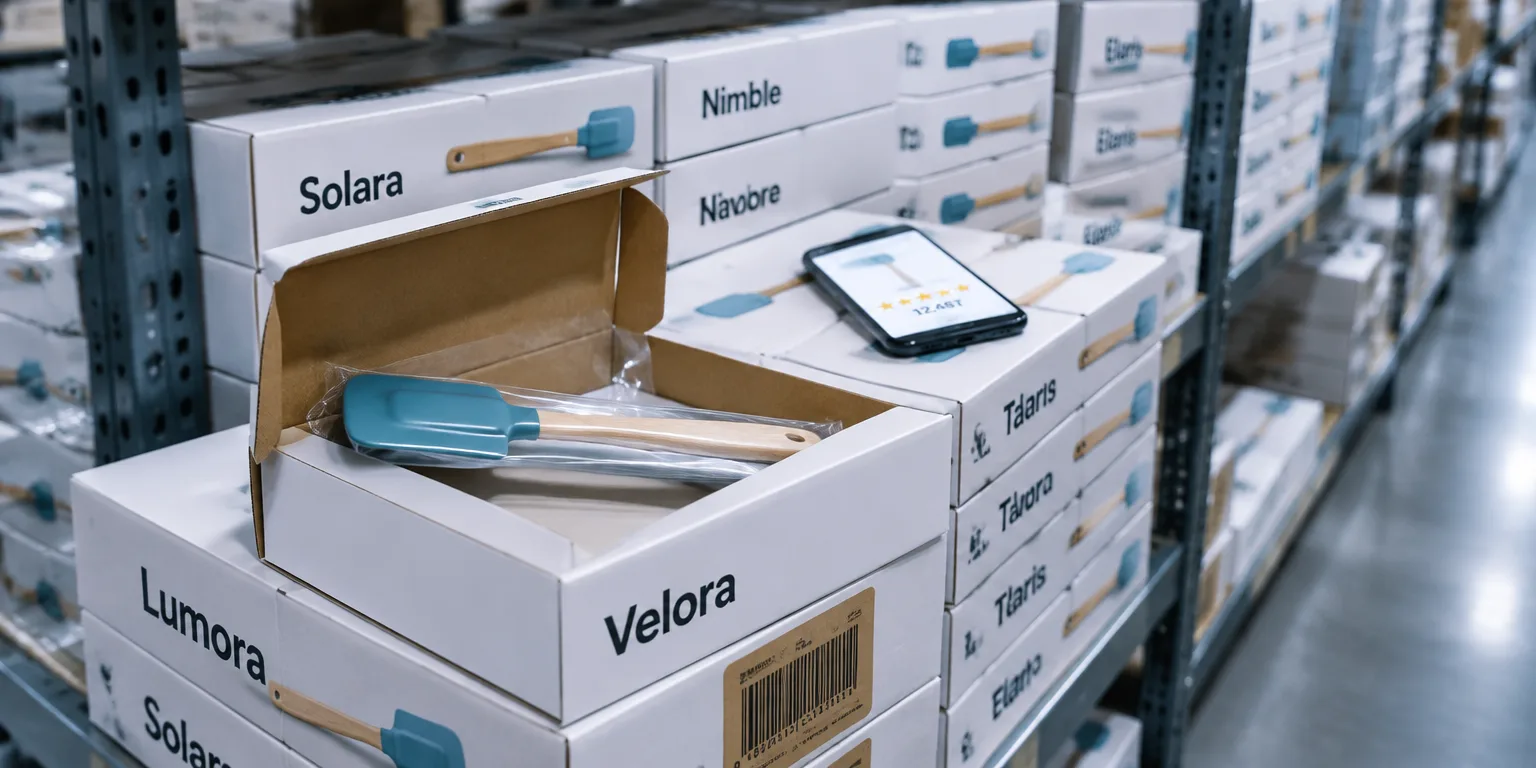
The old payoff for spending decades building a familiar name has faded. A seller can invent a new name, put a product before likely buyers, and build a large business without most buyers ever learning who is behind it. The result is page after page of unfamiliar names, random-looking strings of letters, and clusters of listings showing what appears to be the same product under different labels.
Her example is deliberately silly: "If a brand called something like, I don't know, Zorvex has 4.6 stars and 18,000 reviews, you're gonna maybe think, you know, hey, maybe Zorvex knows what it's doing."
That opening created room for thousands of small sellers who could never have won space on national store shelves. It also left shoppers sorting through a crowded marketplace where listings often have more in common than their different logos suggest. Some are private-label copies, meaning a seller took an existing best seller, asked a factory for a version with its own name on it, and listed it alongside the rest. Some of these mystery brands are excellent and some are terrible.
Knight puts the tradeoff this way: "A customer may not trust the company. A customer trusts Amazon, though, to try the company."
Questions people ask
Why can a brand I have never heard of still offer Prime shipping?
Fulfillment by Amazon, introduced in 2006, lets independent sellers store their products in Amazon warehouses and have Amazon pack, ship, and handle customer service. For shoppers, that is why an unknown brand can still offer Prime shipping and Amazon-backed returns.
Why do so many Amazon listings look exactly the same?
Private labeling is when a seller finds a product that already sells well, reads the reviews for complaints, and asks a factory to make a similar version with fixes and the seller's own name on it. It explains why so many listings look nearly identical but carry different brand names.