Short on rent, tenants threw house parties that fueled jazz culture
The entry fees earned extra cash toward rent and gave musicians steady Saturday work, and the party cards ended up at Yale.
 Today, Explained · We should party more
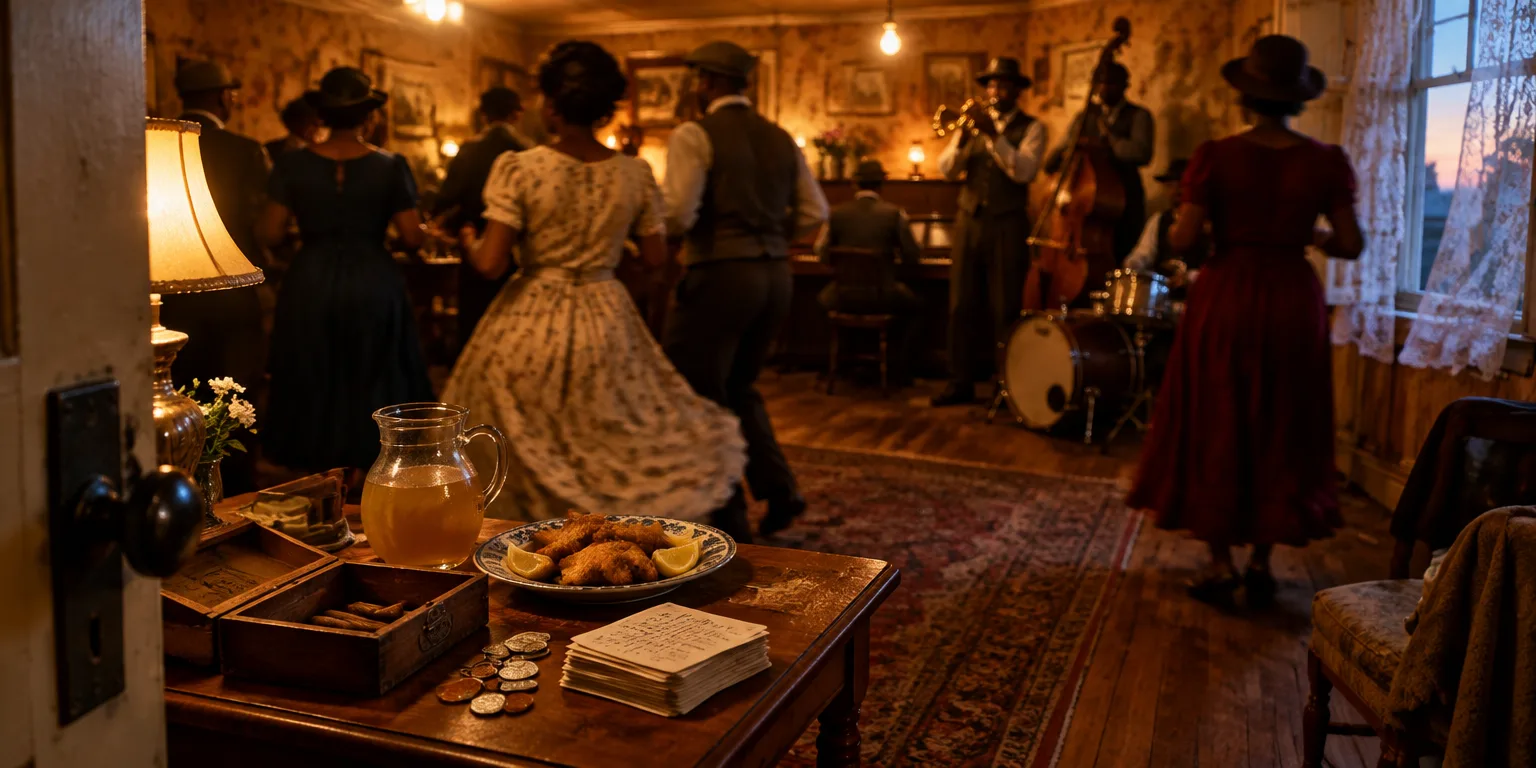
On a Saturday night in New Orleans at the turn of the last century, households opened their homes to strangers. For a small charge paid at the door, anyone could walk into the living room and find food, drink, and a band squeezed into the corner.
The spread was generous and the music was loud. Neighbors ate, drank, danced, and listened while the hosts collected cash. For households short on the rent, the night was a practical solution, a way to earn some extra cash without leaving home.
That is the story historian Imogen Willits tells about the fish fry, a home turned into a club for one night. The fish fries had a huge impact on the development of jazz culture, Willits says, in part because they “were such a big part of the social scene” in New Orleans “that there was always work for musicians.”
The same idea reappeared in Harlem in the 1920s. Tenants opened their apartments on Saturday nights for rent parties, charging entry to cover the rent and offering music and dancing until morning.
Langston Hughes, who wrote about going to them as often as he could, said they beat the professional venues. “The Saturday night rent parties that I attended were often more amusing than any nightclub,” he wrote.
His description captures the crowding and improvisation. The parties unfolded, Hughes wrote, in small apartments where the guests seldom lived, with a piano joined by “a guitar or an odd cornet or somebody with a pair of drums walking in off the street, and the dancing and singing and impromptu entertaining went on until dawn came in at the windows.”
Getting in was informal. Hosts scribbled an address on a business card and left stacks in shops, pubs, and hairdressers. A guest picked one up and followed it that night to someone’s door.
Hughes collected the cards from the parties he attended. Decades after the music faded and the dawn light left those living rooms, they ended up in an archive at Yale.
Questions people ask
What exactly was a fish fry?
A fish fry was a ticketed party in a private home, with the hosts cooking food and serving drinks and hiring musicians to play. Guests paid at the door, and the hosts kept the proceeds, often to help cover rent.
Why were so many tenants short on rent?
Harlem rents rose sharply in the 1920s as Black migrants arrived during the Great Migration, and many tenants struggled to pay landlords. A crowded apartment could hold dozens of paying guests for a night, which made a rent party a fast way to raise cash.
How did jazz get started in New Orleans?
Jazz grew out of Black musical traditions in New Orleans around 1900, blending blues, ragtime, and marching band music with improvisation. Regular, informal gigs like fish fries let young players experiment, find audiences, and get paid.