Showing a Child How a Toy Works Makes Them Less Likely to Find What Else It Does
When adults acted clueless, four-year-olds explored and found every hidden feature.
 Talks at Google · The Gardener and the Carpenter | Alison Gopnik | Talks at Google
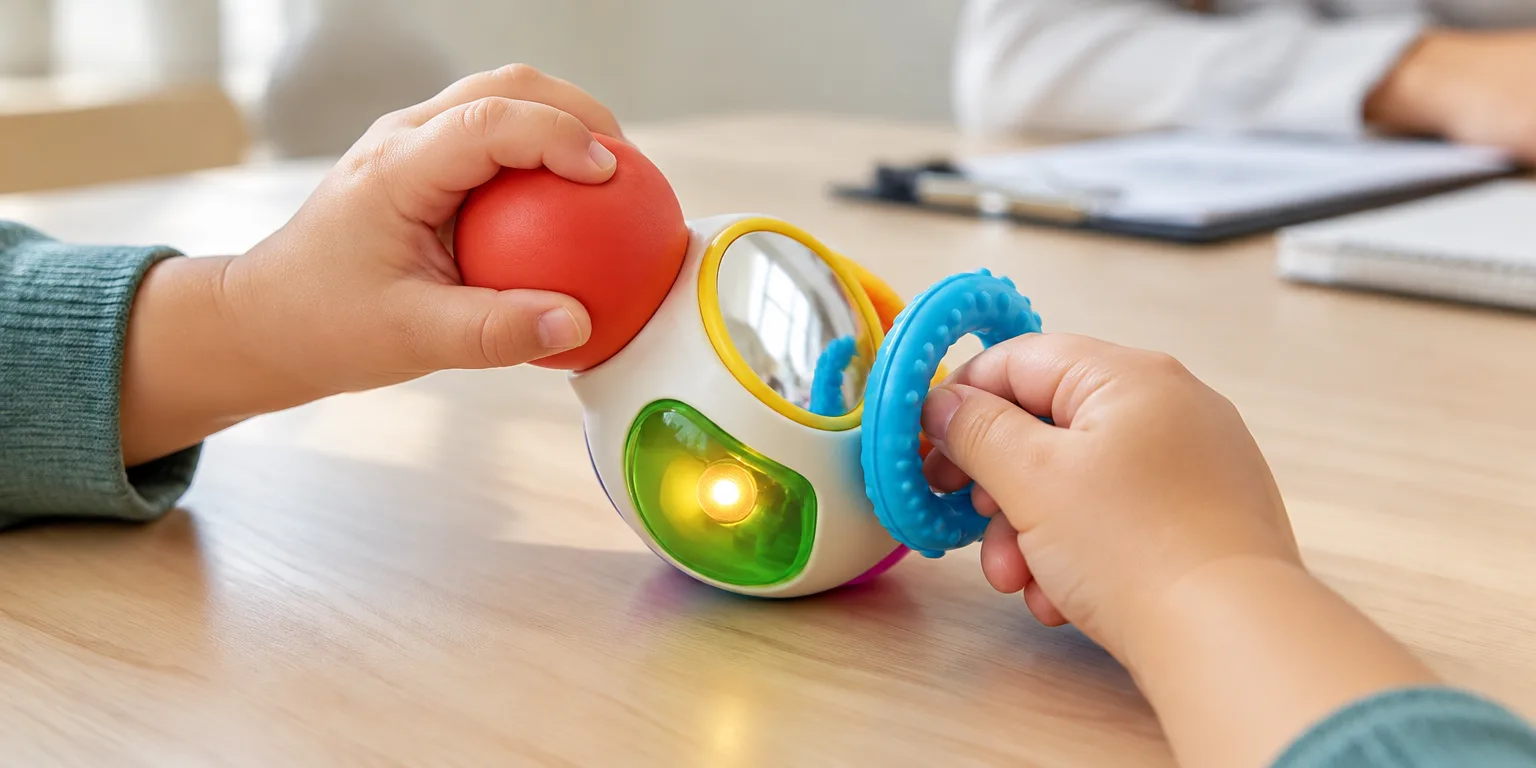
In a laboratory, a researcher held up a strange toy for a four-year-old to try. She squeezed one part, and it squeaked. Then she watched to see what the child would do next.
The toy could actually do four different things. It had a squeaker, a light, a mirror, and music, and left alone, four-year-olds would poke and twist until they found them all.
That curiosity narrowed when adults acted like teachers, according to Alison Gopnik, who studies how children learn. When the adult introduced the toy as a lesson, children explored less and never found all the other possibilities.
The researchers tested it two ways. In one version, the adult fumbled with the toy and said she had no idea how it worked, then bumped it by accident so the squeaker went off. In the other, she said, "This is my toy. I'm going to show you how it works," and then squeaked the squeaker on purpose.
The difference was stark. The children who saw the adult act clueless were intrigued by the squeak, but then kept exploring until they found the light, the mirror, and the music. The children who had been given a demonstration just squeaked the squeaker, again and again and again.
The same thing happened with another toy, a squeaky gadget that played music after a sequence of three moves: squishing it, squeezing a bulb, and pulling a ring. When the researcher running the experiment said, "I don't know how to make it play music yet," and invited the child to help figure it out, four-year-olds watched ten demonstrations and worked out a smarter shortcut they had never seen, using only the last two moves.
When the adult gave the exact same demonstrations but said she was going to show how it worked, the shortcut vanished. The children only copied what they had seen, and never found the cleverer solution.
Gopnik's conclusion is that teaching, as parents often imagine it, can narrow what children are willing to consider. A child who assumes the adult already knows the answer sees no reason to look further, while a child who thinks no one knows keeps searching.
Questions people ask
Does this mean parents should never show children how things work?
No. Children are also remarkably good at learning by watching adults, and direct instruction is efficient when there is one right answer, like tying shoes. The lesson is to leave room for open-ended play with no correct answer, so children keep testing new ideas.
At what age does this effect happen?
The toy studies focused on preschoolers, mostly four-year-olds. Gopnik also described work following this across development that found novelty-seeking going down in the school-age period with a dramatic drop around adolescence, around the time brain pruning increases.
Why do children copy instead of exploring after a demonstration?
It is rational from the child's point of view. If a knowledgeable adult shows you only one part, it makes sense to assume that is the important part. Copying the adult is smart when the adult knows more, but it comes at the cost of missing other discoveries.