Sick Monarch Mothers Choose Poisonous Milkweed to Protect Their Babies
The poison cannot cure the mother, but it fights parasites in the caterpillars that hatch from her eggs.
 Short Wave · How scientists discovered that animals are doctors, too
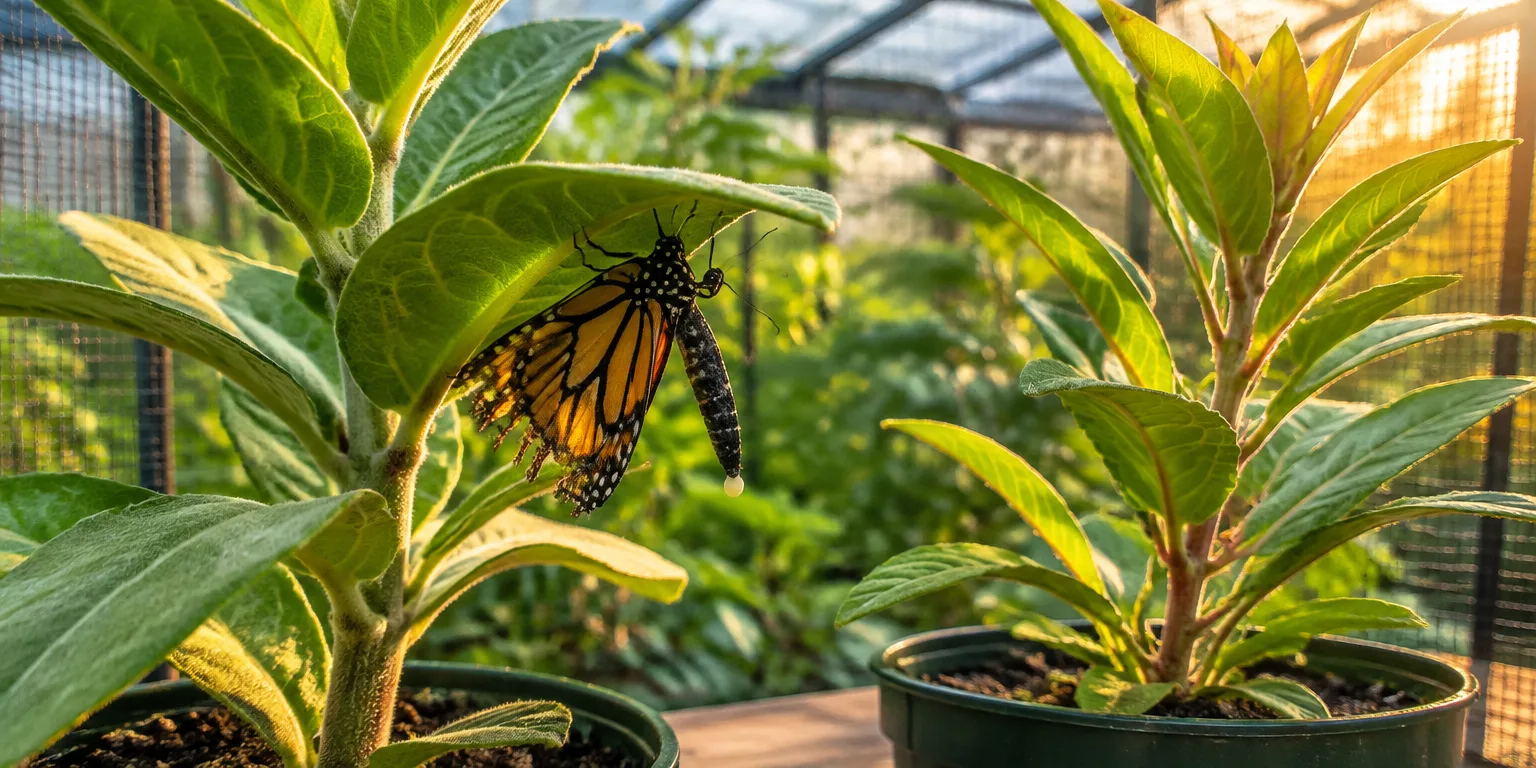
Inside a big flight cage, two kinds of milkweed waited. Biologist Jaap de Roode released parasite-infected monarch butterflies and healthy ones into the cage, and watched where each female laid her eggs.
The choice mattered because young monarchs can feed only on milkweed, so mothers must place their eggs on its leaves. Some of those plants carry strong toxins. The chemicals that caterpillars take in as they chew later help the adult butterflies taste bad to predators.
The idea that butterflies might choose medicine on purpose had made some scientists skeptical. De Roode said that just a few decades ago, many scientists said monarchs could not possibly do that because they were not smart enough, with what he called their "tiny little brains." Medication in insects is easier to study because large numbers can be kept and tested in a lab, and he thought another reason they used toxic milkweed might be to treat parasites on purpose.
His team gave both the infected and healthy butterflies access to toxic and normal milkweed in the same cage. The sick females placed many more of their eggs on the poisonous plants.
The poisonous plant gave no help to the sick mother herself. She is not eating the plant or taking in its chemicals herself. But it helps her babies, the ones she passes the parasites on to. In de Roode's words, she can "preventatively cure her offspring that are going to be infected in the future."
The mother leaves the toxin to her young by laying her eggs on the toxic plant. When the caterpillars hatch, their first food is the leaf around them, toxins included, and those toxins help fight the parasites they pick up as they eat.
Questions people ask
Why does it matter where a monarch lays her eggs?
Yes. Monarch caterpillars eat only milkweed leaves, and adult females glue single eggs to the leaves. When the caterpillar hatches a few days later, its first meals are the leaf around it, toxins included.
How does toxic milkweed protect a caterpillar?
Milkweed makes chemicals called cardenolides that are poisonous to many animals. Monarch caterpillars store those chemicals in their bodies, which makes them taste bitter to birds and helps reduce the growth of internal parasites.
What kind of parasites do monarchs get?
The main one is a single celled parasite that spreads as microscopic spores dusted on eggs and leaves. Caterpillars swallow the spores as they feed, and heavy infections can cripple wings and shorten the adult butterfly's life.