Sick trees warn their neighbors through underground fungi
Healthy neighbors boost their disease-fighting enzymes after getting the signal, with extra help from birch.
 TEDx Talks · Nature's internet: how trees talk to each other in a healthy forest | Suzanne Simard | TEDxSeattle
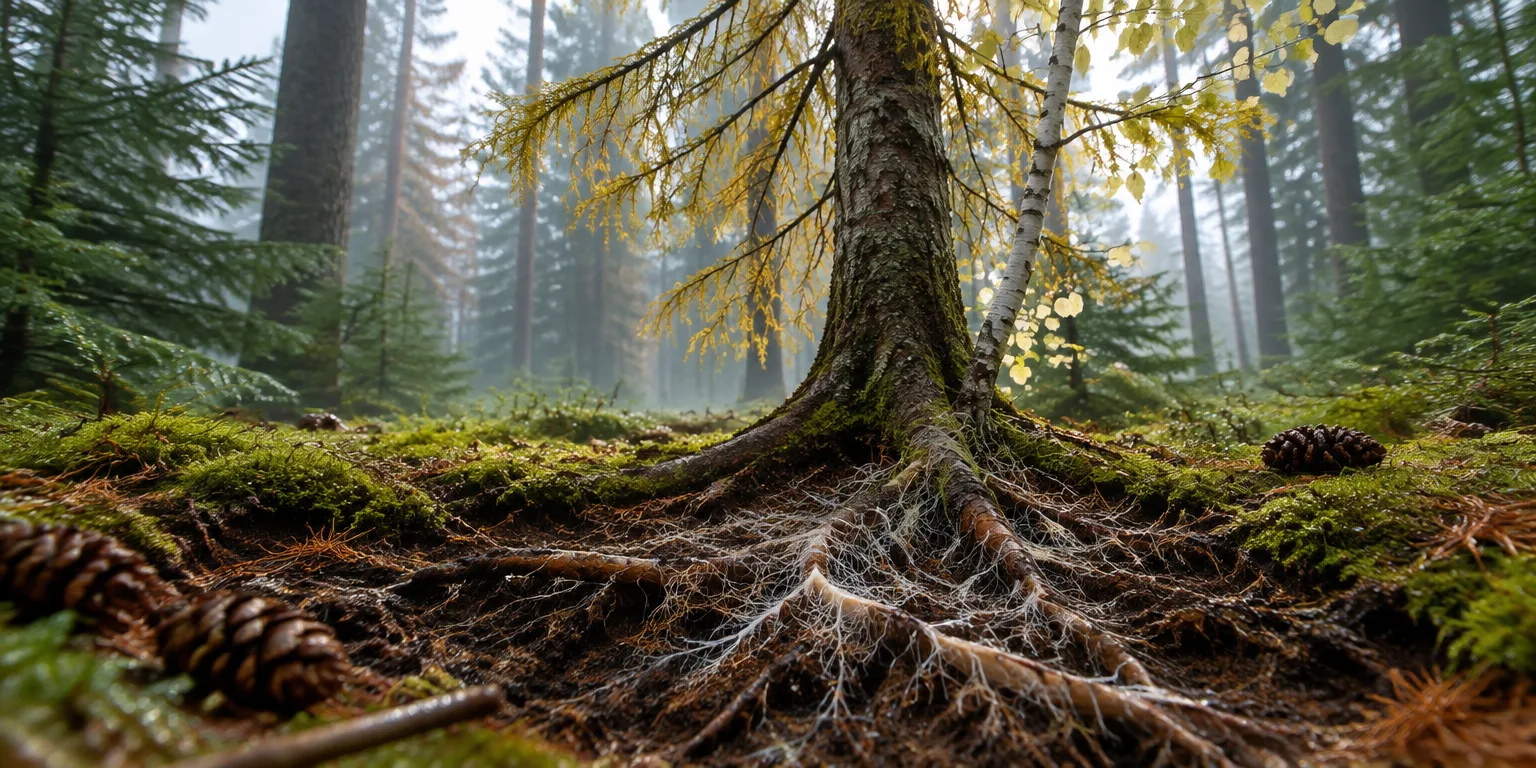
In later experiments in Douglas fir forests, Suzanne Simard, a forestry scientist, found that a stressed or sick fir alerts the trees growing around it. Those neighbors produce more defense enzymes, proteins that help a plant fight infection, and resist disease better.
The message travels through the underground fungal web. The fungi grow through the soil collecting water and nutrients for the tree. In return, the tree gives them sugars it makes from sunlight.
When the neighbor is a birch sharing the same network, the fir gets extra help from antibiotic-producing bacteria linked to the shared network.
Simard called it "like a public immunization system," meaning sick trees prompt shared defense in their neighbors.
Questions people ask
Do trees warn only their own species?
No. Simard's work centers on Douglas firs warning other Douglas firs, but also on exchanges between Douglas fir and paper birch sharing the same fungal network. In her tests, a birch neighbor gave the stressed fir an added benefit from antibiotic-producing bacteria linked to that shared network.
What does a defense enzyme actually do for a tree?
They are proteins that help a plant fight infection and limit damage. In trees they can help break down invaders, strengthen cell walls, and dial up other chemical defenses. Making more of them after a warning leaves the neighbor better prepared if disease spreads.