Simple liquids can crack at up to 1,500 meters per second
The likely reason is the lack of stretch to absorb energy, letting the breaks run thousands of times faster than in complex fluids.
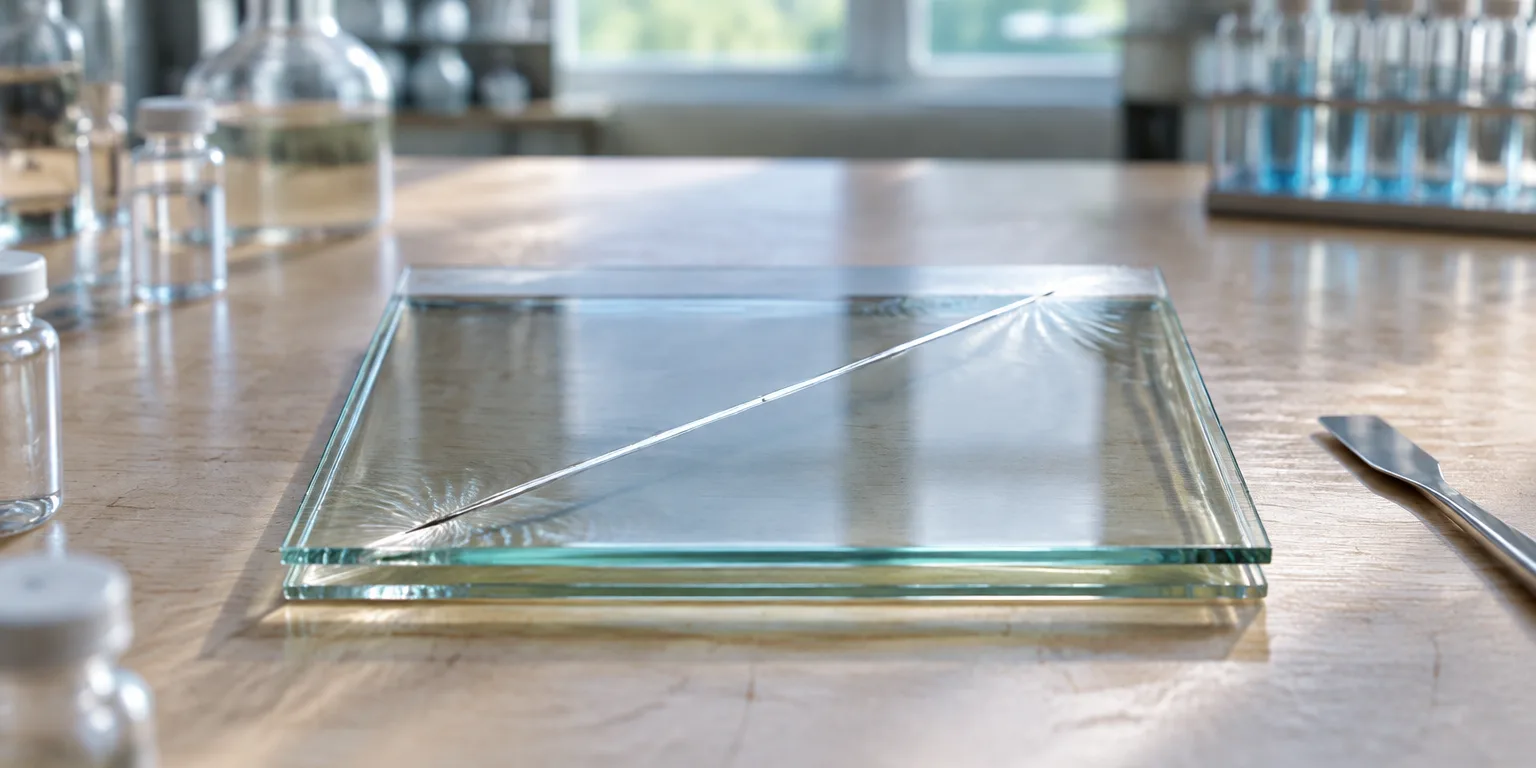
 Quanta Magazine · We Know Simple Fluids Can Flow. Turns Out, Some Can Fracture.
A crack can tear through a simple liquid at 500 to 1,500 meters per second. That is thousands of times faster than the roughly 0.07 meters per second measured in melted polystyrene, a springy and complex fluid.
Nicolas J. Alvarez, a researcher at Drexel University, said that once a crack starts in a simple fluid, "that crack can propagate as fast as physics will allow it." One explanation is that, in a complex fluid, long chains of molecules absorb energy as they break.
The difference may show in the shape. Cracks in complex fluids open in the flared shape of a trumpet horn, while cracks in the simple liquids look like cracks moving through glass.
Questions people ask
How fast is 1,500 meters per second in everyday terms?
It is about 3,350 miles per hour, faster than sound travels in air. Sound moves at about 343 meters per second at sea level, so 500 to 1,500 meters per second is roughly 1.5 to more than four times the speed of sound. It is in the range of a high-powered rifle bullet.
What makes a fluid simple?
A simple fluid is made of small molecules with no long, tangled chains, so it flows rather than stretches and snaps back. Honey, water, and light oils are familiar examples, though not all have been seen to fracture. A complex fluid contains polymers or other large structures that give it stretchiness, or elasticity.
Why would stretchiness slow a crack down?
Stretchy molecules can deform, untangle, and absorb energy around the tip of a crack. That dissipation bleeds off the driving force and forces the crack to creep forward. Without those molecules, there is little to absorb the energy, so the break runs almost unimpeded.