Skip the Big Launch Party and Pregame With a Waitlist
A dating app founder filled her first city with 500 obsessed users through door-to-door recruiting and cheap, small events.
 This Week in Startups · Pregame Your Launch Before Your App Exists (w/ Amanda Bradford) | E2355
Amanda Bradford, the founder of the dating app The League, spent four months building the first iPhone version while lining up its first users in San Francisco.
Instead of saving for one big, expensive launch party, she treated the launch like a college pregame, the small get-together before the party that she joked is often more fun than the party itself. She went door to door in person to collect names for a waitlist, and she landed press coverage before the app was live. That let her pick the strongest applicants for the founding group.
Her main move was to act like a socialite. If you are not one already, she advised, become one or find a cofounder who is. She went to events, showed strangers the early sign-up screens on her phone, and asked what they thought of the onboarding and what they liked and disliked about current apps. People who gave feedback were called founding members and promised first dibs when the app opened. She said that work matters most for a double-sided marketplace, an app that needs two groups, here women and men, to show up at once, or it feels empty.
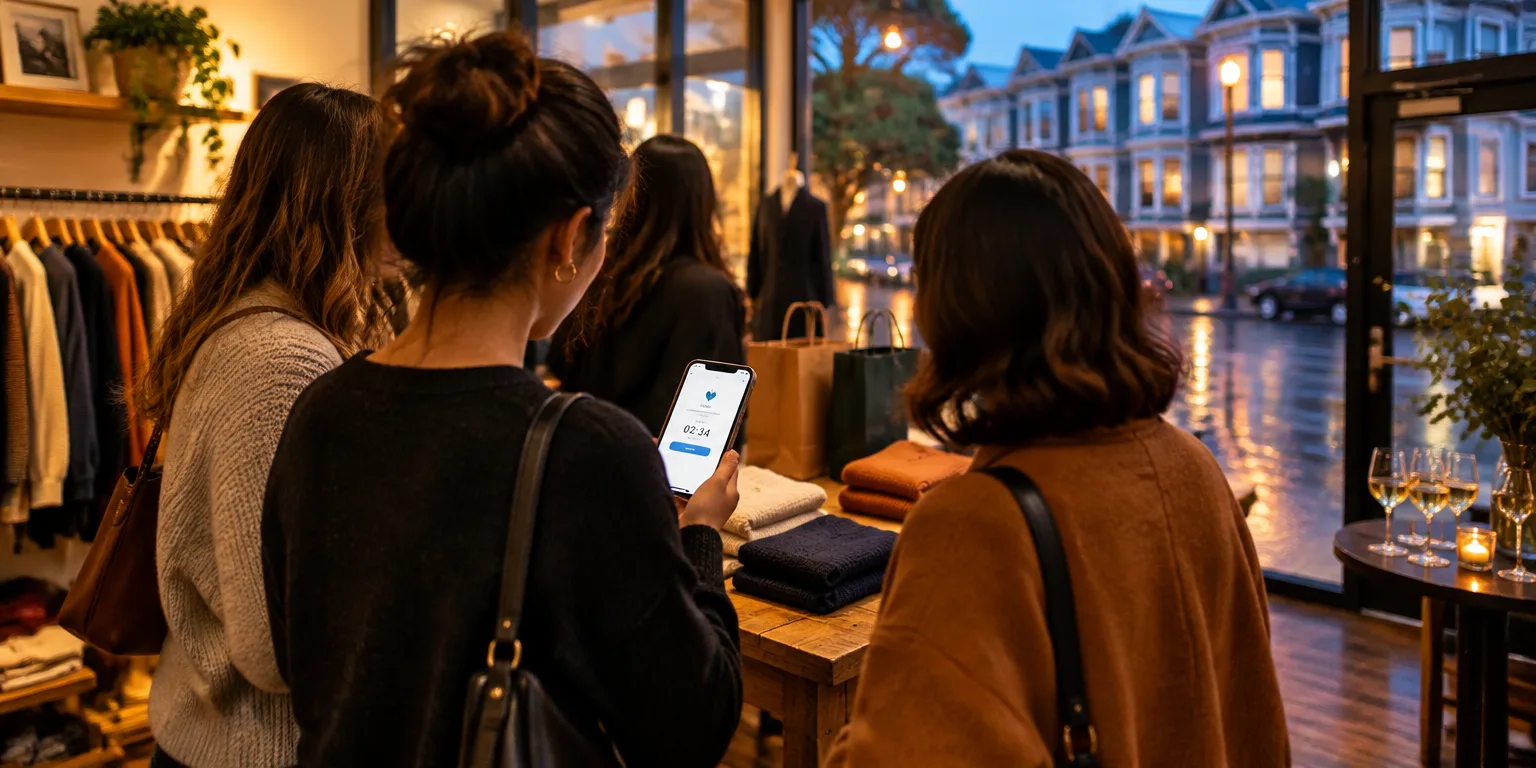
She paired that recruiting with a series of small gatherings, not open bars. She hosted a wine night to collect feedback from women, an after-hours shopping event, and a workout class. She kept costs down by using capacity businesses were not selling anyway. A local store agreed to stay open an hour later for about $300 in guaranteed sales, and her crowd of about 60 women spent well over that amount. A fitness studio handed over a hard-to-fill time slot for free.
For a boat party during the Blue Angels show, the Navy flight demonstration team that flies during Fleet Week, she rented months in advance, charged $300 a ticket, and made a couple thousand dollars. On the waitlist screen, she showed a live countdown of how many spots were left for women and for men, which gave people a reason to invite friends.
On launch day, she admitted only about 500 people, up from 419 starters. As she put it, it is better to have 500 people obsessed with the app than to open to 5,000 people while still figuring out what is wrong.
Questions people ask
How do you get a local business to host you for free?
She asked a store to stay open an hour later in exchange for about $300 in sales. About 60 women came, and the group spent well over $300. She used the same approach with a fitness studio, which gave her a hard-to-fill time slot for free.
What do you actually say when you walk up to a stranger?
Keep it short and specific. Show one screen on your phone, ask what they would change, and ask what frustrates them about current options. End by offering founding member status and early access, which turns feedback into an invitation rather than a sales pitch.
Why start with only 500 users?
Bradford framed it as a choice about quality, not size. She said small is better, arguing that 500 obsessed users beat opening to 5,000 while still sorting out problems. For her, the small start was a way to learn before expanding.