Soaking-wet algae and sewage can be cooked straight into crude-like oil
Superhot, pressurized water does the work, yielding an oil with roughly twice the energy of conventional bio-oil.
Harvested algae can be 80 to 90 percent water, more soup than crop. Sewage sludge and food processing leftovers arrive just as wet, typically in the range of 70 to 90 percent moisture. Two common ways of turning biomass into fuel, pyrolysis and gasification, require substantial drying first, adding costly dewatering steps.
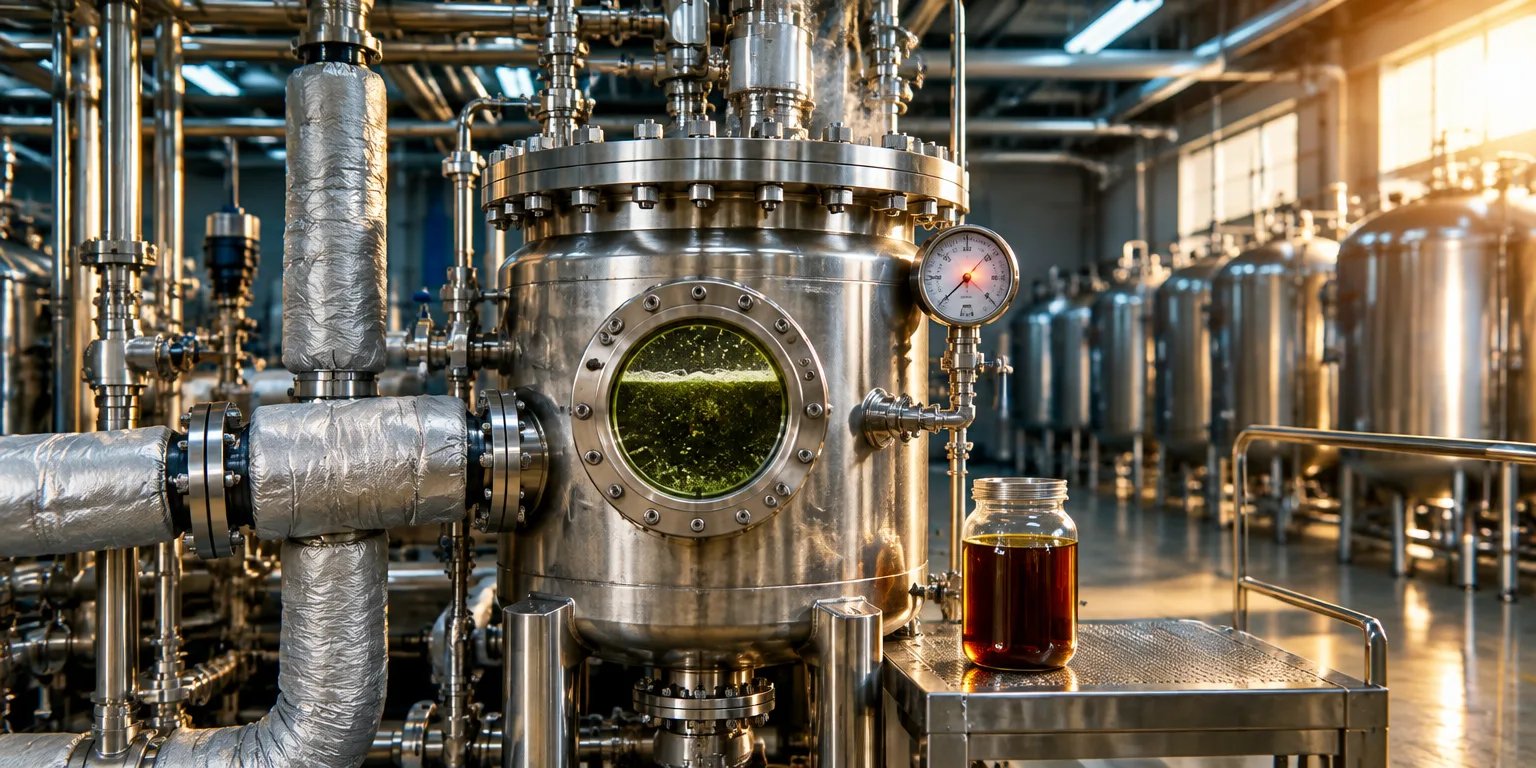
A method called hydrothermal liquefaction skips that drying and cooks the wet mixture as is. Think of it as an industrial pressure cooker. Operators heat the soggy material to 250 to 370 degrees Celsius under pressures of 10 to 25 megapascals, which keep the water liquid even though it is far hotter than boiling.
At that point, water takes on altered properties, including a reduced ability to shield electric charges and increased chemical reactivity. It acts at once as solvent, reactant, and catalyst. In that hot, pressurized state, it breaks apart the large molecules in biomass, carbohydrates, proteins, and fats, and lets them reassemble as a thick, energy rich liquid called biocrude, a crude like oil made from biomass.
That biocrude packs 30 to 37 megajoules per kilogram, approaching fossil petroleum. By comparison, the bio oil made by pyrolysis, which requires feedstock dried below 10 percent moisture, holds only 15 to 20 megajoules per kilogram.
The shortcut is not complete. The biocrude still holds a lot of oxygen, nitrogen, and sulfur, which make it less stable and mean it needs further refining. A cleanup with hydrogen over catalysts is typically used downstream to turn it into diesel and jet fuel, and high pressure reactors have so far limited the method mainly to pilot and demonstration plants.
Questions people ask
Why is avoiding drying such a big deal?
Pyrolysis requires feedstock below 10 percent moisture, so it needs extensive drying before algae or sludge can be used. Hydrothermal liquefaction directly processes material at 70 to 90 percent moisture, eliminating those costly dewatering steps.
What happens to everything that does not become oil?
Oil is only one of four outputs. The process also makes a watery stream rich in organic acids and nutrients, a gas that is mostly carbon dioxide with small amounts of methane and hydrogen, and a solid called hydrochar. The water can potentially be recycled to grow more algae, and the hydrochar can be used for soil improvement or made into activated carbon.
Is anyone actually doing this?
Demonstration plants in Europe, North America, and Asia have tested it on algae and wet wastes. The review describes it as a near commercial option for those feedstocks, with high pressure equipment and catalyst wear still limiting wider use.