Some Clocks Keep Time by Counting the Grid's 60 Pulses a Second
That steady pulse is one reason engineers work to keep frequency stable, along with protecting equipment from brownouts and surges.
 Practical Engineering · How Does the Power Grid Work?
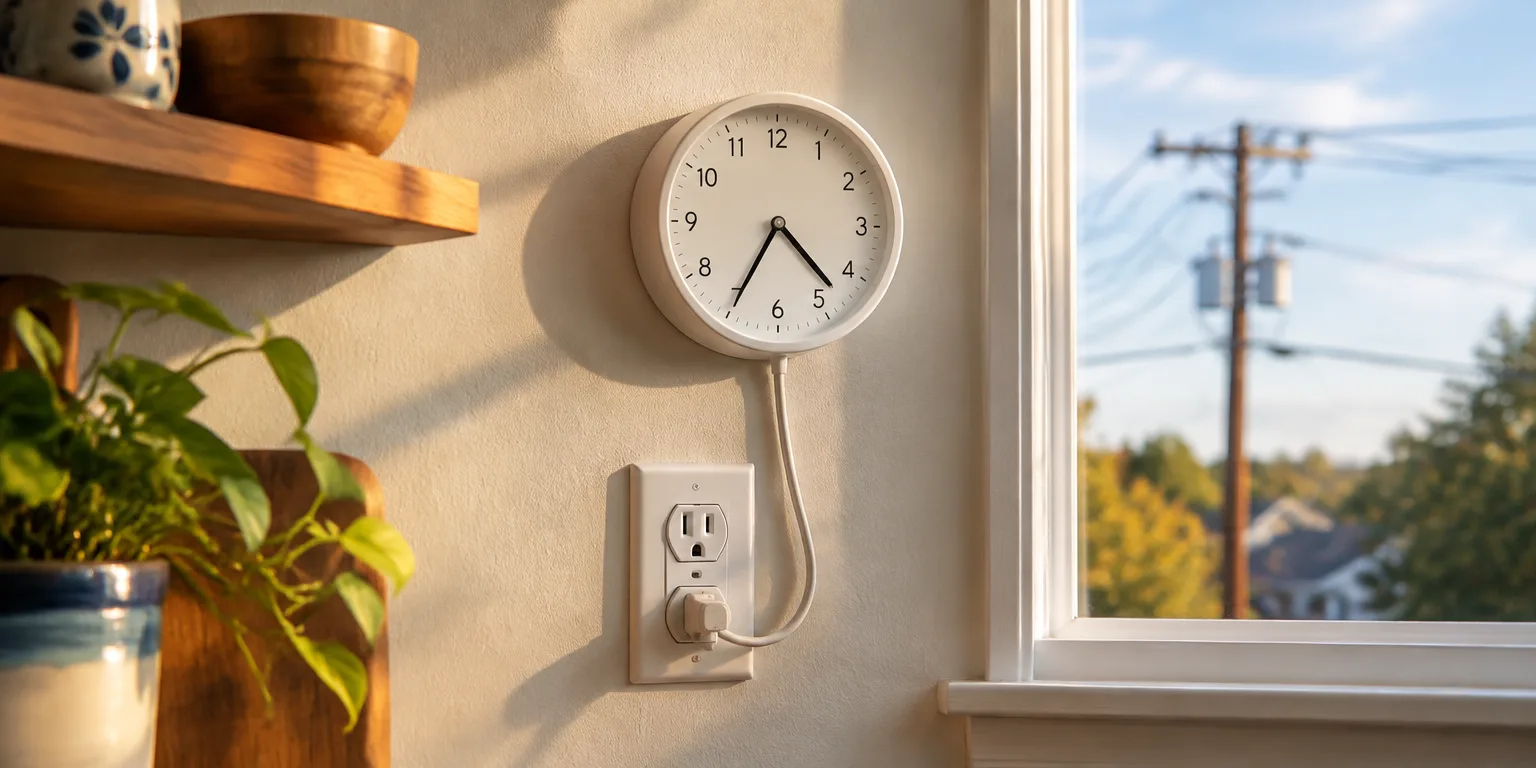
Some clocks keep time by counting the electricity in the grid, which pulses 60 times per second in North America.
That electricity is alternating current, where the flow repeatedly reverses direction. Some clocks count each cycle and treat 60 cycles as one second.
Frequency is those 60 cycles per second, and engineers count steady voltage and frequency as power quality, meaning both stay correct and stable. Counting cycles to keep time is one reason the frequency must not drift. If voltage moves away from its correct level, it can cause brownouts or surges.
A large grid helps hold the line. Spinning generators connected together act as a buffer against sudden changes from equipment faults or fast-changing loads.
Questions people ask
Do all plug-in clocks work this way?
No. Many modern clocks, watches, and phones use quartz crystals, computer signals, or radio signals from atomic clocks. The grid-counting trick shows up mainly in some plug-in alarm clocks, stove clocks, and other devices that run directly on wall power.
Is it 60 times per second everywhere?
In much of the world, including Europe and Asia, the grid runs at 50 cycles per second. Engineers there design compatible devices to count 50 pulses per second. A clock built for one system will run fast or slow on the other.
What keeps the frequency from drifting?
Small wobbles happen all the time as supply and demand shift, and the spinning generators help absorb them. Large, sustained departures are rare because operators add or remove generation to bring the frequency back, since motors, clocks, and other equipment expect it to stay close to normal.