Some white blood cells explode into toxic traps spun from their genetic material
The traps can keep killing bacteria even after the cell that made them is dead.
 Kurzgesagt – In a Nutshell · How The Immune System ACTUALLY Works – IMMUNE
Some of the white blood cells that defend your body kill germs by blowing themselves up and throwing out sticky traps spun from their own genetic material.
They are called neutrophils, and they are short lived killers. They die on their own only a few days after they are born, so they do not have time to accidentally destroy the body from the inside.
When hundreds of thousands of them rush to an infection, they attack carelessly. They spit out deadly chemicals and swallow germs, even though the chemicals also injure nearby healthy cells.
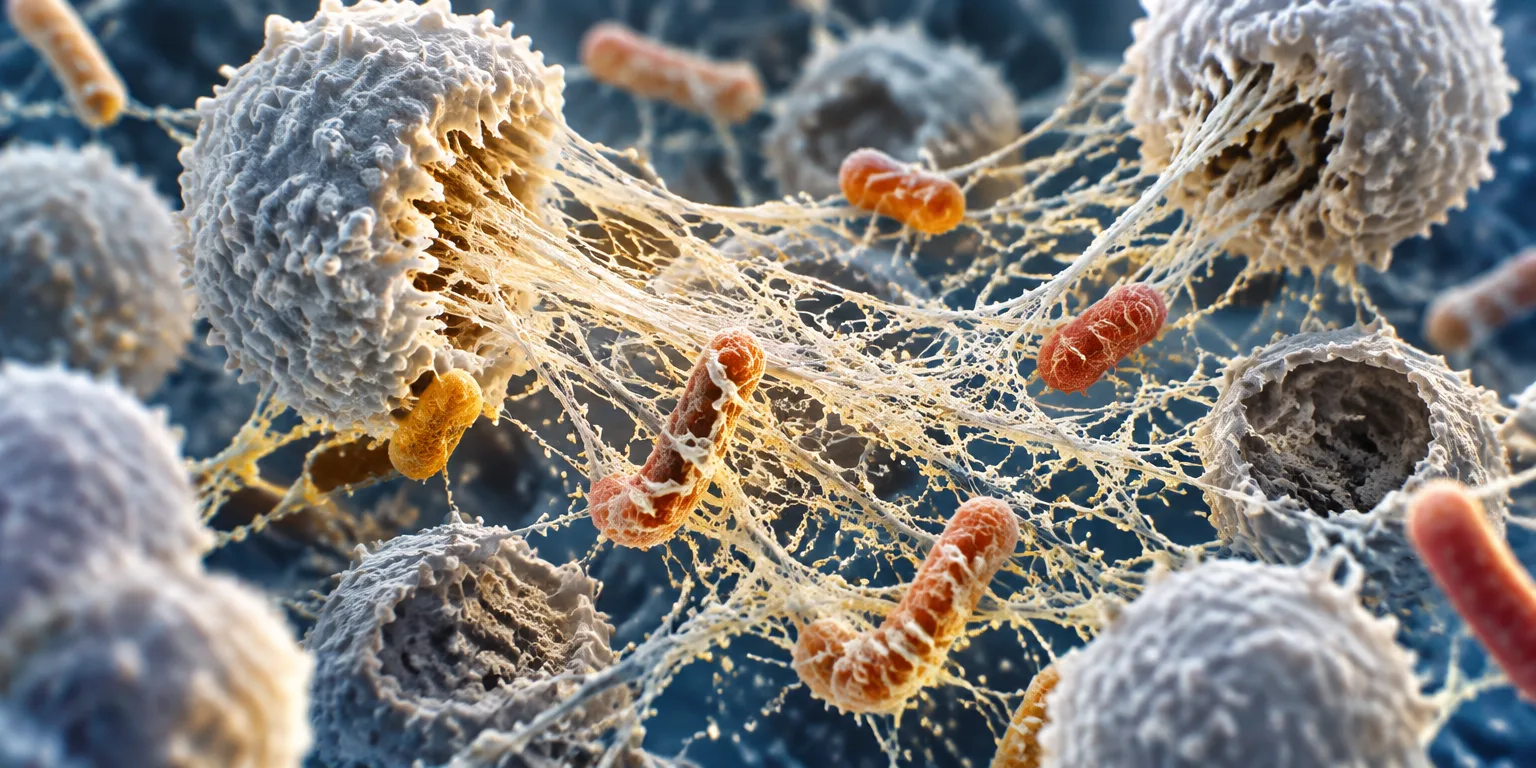
In the most extreme case, some neutrophils hit a self destruct button. They explode and cast wide nets of DNA laced with poison, which trap and kill bacteria. Sometimes the nets can keep fighting after the cell that made them is already dead.
Questions people ask
Do these explosions harm the body too?
Yes. The same chemicals that kill bacteria also injure nearby healthy cells, and leftover nets can prolong inflammation if they are not cleared. In a normal infection, cleanup cells remove the debris once the germs are gone, so the damage heals.
Why use DNA as a weapon?
DNA is long, sticky, and abundant, since every cell carries a full copy. When it is thrown outward and coated with toxic chemicals, it becomes a wide snare that bacteria cannot easily swim through or escape.
How can the body afford to lose so many cells?
Most neutrophils live only a few days. The bone marrow constantly makes replacements, so hundreds of thousands can rush to an infection whenever chemical alarms call them in.