Something Comes Over People Next to a Great White Shark
The crew said the veteran was safe, and the operator said the urge to touch the shark comes from how the animal affects people up close.
 Global News Podcast · Bolsonaro declares himself 'Brazil's leader'
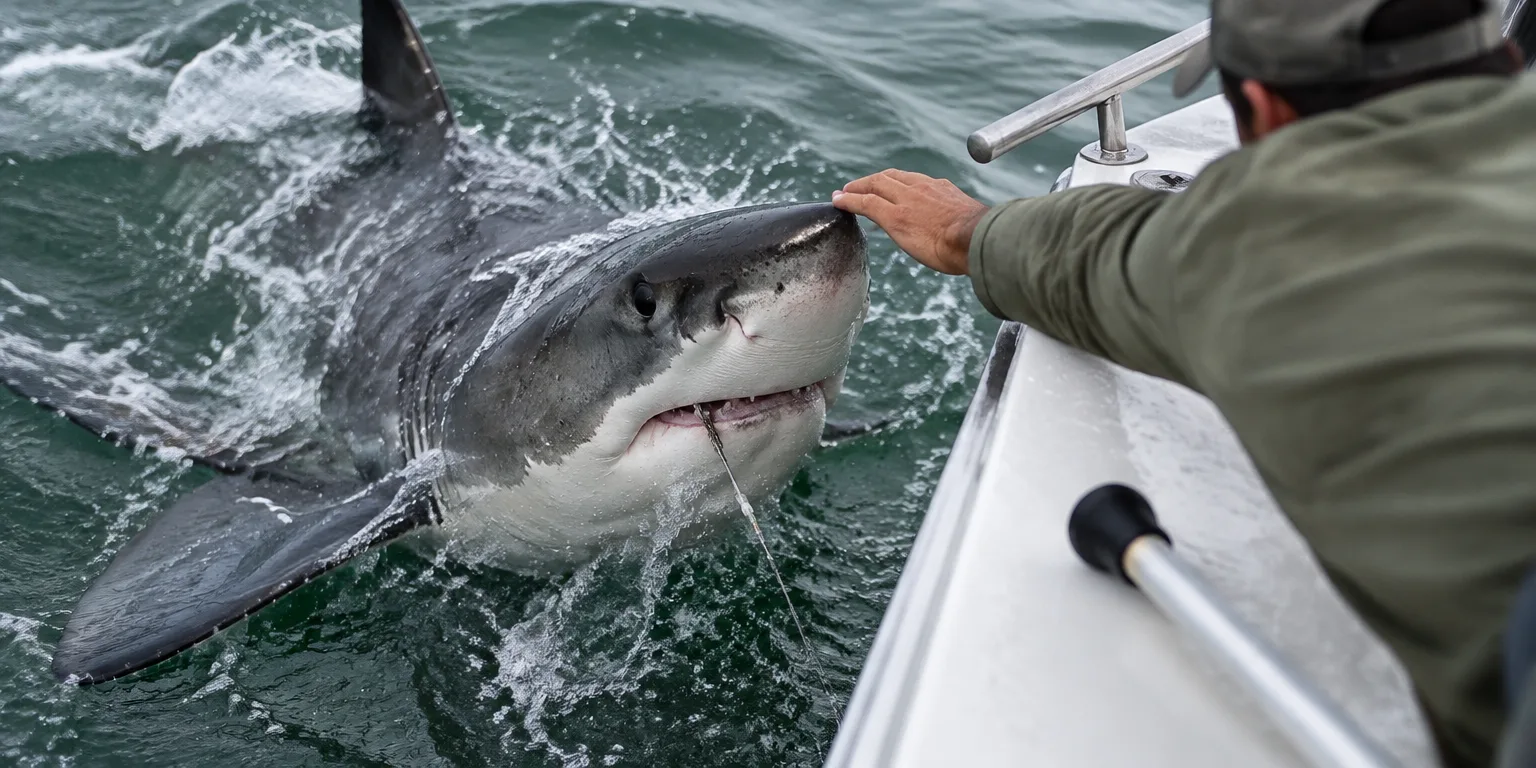
The audio catches voices from the boat shouting, "careful, careful, careful." A woman veteran is leaning over the side off the coast of Georgia, reaching toward the head of a great white shark beside the boat.
The shark, with a hook in its mouth, thrashes and lunges backward. The clip spread online, drawing both admiration for her nerve and disbelief that she would try to touch such an animal.
The outing was with Not Lucky Fishing, a company that brings veterans aboard to catch sharks, attach tags, and release them so scientists can track the animals over time. The crew said she stayed out of harm and the shark was kept under control, but called the thrash "a reminder of the importance of respecting wildlife."
Jimmy Armill, a former United States Army Ranger who runs the company, was filming the tagging. He said guests are sometimes allowed to safely place a hand near the dorsal fin, the upright fin on the back, while the shark is beside the hull. This reach was different. "I just see her like reaching for the head and I'm like, oh no," he said.
Armill described that pull in his own words: "I think sometimes something just comes over people," he said. He said having one of the animals by the boat feels very magical, that there is a vibe that comes with them, and that they are just so majestic.
Armill said he avoids swimming for fun and is frightened of the water, yet added, "I would love to swim with a white shark one day." He added, "These animals do something to some people."
His first meeting with one came while he was fishing close to the beach in winter for sheepshead, a blunt-headed coastal fish. He noticed a large shape under the boat where no shark should have been in cold water. It rose to the surface, a great white about eight feet long, which he later learned was still only a baby. It showed no fear, he said, and circled the boat three times, slowly and deliberately, before swimming away.
The first time he held one beside the boat for tagging, a fish of about 1,000 pounds, he touched it, looked into its eye, removed the hook, and helped it swim off. He called it "the most beautiful feeling you can imagine."
That feeling is what he tries to share. Most of the veterans who come out are not anglers and do not own boats, he said, so the chance to work beside such a large wild animal is rare. The trips supply data meant to help preserve the sharks, and he said watching strain leave the faces of former service members, as the work helps them heal, is its own reward. Watching veterans recover, and watching a white shark leap clear of the water, he said, never gets old.
Questions people ask
Why catch and release a great white shark to tag it?
Tagging usually means attaching a small tracker or numbered tag near the dorsal fin before release. Scientists use the returns to follow migration, growth, and survival, which helps shape rules about fishing and protection.
Is it legal to catch a great white shark?
Yes, in United States waters white sharks are protected and directed fishing for them is prohibited. Research groups work under federal and state permits that set strict rules for gear, handling time, and release.
How dangerous are great whites to people in boats?
They are powerful predators with large teeth and a bite shaped for seals and fish, so any contact carries risk. Most injuries happen when people enter the water near feeding seals or try to touch a restrained animal.