Spain Took Impregnable Antwerp With a Half-Mile Bridge That Survived Fire Ships
The 13-month siege squeezed Europe's richest city and sent 60,000 people, many of them merchants, fleeing north.
 The Rest Is History · The Shadow War: Elizabeth I vs The Catholics (Part 4)
The rebels' fire ship did its work. Packed with explosives and sent drifting toward the Spanish bridge, it blew up and incinerated an entire section of the structure, killing 800 Spanish soldiers.
Parma did not panic. Alexander Farnese, the Prince of Parma, was an Italian-born prince who since 1578 had held Spain's top civil and military commands in the Low Countries. Jeffrey Parker, the historian of the Dutch revolt, called him able and resourceful, and by 1584 he had pulled Spain's collapsing cause in the Low Countries back from the brink.
This is the story of how he took the city no one thought could be taken. Antwerp was the biggest and richest city in the Low Countries, the cluster of trading towns in what is now the Netherlands and Belgium. It had been bankrolling the Dutch Protestant rebellion against Catholic Spain, and it controlled the Scheldt, the wide river mouth that connected the cloth towns of Ghent and Bruges to the North Sea and to trade with England. Behind massive fortifications, it was considered impregnable.
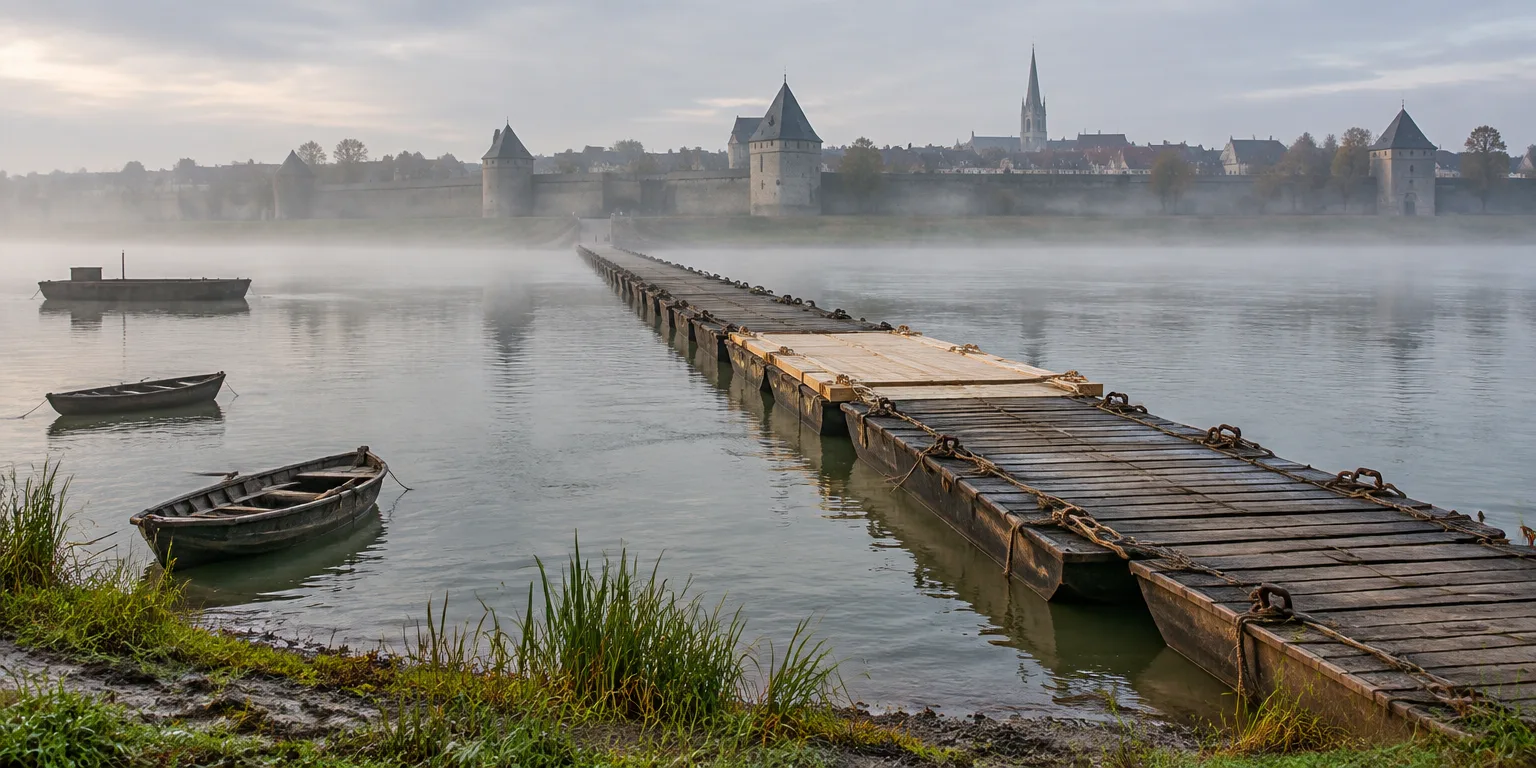
Parma, who liked a challenge, besieged it in June 1584. He built a network of forts to cut Antwerp off from the land, but the decisive move was to cut it off from the sea. His men lashed boats together into a floating pontoon bridge across the Scheldt, almost half a mile long. His admirers boasted that it was twice the length of Julius Caesar's famous bridge over the Rhine.
The rebels in the north were desperate to break it. They sent in what they called hell burners, fire ships loaded with explosives. After the blast that killed the 800 men, Parma had the gap repaired before rebel ships could force their way through. When the rebels tried again in late May, the tide turned and swept their own explosives-packed fleet back toward their lines. Parma held the river.
After 13 months, on August 17, 1585, the richest city in Europe surrendered. The Spanish troops were, by the standards of the age, very well behaved, and Parma offered generous terms. Antwerp was restored to Catholicism, but Protestants were allowed to leave. About 60,000 of the city's 100,000 people did, many of them bankers and merchants. Most headed north to Holland, and to a new trading city called Amsterdam.
Questions people ask
What exactly is a pontoon bridge?
A pontoon bridge is a floating bridge made by lashing boats or barges together and laying planks across them. Armies have used them for centuries to cross rivers too wide or deep for a permanent bridge, and they can be taken apart or repaired in sections.
Why was Antwerp so valuable?
Antwerp sat at the head of the Scheldt estuary and handled much of the trade and banking business of northern Europe. It was probably the richest city in Europe, so Spain gained a great deal of money by taking it.
What happened to the 60,000 people who left Antwerp?
Most went north to Holland, especially Amsterdam, taking their money, ships, and trading contacts with them. Their arrival helped turn Amsterdam into the great commercial capital of the 1600s, while Antwerp, now Catholic and under Spanish rule, went into long decline.