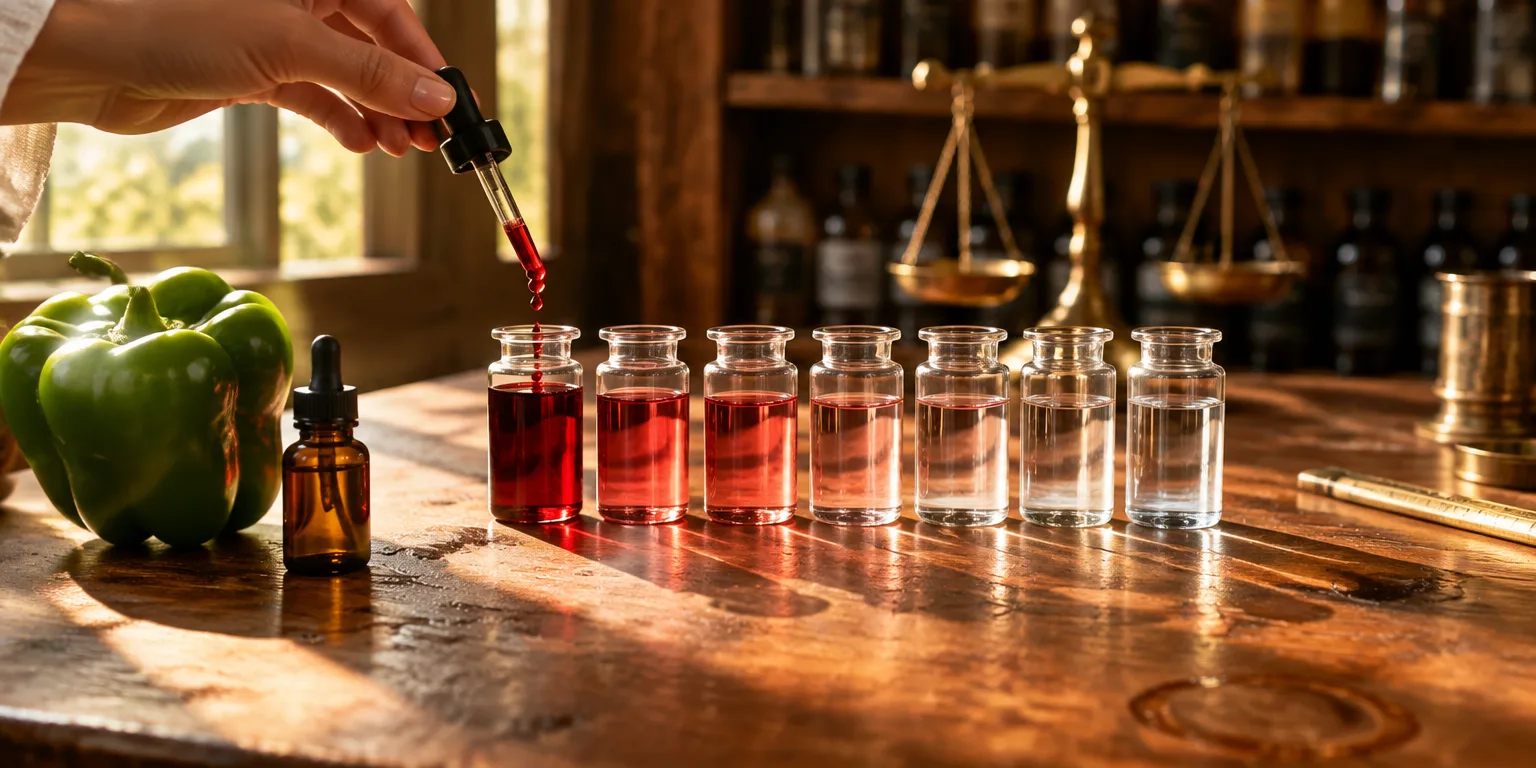
Spiciness is measured by how much you dilute it until the burn stops
A bell pepper scores zero, while Tabasco sauce must be diluted more than a thousand times before the burn disappears.
 TED-Ed · The science of spiciness - Rose Eveleth
Spiciness is scored by how far a pepper extract can be diluted before people can no longer feel the burn.
The test was created in 1912 by pharmacist Wilbur Scoville, who had tasters sip ever more diluted pepper extract until the heat disappeared. The system is called the Scoville scale after him, and scores are given in Scoville heat units. A sweet bell pepper scores zero, while Tabasco sauce scores between 1,200 and 2,400 units, meaning a drop must be mixed into that many drops of water before the burn stops.
Modern labs mostly measure the heat chemicals directly and convert the result into Scoville units, rather than running large taste panels. The score is still the dilution needed to stop the burn.
Questions people ask
Why does water not stop the burn?
Capsaicin, the main heat chemical in chilies, does not dissolve well in water, so water mostly spreads it around the mouth. Fat and the protein in milk dissolve it more easily. That is why milk or yogurt calms the burn better than a glass of water.
How hot are the hottest peppers?
Two peppers often cited as the hottest, the Trinidad Moruga Scorpion and the Carolina Reaper, measure between 1.5 and 2 million Scoville heat units. That is about half the strength of pepper spray. Eating them triggers a strong heat response, including sweating and a faster heartbeat.