Spicy Food Is Not a Taste, It Is Your Brain Thinking You Are on Fire
The burn trips the same pain sensors as a hot stove, and your body responds with sweat and a racing heart.
 TED-Ed · The science of spiciness - Rose Eveleth
Bite into a chili pepper and your mouth feels like it is on fire. In a way, your brain is convinced that it is.
Sweet, salty, and sour are tastes, picked up by taste buds. Spiciness is something else entirely. Certain compounds in spicy foods switch on sensory neurons called polymodal nociceptors, pain sensors found all over the body, including in the mouth and nose. They are the same sensors that fire when skin meets something scalding.
So when you eat a hot pepper, there is no rise in temperature. There is a false alarm. The heat sensors send their usual danger signal, and the brain concludes that the mouth is burning.
Mint pulls the same trick in reverse. Its cool compound, menthol, activates cold receptors, so the mouth feels chilly even though nothing got colder.
The body takes the warning seriously. Believing it has touched something dangerously hot, it triggers the body's general emergency alarm for danger. You sweat, as if to cool down, and your heart beats faster.
That is the strange deal with spicy food. Peppers set off an ancient defense system for burns without causing a burn at all, and leave your body bracing for a fire that was never there.
Questions people ask
What actually helps soothe the burn?
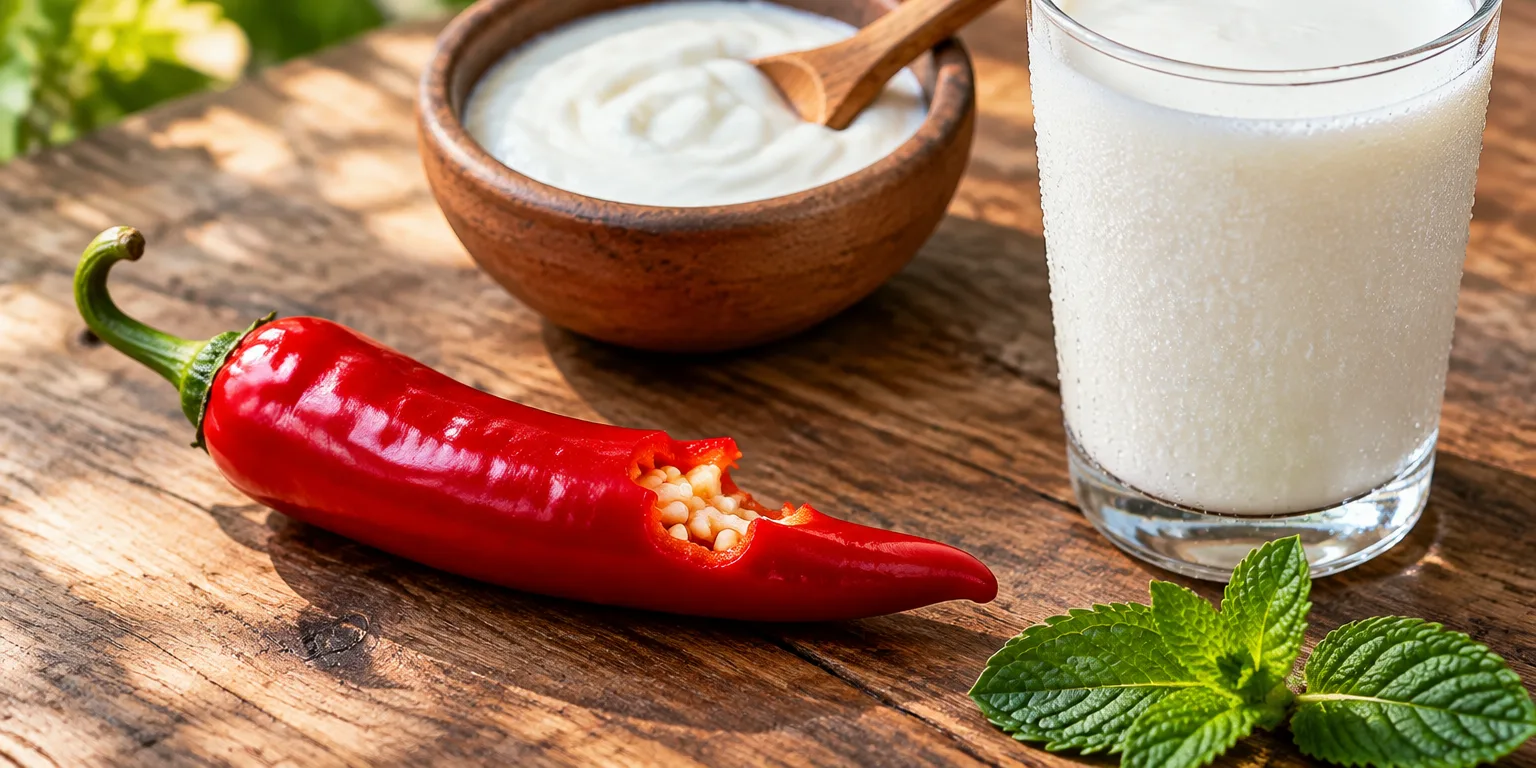
Dairy often helps because the burn comes from oily compounds that water cannot wash away. Milk, yogurt, and ice cream contain fats and a protein called casein that help dissolve those compounds and carry them off taste sensors. Water tends to just spread the oil around, which is why it rarely brings relief.
Why does mint feel cold when nothing is cold?
Mint contains menthol, which switches on the sensors that normally detect cold. Like heat sensors, those cold sensors can be triggered chemically without any change in temperature. The brain reads the signal as coolness, which is why mint gum or toothpaste feels chilly.
Do animals feel the burn from chilies too?
Most mammals do, because they carry the same type of heat-sensing pain receptors. Birds do not respond the same way, which lets them eat wild chilies and scatter the seeds in their droppings. That difference is thought to help pepper plants spread their seeds widely.