Spider silk is stronger than steel for its weight, and tougher
Weight for weight, silk can take about twice the pulling force of the strongest experimental steel, and the toughest kind absorbs 10 times more energy than Kevlar.
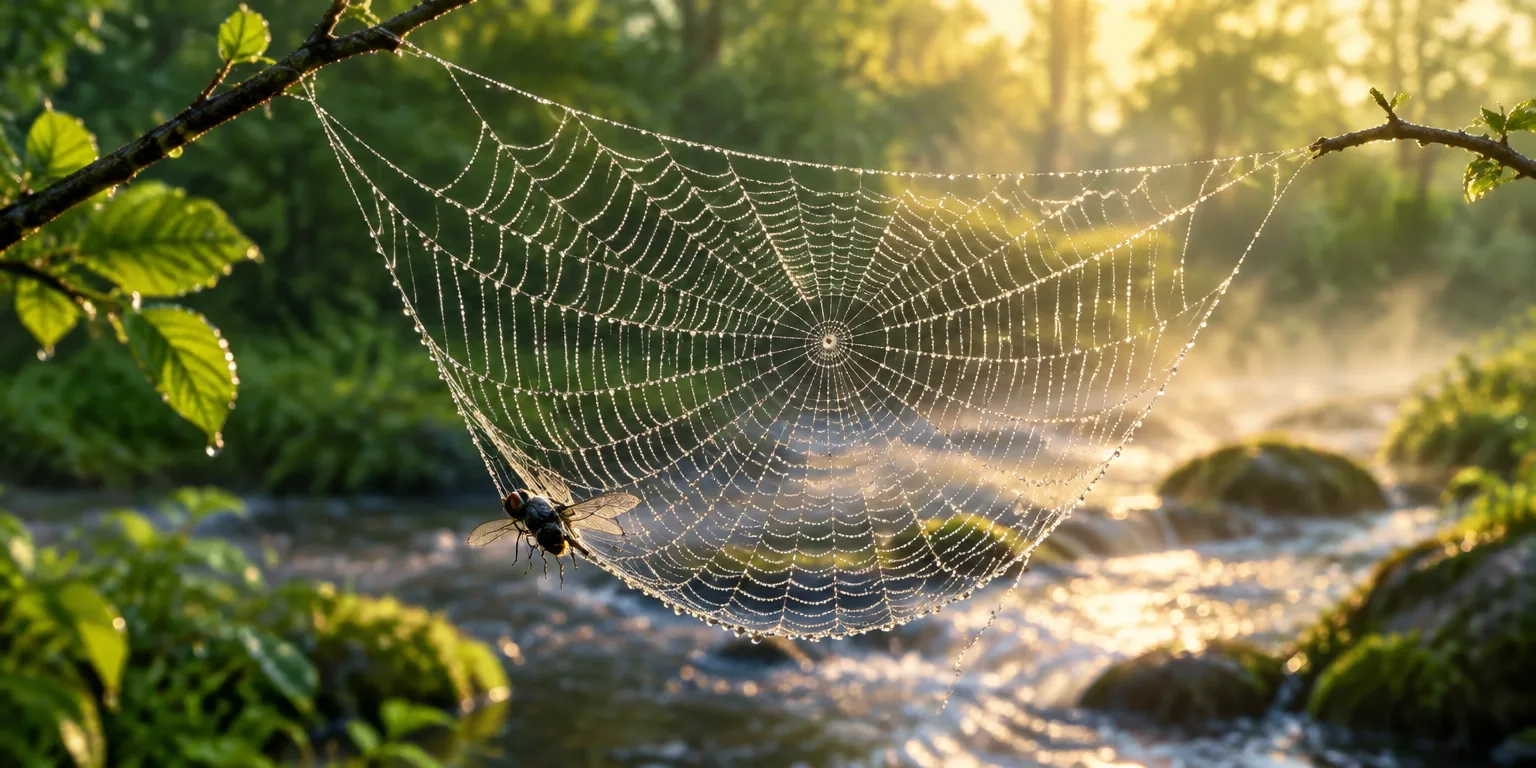
 Veritasium · Is spider web really stronger than steel?
The old line that spider silk is stronger than steel is almost true, but it leaves out the most important words: for its weight.
Pulled straight against each other, the strongest steels win. The strongest experimental steels can withstand nearly 3,000 megapascals of pulling force per area before snapping, with ultimate tensile strength meaning the pulling force per area a material can take before it snaps. That is about three times the strength of typical dragline silk, the strong silk that forms the spokes and frame of a web and stops flying bugs.
The catch is weight. Steel is about six times denser than silk. So if you make two ropes of the same length and the same weight, the silk rope is much thicker, with six times the cross section. With much more thickness offsetting lower strength per area, the silk rope still handles about twice the force before breaking. That weight adjusted measure is called specific strength, and there silk is the champion.
That is only half the story, said Henry, a researcher at the Blackledge Spider Lab at the University of Akron, because a web also has to absorb energy, not just hold weight.
Think of a rock climber who falls. Halting that drop abruptly creates enormous forces. Allowing the rope to elongate spreads the impact over time, keeping peak forces lower. A web faces the same problem when a bug hits. A stiff wall would stop the insect instantly, but it would bounce off. A stretchy web slows it down and holds it.
Silk stretches remarkably far. One dragline sample in the lab stretched 70 percent longer before breaking. Every bit of stretch soaks up a little more energy, and the total absorbed before breaking is called toughness.
There silk pulls far ahead. Kevlar, the fiber in bulletproof vests, tops out at 50 megajoules per cubic meter in toughness. Lab-made super-strong steel gets to about 170. That particular lab tested sample reached 205, about four times Kevlar. Silk from the Darwin's bark spider of Madagascar, which spins giant webs up to 25 meters across rivers, can reach 520, roughly 10 times Kevlar and three times the strongest steel.
Where weight counts and energy must be absorbed gently, silk beats even the experimental lab steels tested here, both on strength per weight and on energy absorbed per volume. Where weight does not matter, steel is perfectly fine.
Questions people ask
What is dragline silk?
Dragline silk is the strong structural silk spiders use for the frame and spokes of a web, and as a lifeline when they drop. A web also uses stretchier silk for the spiral, sticky silk to catch prey, and other silks to anchor the web and wrap victims, seven types in all.
Could a spider silk thread the same thickness as a steel wire hold more weight?
No. The strongest steels are still about three times stronger for the same thickness. Silk wins on specific strength, meaning strength divided by weight, because steel is about six times denser.
What is Kevlar?
Kevlar is a synthetic fiber developed by DuPont and best known for use in bulletproof vests and helmets. It is very strong and stiff, but because it does not stretch far, it cannot absorb as much energy before breaking as spider silk can.