Steve Jobs Sold Wireless Internet by Walking Across a Stage With No Wires
The AirPort demo paired a partner's wireless technology with Apple's ease of use.
 Stratechery · Do You Trust Apple? | Stratechery by Ben Thompson
The web page was still loading when Steve Jobs, Apple's chief executive, picked up the computer and started walking.
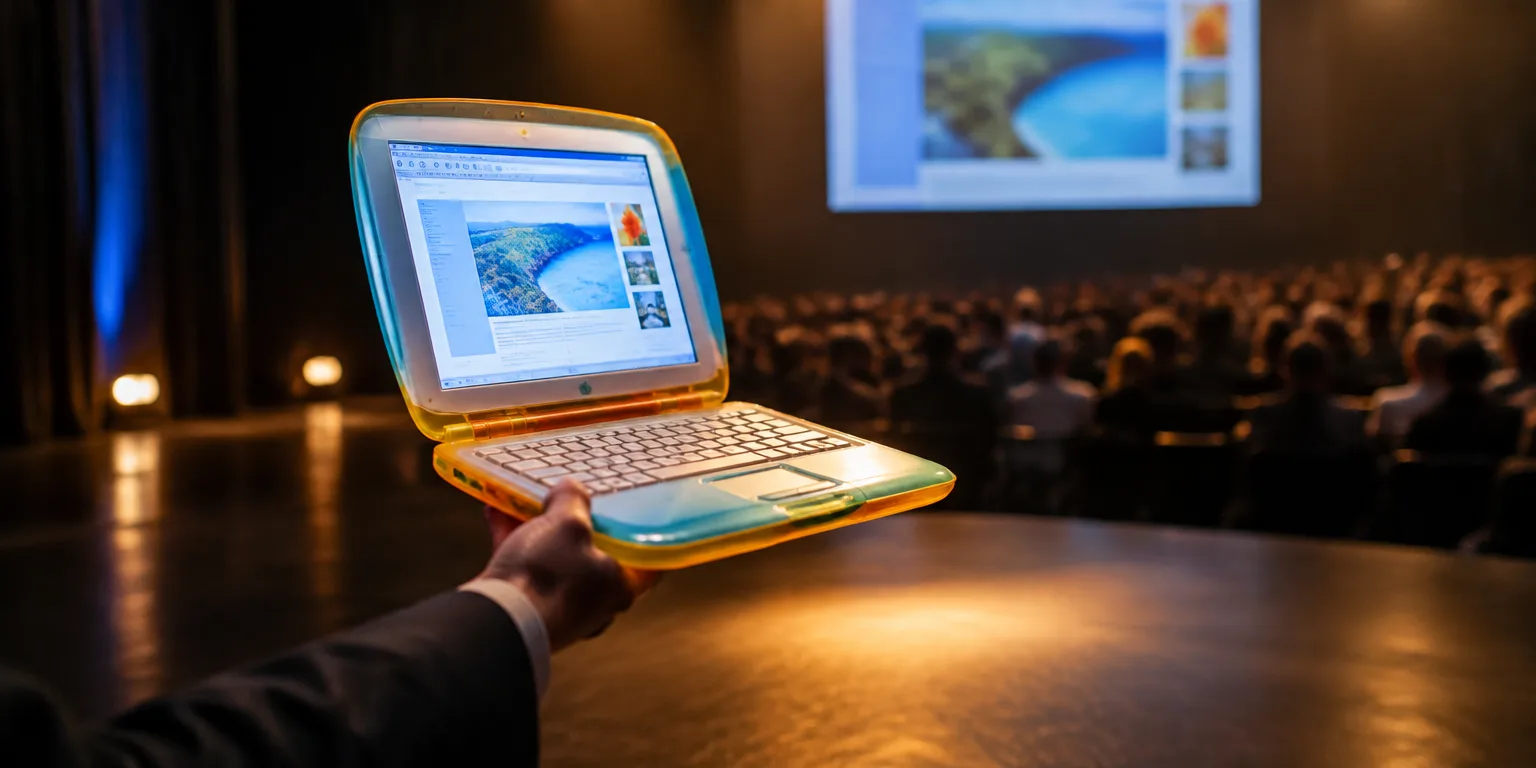
It was July 21, 1999, at Macworld in New York. Jobs had clicked from Apple's own site to CNN Interactive to Disney's site on the new iBook laptop, then carried the machine across the stage as the Disney page filled in. The crowd roared at the lack of wires.
"No wires. No wires. What is going on here?" Jobs said. He was introducing AirPort, Apple's name for Wi-Fi, a wireless network that ran at 11 megabits per second and used an industry standard called 802.11. That stroll made an invisible technology instantly clear.
Jobs told the crowd that other companies would adopt the same wireless standard over the next six to nine months. Apple, he said, would be there first and best, with encryption to keep what people sent private.
He had help. Apple had worked with Lucent, the telephone equipment maker behind the wireless technology, for 18 months to combine its radios with Apple's simple setup and to cut the price, which until then had been high.
Then he showed the hardware. First came the AirPort base station, the small station that would send the signal around a home or office, styled with Apple's attention to design.
Then came the computer itself. Jobs called the iBook the first computer designed from the start for wireless, with two antennas built into every machine and a slot for a small AirPort card.
Installation was the demonstration within the demonstration. Lift the keyboard, the same way Apple owners added memory, drop in the card, and connect the single antenna cable. The software found the card and set up wireless networking by itself.
It all happens automatically, Jobs said, the iBook now online with nothing attached to it. He had walked across a stage, and wireless internet looked simple, private, and ready to take home.
Questions people ask
Why was walking around on stage such a big deal?
In 1999, most laptops reached the internet through a phone jack or an Ethernet cable plugged into a wall or office network. Seeing a full web page load while the computer moved, with nothing attached, proved the connection was truly wireless.
Did Apple invent Wi-Fi?
No. Wi-Fi was an industry standard known as 802.11, developed by many companies. Apple was an early adopter, working with Lucent to package it simply and sell it to ordinary consumers.
What happened to AirPort?
Apple sold AirPort base stations and cards for nearly two decades before discontinuing the line in 2018. By then, Wi-Fi was built into almost every computer, phone, and home router, so Apple left the hardware to others.