Stop a story halfway and let children build their way inside it
Children build the sets, adults play the characters, and even a plan to blow up the school gets a role.
 TED Talks Daily · How imaginary worlds help kids learn | Anna Rainio
The lesson starts when the teacher stops reading.
Anna Rainio, a Finnish education researcher who studies Play Worlds with colleagues, describes a method in which a teacher reads the first half of a familiar tale and asks the class to resolve the rest. A teacher might read The Wizard of Oz up to the middle and ask the children to decide how Dorothy should find her way home.
The method is called Play Worlds. It was developed by Gunilla Lindqvist, a Swedish scholar, and is now studied by research teams around the world. It is joint play for adults and children, often organized around a book or work of art, from stories about Moomin trolls to Alice in Wonderland. Adults and children construct the world of the story in the classroom, then take roles in it and go on adventures together. Children steer what happens, while adults pay close attention.
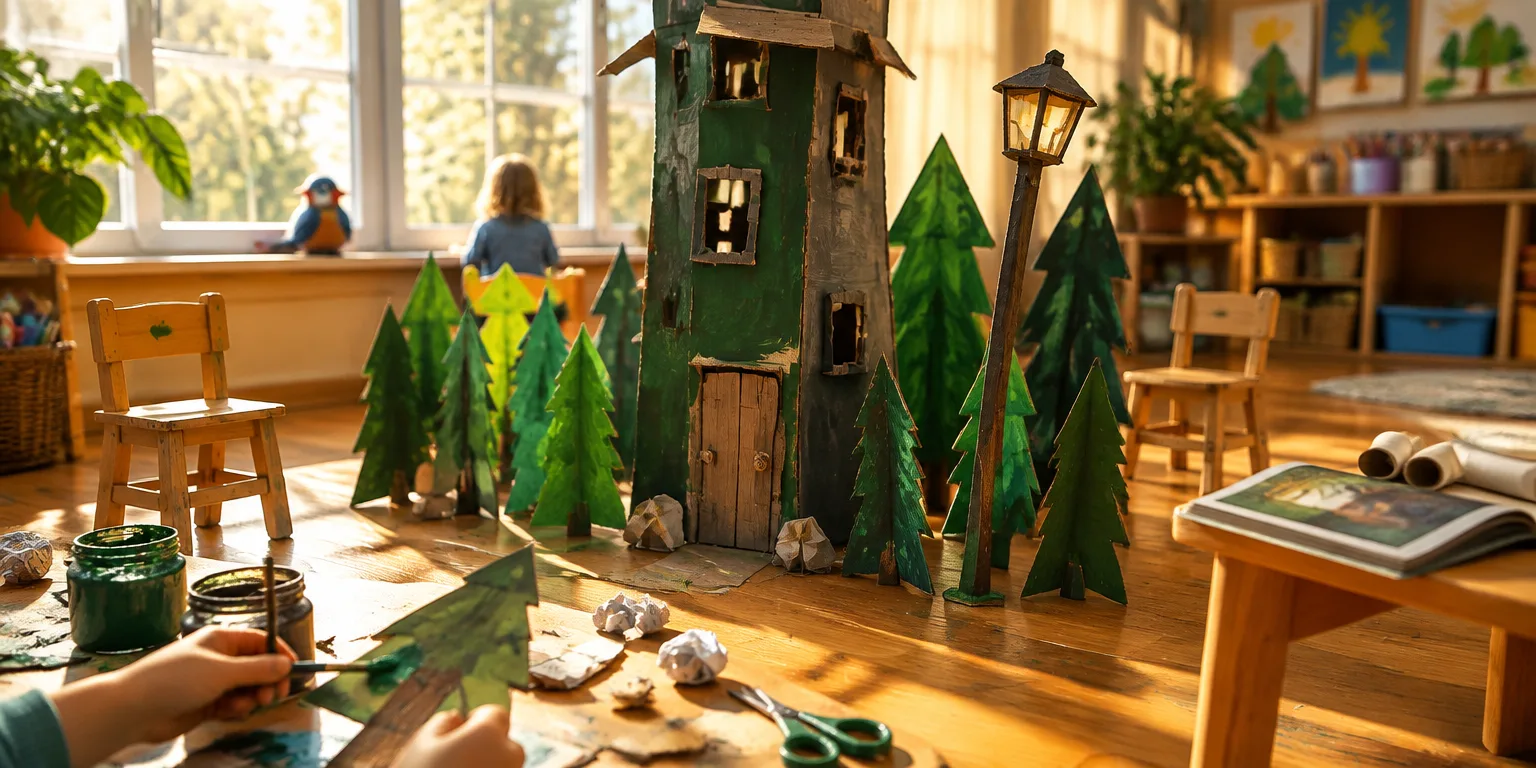
Construction is concrete. In one kindergarten class, teacher Johanna read aloud the first half of Baba Yaga, a Slavic folktale about a witch who traps travelers, and the class wrote and directed its own ending. Across that year, the children made hand-painted props, including Baba Yaga's tower, caves for magical creators, her trap, and trees and a lamppost for the forest.
Then the adults enter the fiction as characters. In another class, teacher Tom chose a picture book about Ruben, a bird that ends up in a child's bedroom and relies on the child to return home. After months away for COVID distance learning, the children came back to find a puppet Ruben on the classroom windowsill, performed by Tom. They sang songs to it, fed it, built it a nest in art class, and taught it math.
That shared fiction changes what disruption means. When the Baba Yaga class discussed how to free everyone from the witch, a child named Viola, who was often inattentive in ordinary lessons, proposed exploding the entire school to free the captive makers. The other children asked her to blow up some props instead, and she agreed. Later, when she was again restless, the teacher told her the rescue depended on her, warning that "her disruptive behavior might alert Baba Yaga." Viola checked that everyone was protected, threw the pretend bomb at the trap, and led a dramatic countdown. Rainio says that in most classrooms the behavior would have been treated as a problem: "But inside a play world, it made sense, and it even solved some problems."
Questions people ask
How long does a Play World last?
A school year in the Baba Yaga example, during which the class built props and developed the plot. Shorter Play Worlds can run for a few weeks, depending on the story and how long children want to keep playing.
What ages is this for?
Most often in preschool and the early grades, around ages four to eight. At those ages pretend play is still a natural way to learn, and children differ widely in how easily they sit still, follow directions, or trust adults.
Does any book work as a starting point?
Teachers tend to pick stories with a clear problem and room for invention, such as a lost character who needs help getting home. Familiar tales work well because children already grasp the setting and can quickly suggest what should happen next.