Straight men used to tell each other they cried and sit on each other's laps
Until the late 1800s, the opposite of a man was a child, not a woman.
 Civics 101 · These United Hosts
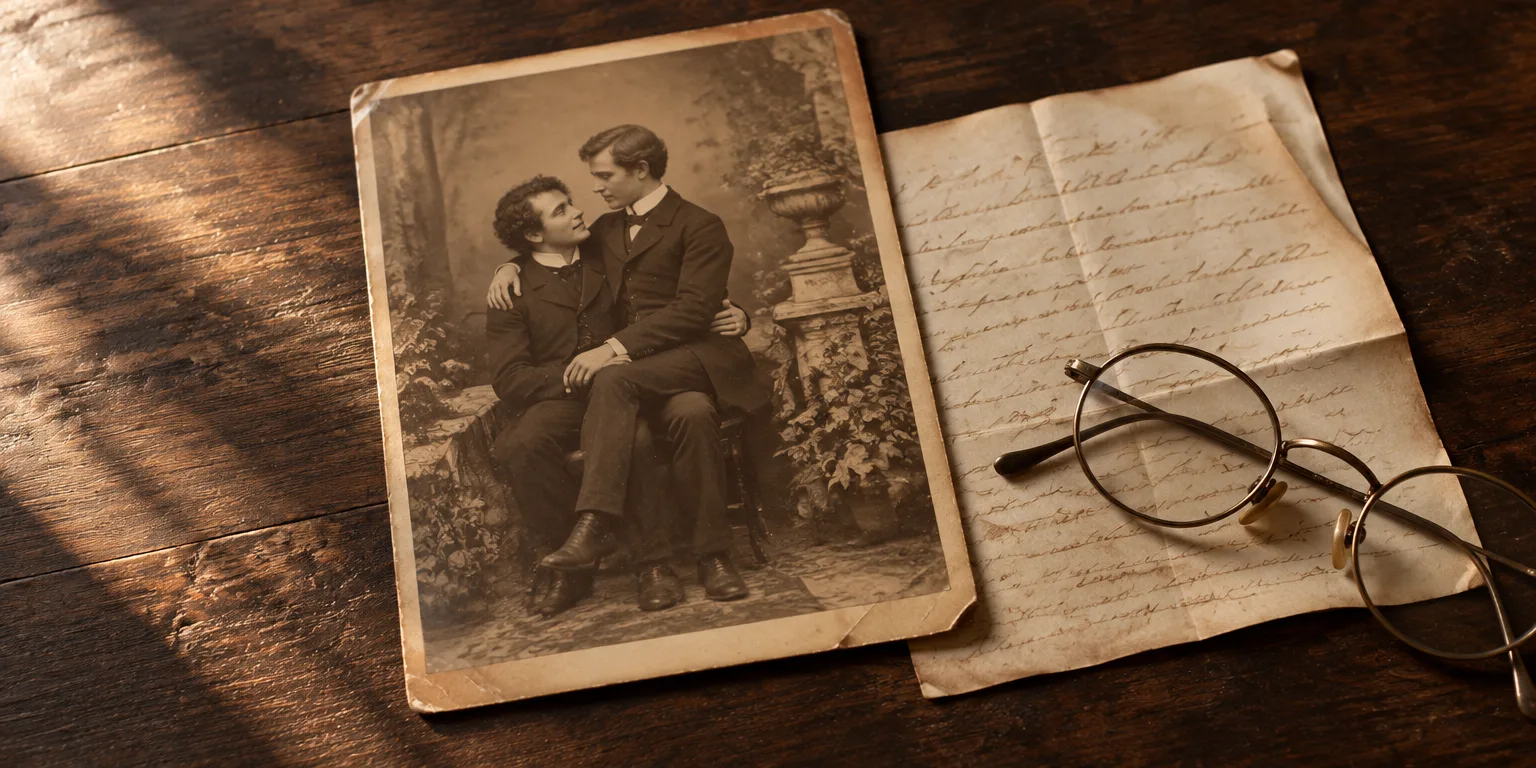
A century and a half ago, heterosexual men told each other they had cried over a letter and posed for pictures sitting on each other's laps.
Historian Stephanie Coontz, who studies marriage, has her students read letters men wrote to other men before the 1800s. The male students squirm, she says, because the notes sound like notes a 15-year-old girl might send a friend. As Coontz quotes them: "Oh, I haven't heard from you in so long. Are you mad at me? Why don't you write to me? I read your last letter and I cried."
When cameras arrived, men photographed themselves embracing, walking arm in arm and hand in hand, or perched on a friend's lap. All of it faded in the late 1800s.
Until then, she says, in Coontz's words, "the opposite of manhood was childhood." A boy became a man by growing up. Then the opposite became womanhood, and proving manhood meant proving you were not feminine.
Questions people ask
Why did that kind of male friendship disappear?
In the late 1800s, industrial work moved out of the home, and middle class culture began defining men and women as opposites. Manliness became about not being feminine, so open affection between men started to look suspect and largely disappeared from letters and photos.
Do those lap-sitting photos still exist?
Yes. Studios from the 1850s through the 1870s left many portraits of young men lounging with arms around each other, holding hands, or sitting on a friend's lap. They were ordinary friendship portraits, not jokes, and similar poses show up between women of the same era.