Students found a chatbot that won't do homework annoying, and one stopped using it
Instead of giving answers, it asks about their goals and their porridge experience.
 The Journal. · The High Schools Going All-In on AI
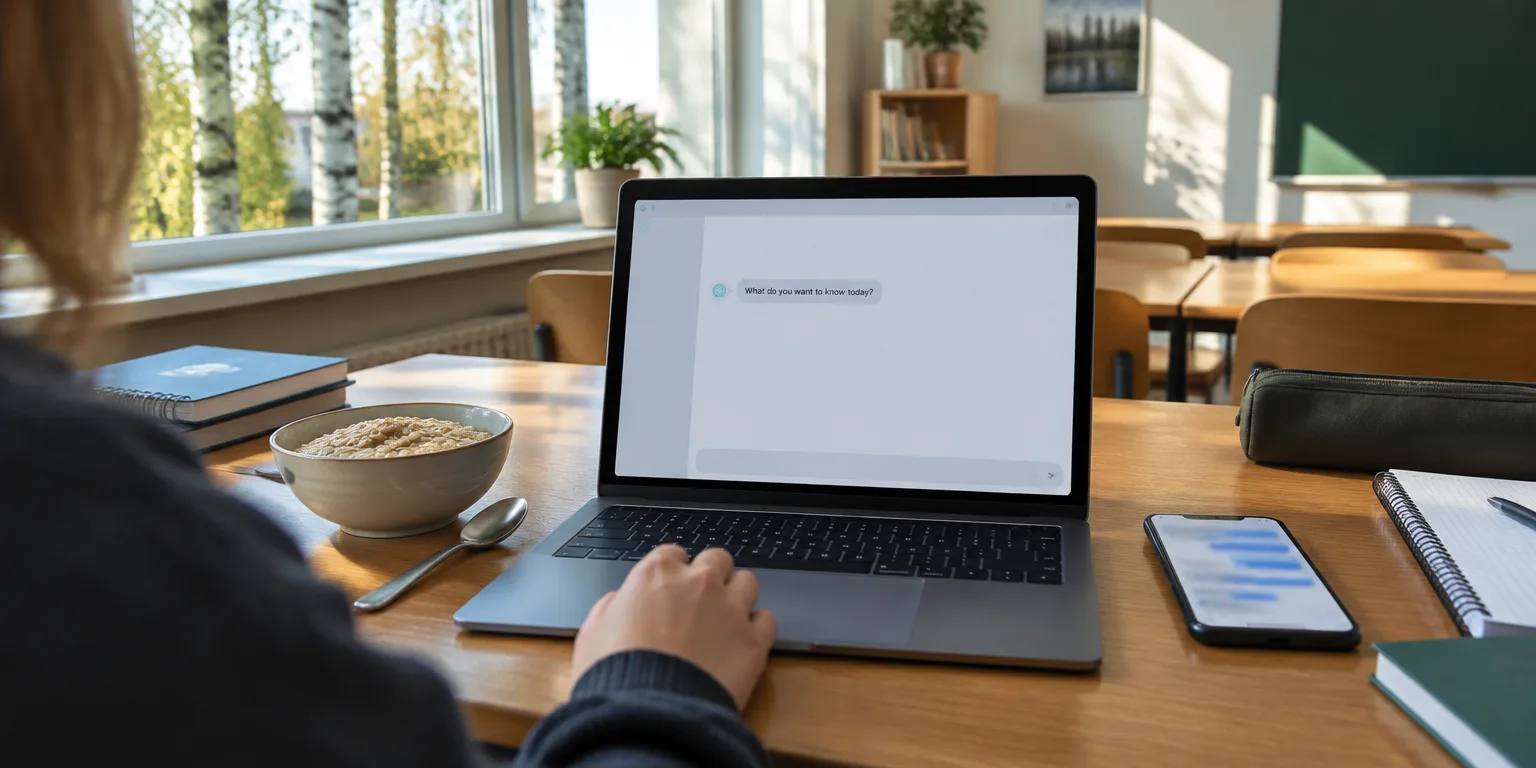
In an intermediate English class in Estonia, a student named Anna pasted a long prompt into her school chatbot and waited for advice on study abroad programs.
The chatbot, which students call he, did not give her a list. It started asking about her future, and Anna typed back what she wanted. Pilot, flight attendant, and sports coach.
That exchange is exactly what Estonia designed. Under a national school program called the AI Leap, the country built a Socratic chatbot, a version of ChatGPT that will not answer homework questions for students. Named for Socrates, the Greek philosopher known for teaching by asking questions, it is supposed to act more like a tutor, helping students plan how to approach an assignment rather than handing them the answer.
Agne Kask, who oversees language teaching at the school, was trying to make the tool useful. She asked students to chat with the bot in English while researching programs that might actually interest them. She had even used ChatGPT to write the prompt for the exercise. “Of course, I asked ChatGPT to make the prompt,” she told the class. At the end, she warned them not to trust everything it said, because it might be outdated or wrong. “So please check the school website to make sure,” Kask said.
Most of the students were not won over. Even though the prompt said, “Please use B2 English,” the bot kept switching into Estonian. B2 is the level for intermediate English. It told students it would talk to them in Estonian to support them better. Students repeatedly told it, “No, this is an English class,” insisting it stay in English.
The bigger complaint was the Socratic part itself. Instead of answers, it asked more questions. A reporter who visited the school said students called it super annoying.
When Anna once asked how she could make porridge, the bot replied, “What experience you have with porridge?” She stopped using the school version after that. “I used the normal ChatGPT, not this studying ChatGPT,” Anna said, even for schoolwork.
Questions people ask
Why would a school want a chatbot that won't give answers?
Teachers worry that a regular chatbot breaks the link between effort and learning. If a student can copy a finished essay in seconds, the teacher sees output but the student skips the thinking that was supposed to happen. A Socratic bot tries to preserve that effort by asking follow-up questions and helping plan the work.
What is Estonia's AI Leap?
It is a national program that gives every 10th and 11th grader a school ChatGPT account, built with OpenAI and Google. Estonia has a history of putting technology in schools dating to a post-Soviet program that wired classrooms for the internet. Officials decided to lean in because surveys showed most students were already using AI.
Does the Socratic approach actually help students learn?
The idea comes from tutoring research that shows students learn more when they actively explain, try steps, and get feedback rather than passively receive answers. Asking guided questions can build understanding and catch mistakes. It can also feel slower and more frustrating, which is part of why students resist it.