Students Use AI to Add Mistakes to Essays So They Look Human
Some schools are returning to handwritten blue books, while teachers and students both use AI to assign, complete, and grade work.
 Fresh Air · Back-to-school with Big Tech
Students who use a chatbot to write an essay now run it through a second AI to add human-looking mistakes. Natasha Singer, a New York Times reporter who covers education and technology, describes the extra step this way: "Then they run it through another AI and ask it to take out the signals that it's an AI."
Those second tools are called humanizers. They insert mistakes and slang to make the prose look kid-written. Teachers can spot telltale signs of AI writing, but students are clever.
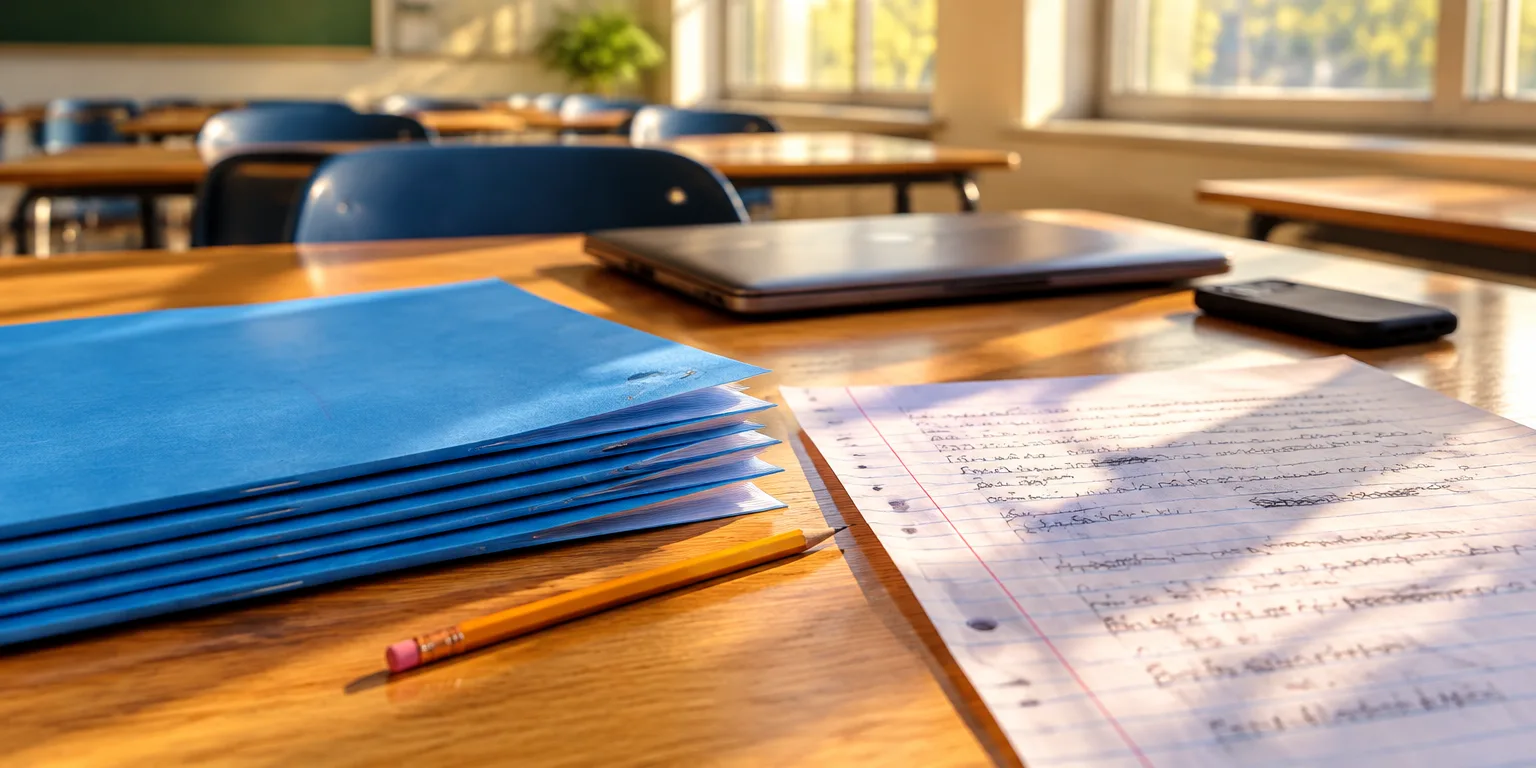
Singer said "teachers know they have to get ahead of this by not giving kids writing to do at home." Some schools have returned to handwritten exam booklets done in class, and teachers ask students to explain the thinking behind their work and how they arrived there.
The end point is a loop of teacher AI assigning, student AI completing, and teacher AI grading: bots talking to bots.
Questions people ask
What is a humanizer tool?
A humanizer is software that rewrites chatbot text to hide machine patterns. It may shorten sentences, add slang, vary rhythm, or insert small errors. Students use it to try to pass AI detectors and teacher review.
What is a blue book exam?
A blue book is a small, stapled booklet of lined paper long used for in-class exams in American schools and colleges. Because the work is done by hand under supervision, it is much harder to use a phone or chatbot. That is why some teachers are bringing them back for essays.
Why would teachers use AI themselves?
Teachers use them to draft lesson plans, create quiz questions, and give faster feedback on drafts. The work can save time on routine preparation. The concern is that if both sides automate, students may do less thinking and teachers may see less real work.