Sumerian irrigation salted its own fields until wheat disappeared
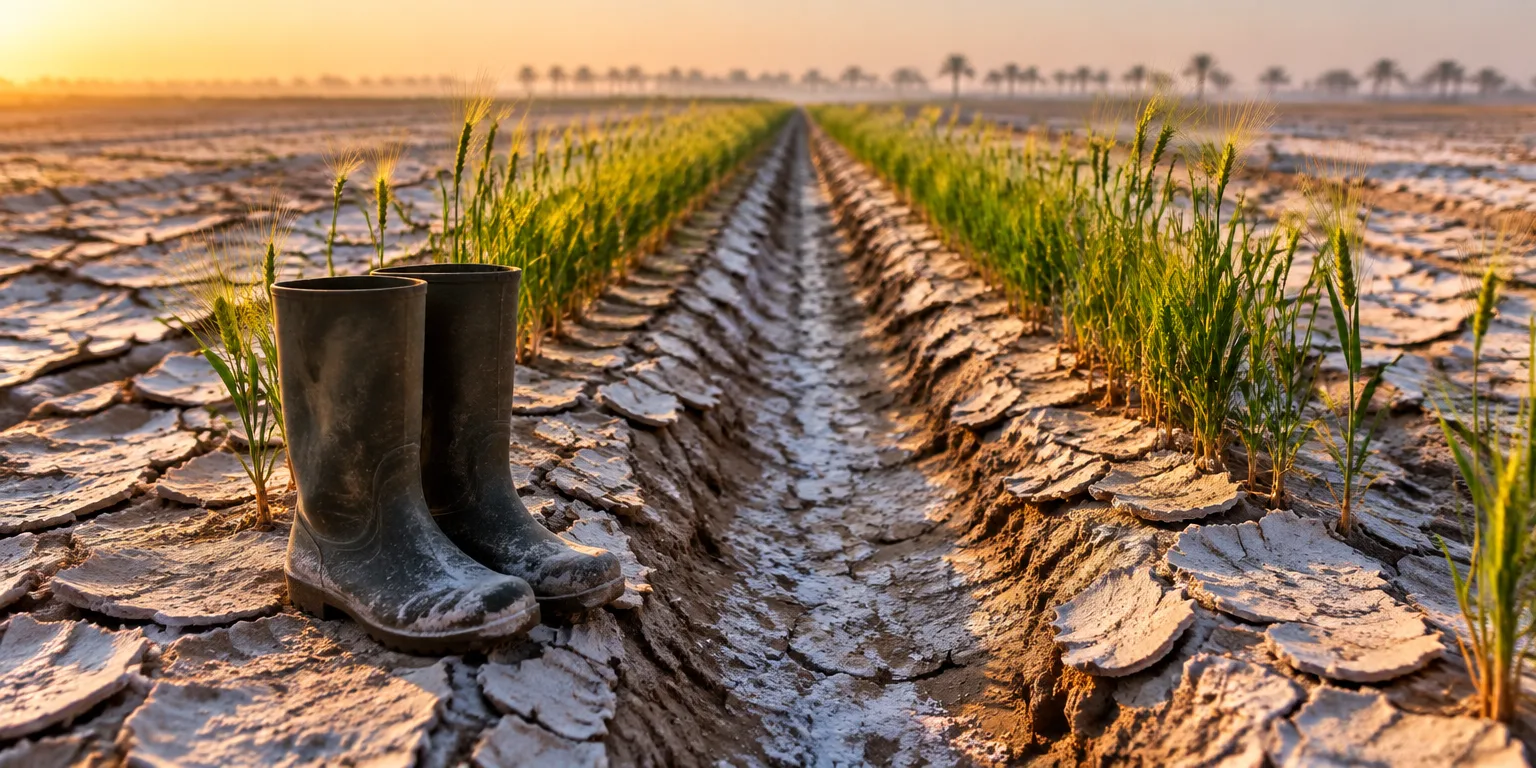
Barley held on long after wheat failed, and the same white crust still crunches underfoot in Iraq today.
 Fall of Civilizations · 8. The Sumerians - Fall of the First Cities
The trouble was not too little water. It was what was in the water.
All river water carries a little dissolved salt and minerals. The Tigris and Euphrates run over limestone in the Taurus Mountains, and carry too much salt. When Sumerian farmers led that water onto their fields, the hot sun dried it up and left a little salt behind.
Where more rain falls, rain may wash that salt away. In the arid conditions of Iraq, the salt stayed in place. Over time, those small amounts accumulated on the soil surface until plants found it difficult to grow.
Temple scribes kept careful yearly tallies of harvests, and from around 2350 B.C. their tablets show harvests slipping over time. At Girsu, a Sumerian farming city, farmers grew about as much wheat as barley around 3550 B.C. After about a thousand years of irrigation, wheat was only one sixth of the harvest. Centuries afterward, by the 21st century B.C., wheat was less than two percent. Barley held on because it tolerates salty soil far better than wheat.
The Sumerians understood that soil needed rest for several seasons to remain fertile, shifted almost exclusively to barley, and developed drying methods to reduce salinity. They worked hard to hold back the decline, but through the centuries the decline was slow and unstoppable as population grew and drought increased demand on the land.
In parts of the Iraqi desert today, the soil has a crumbly crust that cracks underfoot, peeling “like old varnish.” That is the salt that slowly choked life from the fields.
The land itself also shifted. Silt deposition and changes in sea level pushed the gulf coast about 150 kilometers south of Ur, which had once stood near the sea. The path of the Euphrates may have changed over the centuries. Without the river and the sea, the city emptied quickly once the water was gone: people left their homes, stopped working the fields and maintaining irrigation, the ground dried out, and the topsoil broke apart in the wind. Farmers 20 kilometers away could once see the great ziggurat on the horizon, but the city fell into rubble.
The system that made the harvest possible left the salt behind.
Questions people ask
Why can barley grow in salty soil when wheat cannot?
Barley excludes more salt at its roots and stores what it absorbs in leaves and stems rather than in the grain, so it keeps producing at salt levels that stunt wheat. Plant breeders still use that tolerance today, crossing hardy barley strains to protect harvests in salty ground. Wheat has some tolerance, but its threshold is much lower.
Can modern irrigation avoid the salt buildup that hit Sumer?
Yes, but only with extra water and drainage. Farmers must apply more water than crops need to flush salt below the roots, then carry that salty water away in drains. Without drains, especially in hot and dry climates, irrigation still raises water tables and deposits salt, which is why parts of Iraq, California, and South Asia still struggle with it.
How do we know what Sumerians harvested 5,000 years ago?
Temple scribes pressed wedge-shaped marks into clay tablets to track rations, taxes, and harvests, and tens of thousands of those tablets survive. Because clay hardens and preserves well in dry soil, archaeologists can read year-by-year accounts of wheat and barley deliveries. Those bureaucratic receipts became an accidental climate and soil record.