Supermarket Chickens Are Slaughtered at 38 to 39 Days, Their Optimal Age, as Their Bodies Cannot Cope Beyond It
A barnyard bird can live at most about 10 years, but today's meat birds are roughly quadruple the size of 1950s birds.
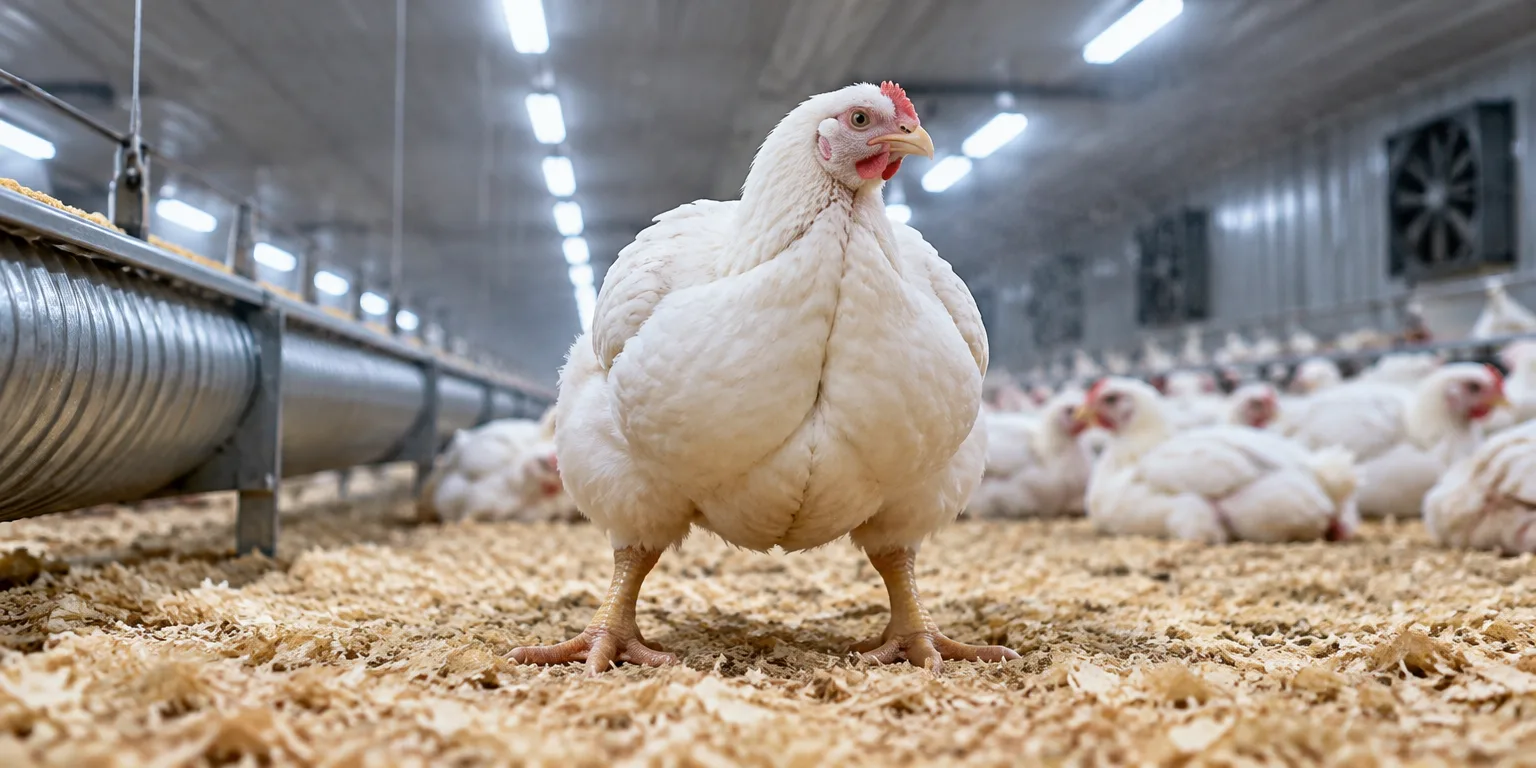
 The Economist · Why is chicken so cheap?
The chicken you buy for dinner is usually slaughtered at 38 to 39 days old, its optimal age for meat, and birds kept beyond that planned life develop huge medical problems as their bodies cannot cope with more rapid growth.
Today's broilers, chickens bred purely for meat, are roughly quadruple the size of 1950s birds. Their whole lives are controlled with artificial light and temperature, and they can survive only with technological support.
By contrast, a barnyard bird can live at most about 10 years. A broiler kept past its slaughter age develops huge medical problems because its body cannot cope with such rapid weight gain.
That is the tradeoff: birds are bred to grow fast for meat, at the cost of bodies that cannot cope past slaughter age.
Questions people ask
Why do broilers grow so fast?
Decades of selective breeding have favored birds that convert feed into breast meat as quickly as possible. Farmers also control light, heat, and feed around the clock to keep the birds eating and growing. The result is a bird that reaches market weight in about five weeks.
What health problems do they get if they live longer?
Their muscles outgrow their skeletons and organs. Older broilers commonly suffer leg failure, heart failure, and breathing trouble, and many cannot walk under their own weight. That is why longer life is not simply a matter of feeding them more.
How long do organic or free-range meat chickens live?
Slower-growing breeds used for organic production in Europe are typically slaughtered at around 81 days, roughly twice the age of intensive broilers. Free-range birds also tend to live longer than intensive birds, with more space and access to the outdoors.