Survivors of Spain's train crash woke to silence and carried the injured into almond groves
At least 68 people died when a Madrid to Seville train hit a stopped train, after a signal system failed and operators never warned the driver to slow.
 The Headlines · At Least 68 Killed in Spain Train Crash, and Democrats’ Secret Effort to Stack Alaska’s Ballot
The man was sitting several cars back in the moving train when the impact jolted him awake. He turned and watched a piece of metal shoot through the carriage and kill the people seated to his right.
Farther back, another passenger climbed out of the wreckage and rushed toward the front cars to help. At first, he said, everything was strangely hushed, with those around him either dead or too hurt to cry out.
They had just lived through one of the deadliest train wrecks in Spain's history. A high speed train running from Madrid to Seville had run into the back of another train that was waiting on the same track, killing at least 68 people. The crash happened in the morning, when the moving train came up behind the stopped train.
Speaking to reporters, Spain's transportation minister said the old signal network that directs train movements in that area had failed that morning, forcing several trains to stop.
Then, in a move the minister described as an "inexplicable decision," traffic controllers let one train keep going and failed to order the driver to slow down even as it approached the stopped train ahead.
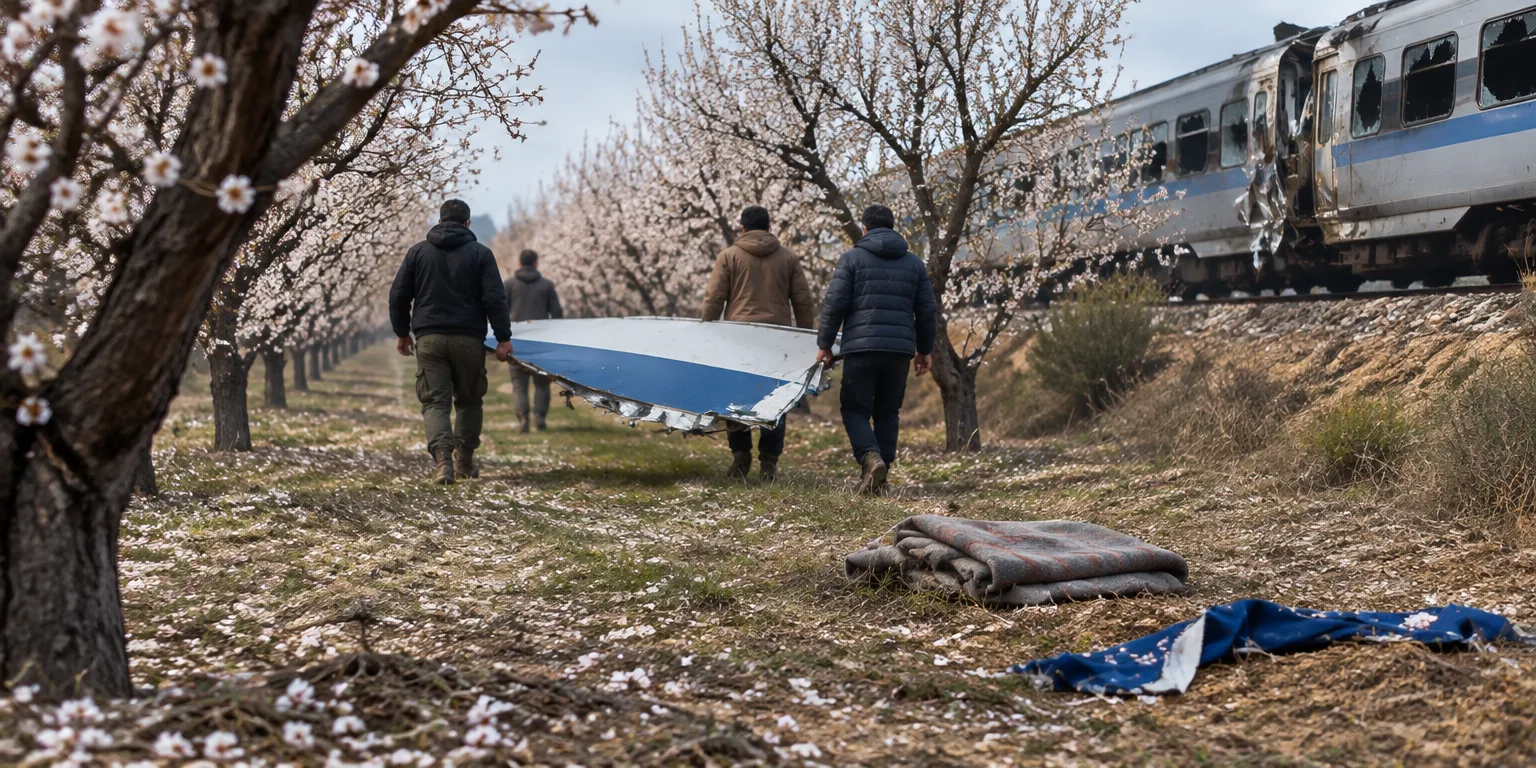
Survivors improvised with what they had. They used broken pieces of the train as makeshift stretchers and carried the injured off the tracks and into the almond groves alongside the rails, which served as an impromptu treatment area.
It was the second serious wreck this year on the same line involving the same rail operators. In January, 46 people were killed when trains collided on that line.
The two disasters only months apart have shaken the country and raised questions about the safety of its fast train network, which is the largest high speed rail system in Europe and the second largest in the world. Beside the tracks, the almond groves served as a kind of field hospital.
Questions people ask
What will investigators examine to determine exactly what went wrong?
In a rear-end collision, investigators look at signals, braking records, speed data, communications between dispatchers and drivers, and the condition of the track. In Spain, officials have already pointed to a failed signal system and a decision to let a train proceed without a warning to brake.
What is supposed to happen when a train signal system goes down?
Dispatchers typically stop trains or issue strict speed and spacing orders when signals fail, and drivers proceed only with explicit permission and extra caution. The key question here is why a train was allowed to continue at speed toward a section of track known to hold a stopped train.
How does a field beside a crash become a field hospital?
First responders sort patients by severity, move the most urgent cases first, and use any flat, shaded ground near the site to stabilize people. That is why farm fields, groves, and parking lots beside a wreck often become triage areas before ambulances can carry everyone to hospitals.