Sweden built a 20-story wooden hotel by changing one building rule
Factory-built timber rooms arrive nearly finished, stack a floor a week, and store carbon in their walls.
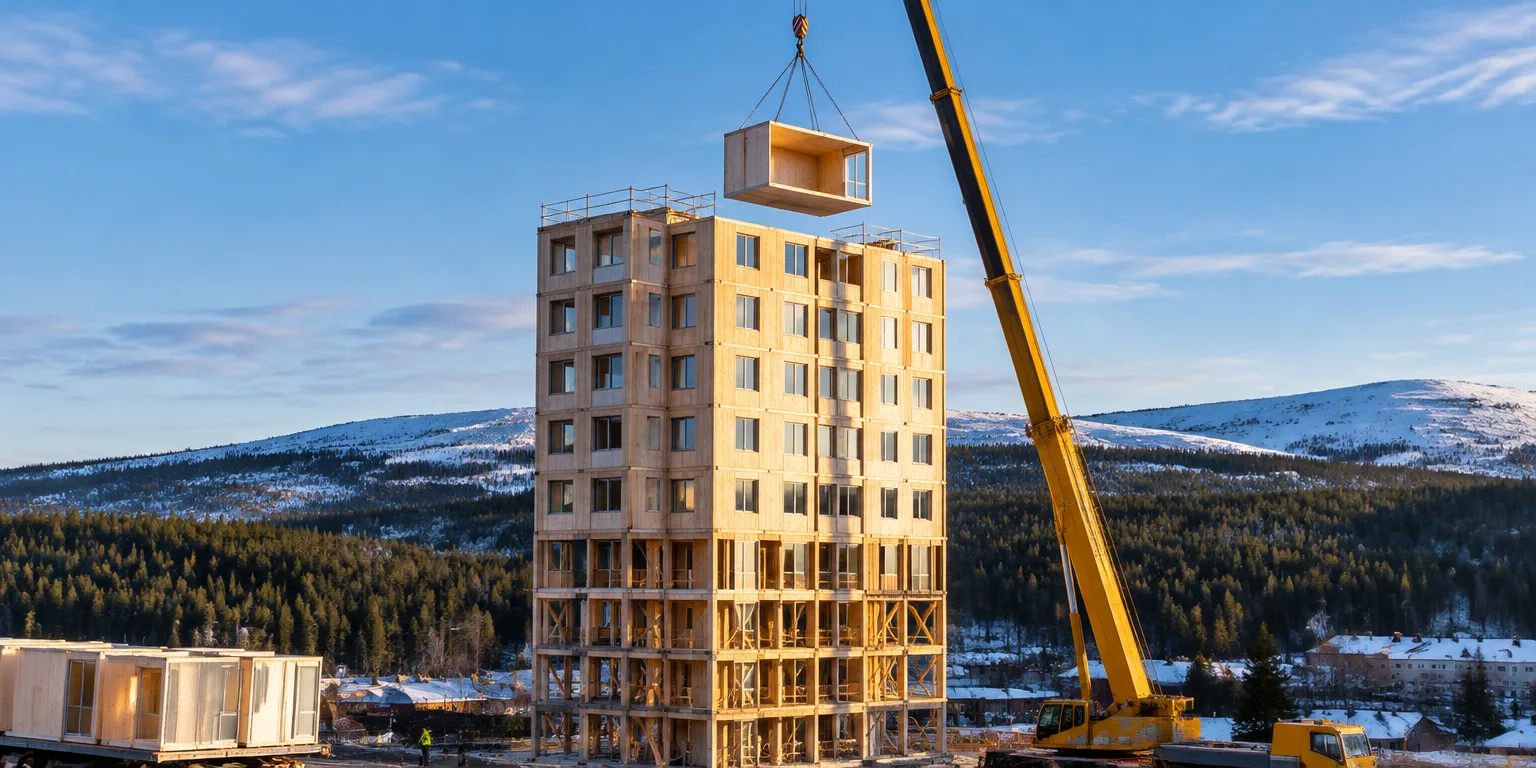
In a small city in northern Sweden, one building rises above the pines. Sara Kulturhus is 20 stories tall, with a hotel tower made of wood that holds 205 identical rooms sealed behind double-pane glass.
Before 1995, that building would have been illegal. Swedish rules then capped wooden structures at two floors. Then the country switched to a code that sets safety targets and lets designers prove they meet them. Builders could now build as tall as they could prove safe.
The hotel shows how builders used that freedom. The designer, architect Oskar Norelius of White Arkitekter, the studio behind the project, looked for ways to stretch costly lumber by planning around repetition and factory work. Each hotel room was built as a single box-shaped unit, shipped nearly finished with bathroom and surfaces in place.
Those boxes were put together at a Derome factory, then hauled to the building site about 95 percent complete. A crane lifted them into place, adding as many as 16 rooms in a week when winds allowed. Once fastened, flexible seals around the edges pulled tight to block air leaks. The contractor estimates that building the rooms and the base at the same time saved about a year.
Wood also changes the climate math. Globally, the building sector generates 40 percent of carbon emissions, while Sweden holds its share to about 20 percent through heavy use of wood. Trees draw carbon from the air as they grow, and it stays stored in boards and beams, while replanted forests keep absorbing more. Lumber can carry a higher purchase price, yet it needs less energy to assemble and finishes sooner, so owners can retire debt quicker and start collecting rent earlier.
Hotels, dorms, offices, and hospitals suit this method, because the same room can be built again and again in a factory, then stacked into a tower that holds carbon instead of just releasing it.
Questions people ask
Is a 20-story wooden building safe from fire?
Yes, when it is engineered for it. Large wood beams and panels char slowly on the outside, which insulates the inner wood and lets engineers predict how long a wall or floor will hold in a fire. Swedish rules require the assembly to meet a time target, such as two hours, and the design must be tested or modeled to prove it.
How does building with wood trap carbon?
Trees pull carbon dioxide from the air as they grow and lock the carbon into wood. That carbon stays in lumber, walls, and floors for the life of the building, and new trees planted after harvest start absorbing more. The benefit depends on responsible forestry and on the building lasting a long time.
Why isn't this common in the United States?
Most U.S. codes are prescriptive, meaning they dictate specific materials, thicknesses, and methods rather than just the safety result. That makes it harder to approve tall wood buildings and factory methods, and every building also needs its own permits and stop-and-go inspections. Sweden certifies the factory itself under performance goals, so approved rooms can be repeated.