Taiwan's most inviting invasion beach is a mile from the presidential palace
It offers a port, an airport, and a river into Taipei, which is why Taiwan rehearses defending it every year.
 Wendover Productions · How Taiwan is Preparing to Get Invaded
In 1884, French marines came ashore near where the Tamsui River meets the sea in northern Taiwan.
It was an obvious place to land, with a direct route toward Taipei, and that was the problem. The landing was so obvious that defenders could prepare for it, and the French invasion ultimately failed.
More than 140 years later, analysts point to almost the same sand, Linkou and Bali North Beaches, as the most attractive starting point for a Chinese invasion, and for the same reason it is also a trap. Analysts believe the number is down to 14 workable beaches, and this stretch tops the list because it offers the fastest payoff and the heaviest resistance.
Between the two beaches sits the Port of Taipei, a permanent harbor that would let an invader bring in heavy ships and supplies with more capacity and less vulnerability than unloading over open sand. Slightly further on lies the country's largest airport, at Taoyuan, which could serve an invader as an airbase on the island itself. Most tempting of all is the Tamsui River, which small, fast boats could ride straight into central Taipei. From its banks, the presidential palace is about a mile away, and seizing it would mark Taiwan's greatest symbolic defeat.
That predictability is why these beaches host Taiwan's invasion rehearsals again and again. During a 2022 rehearsal for the early stage of an attack, reserve troops quickly dug a firing trench above the sand and stored about a month of provisions there. In 2023, with Taiwan's president watching, troops staged a full landing drill, with one side playing the attacker and the other trying to push it back into the sea.
Taiwan has also held at least four drills to block the river itself. The plan tested floating gasoline barrels rigged with explosives to detonate as attacking boats tried to pass, and troops simulated exploding Guandu Bridge, a crossing downstream from the capital, to create a wreckage barrier that would stop boats from moving toward Taipei.
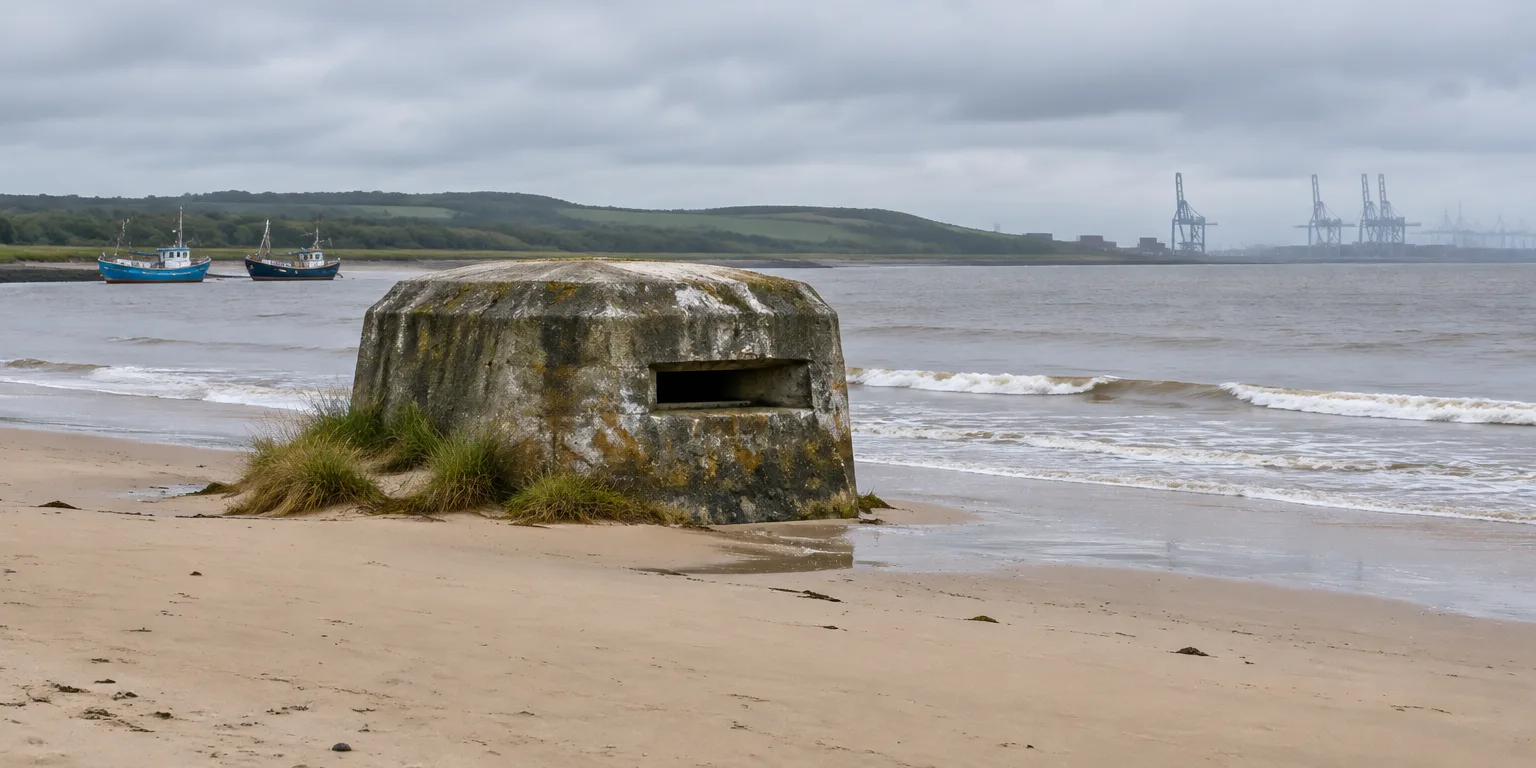
Walk there today and you would not know it. Apart from a 1600s fort left behind by Spanish builders and squat concrete pillboxes left from the Cold War, there are no permanent modern fortifications, just sand that looks like any other beach. Taiwan does not believe in permanent coastal defenses, reasoning that they would almost certainly be wiped out from the air before any landing craft appeared. China is reported to be working on seagoing floating docks that would let large ships unload personnel and cargo.
Questions people ask
Why are there only 14 beaches that would work for an invasion?
A usable beach needs a steep slope underwater so landing craft can get close, a shallow slope on sand so vehicles can drive off, and enough width to move large numbers of troops. Most of Taiwan's coast fails that test, with cliffs in the east and muddy fish and shrimp pools in the west that force vehicles onto narrow roads.
How would blowing up a bridge stop boats?
Guandu Bridge crosses the Tamsui River northwest of central Taipei. Dropping a span into the water would create a wall of steel and concrete that small boats could not push past, buying time for defenders closer to the capital.
What are the floating barges China is building?
They are large floating platforms designed to connect big transport ships to shore, working like temporary docks. They would let China unload tanks, trucks, and supplies without needing to capture an intact port first, though the platforms themselves would still be vulnerable to missiles.