Taking the Roadway Off an Old Truss Bridge Flips the Forces Inside It
The steel was assembled around the weight of the roadway, and lifting that weight off flipped tension and compression.
 Practical Engineering · Bridge Demolition is Complicated
The forces inside a steel truss shift as weight is added or removed. Two long steel frames carry the road, with an upper beam called the top chord and a lower beam called the bottom chord. Under traffic, the structure normally sags slightly in the middle, pulling the bottom apart in tension and squeezing the top together in compression.
The old Iowa-Illinois I-74 bridges at the Quad Cities did not behave normally during demolition because of how they were born. The rivets connecting the top chords were not installed until after the heavy concrete deck had been poured. That meant most of the weight settled into the bottom chords, which carried it in tension from the start.
Take the deck back off, and the truss springs the other way. Engineers call the result negative bending. The top chords go into tension and the bottom chords go into compression, the exact opposite of the usual arrangement. A member that looks identical can be pushing when the plans suggest it should be pulling.
That flip is why tearing the bridge down required history as much as math. You cannot judge by sight how hard a piece of steel is working, and every cut shifts stress to other members in new directions and amounts. Demolition engineers built a computer model that followed the original construction sequence, later changes, and retrofits, consulting even old magazine articles to pin down where stress would sit.
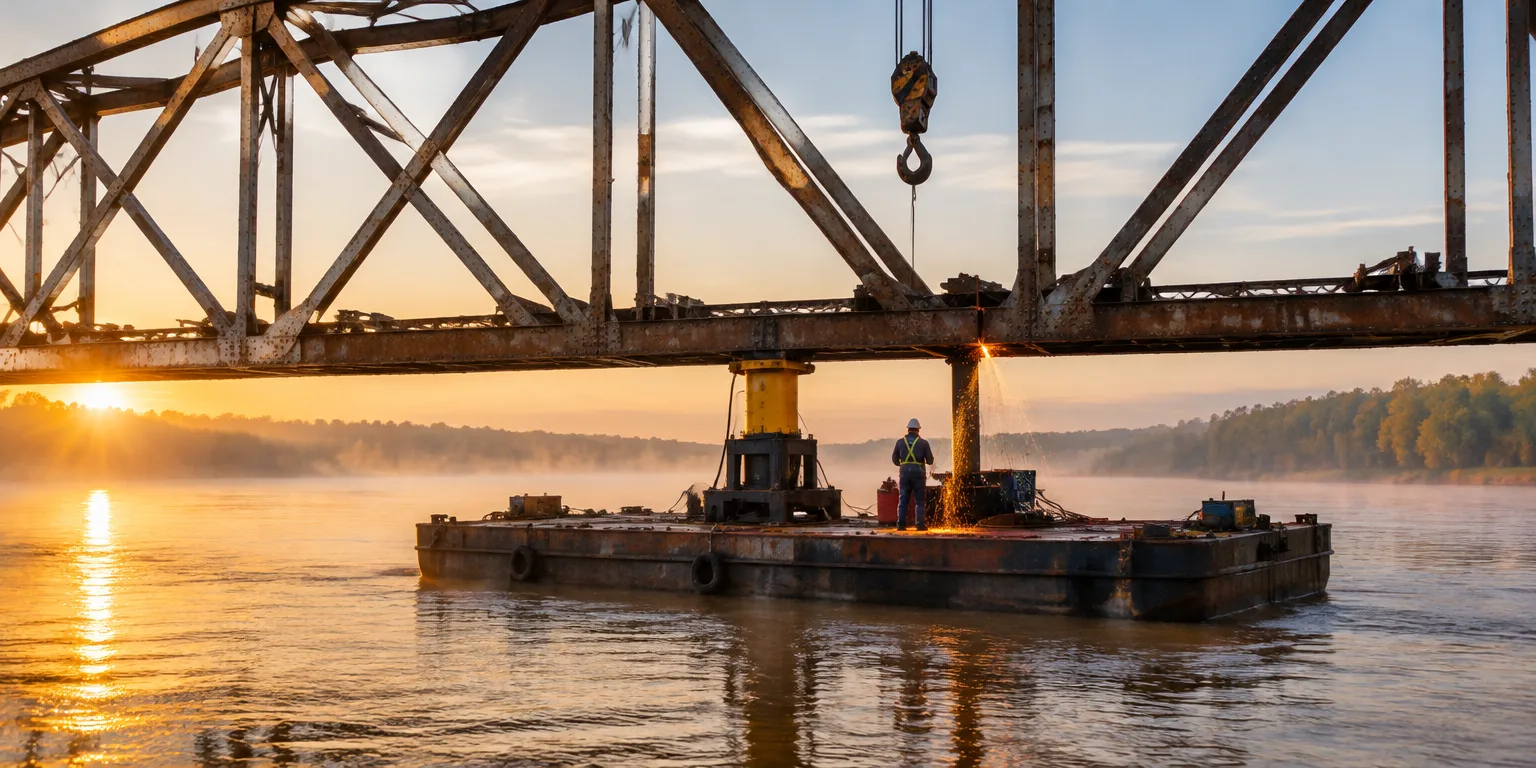
The constraints made the modeling unavoidable. The crew was not allowed to set temporary supports in the riverbed because of protected mussels, so on the continuous truss section they floated the support in on a barge before cutting the steel small enough for a crane. On the suspension spans, each cut in stressed steel had to be sequenced and checked in the model before workers made it.
To take a bridge apart safely, you first have to rebuild, on paper, exactly how it was put together.
Questions people ask
What do engineers mean by tension and compression?
Tension pulls a member longer, like a rope in tug of war, while compression squeezes it shorter, like a column under a heavy roof. Steel handles both, but connections, bolts, and slender pieces can behave very differently depending on which force they feel.
Why remove the concrete deck first instead of cutting the steel with it attached?
The concrete deck is heavy, and while it stays attached its weight controls the stresses in the steel. Stripping it off lightens the truss so members can be cut into pieces a crane can handle, but that unloading changes the stresses and can even reverse them, so crews sawcut the deck into panels and removed them in a planned symmetric sequence, leaving some slabs as temporary counterweights.
How can a floating barge act as a bridge support?
Because temporary supports on the riverbed were banned to protect mussels, the team floated the support in on a barge under the continuous truss section. That floating support let them cut the trusses into pieces small enough for the crane to handle without causing a collapse.