Talking to a Stranger on the Subway Made Riders Happier
They expected awkwardness, but even a brief chat beat riding alone with a phone.
 TED · The Secret to a Happy Life — Lessons from 8 Decades of Research | Robert Waldinger | TED
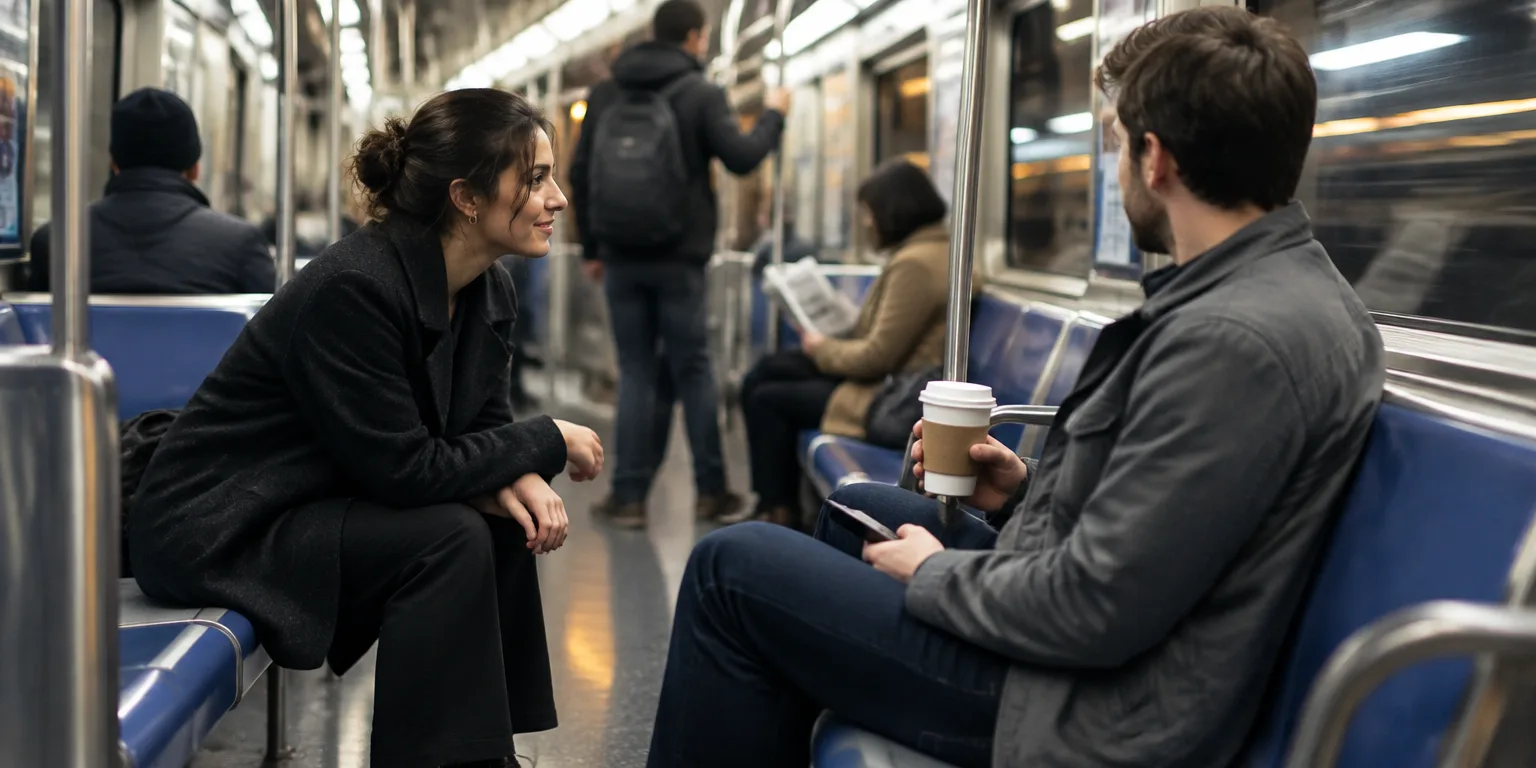
Some subway riders were asked to talk to a stranger.
In the experiment, one group of riders got that unusual assignment before they boarded. Another group got the opposite instruction, to do what commuters usually do. They kept to themselves, looking at their phones, listening to music, or reading.
Those who were asked to talk expected to dislike it. They expected the ride to be awkward, and assumed that minding their own business would feel better.
They were wrong about what would make them happy. Robert Waldinger directs the Harvard Study of Adult Development, the long running project that has followed the same people since 1938. Describing an experiment run by other researchers, he says the riders asked to talk ended the ride much happier than the riders who kept to themselves.
The result fits a larger point Waldinger makes about what counts as connection. It does not have to be intimate, or even close, to support well-being. Friendships, relatives, and coworkers all count, and so do casual contacts.
He means the person who hands you coffee every morning, and the clerk who scans your groceries once a week. Even talking to strangers, Waldinger says, gives "that little hit of well-being from relationships."
So the reluctant talker steps off the train in a better mood than the rider with earbuds in. He did not gain a close friend or change his life. He just spent a few minutes talking, and for his mood, that was enough to beat riding alone.
Questions people ask
Who actually ran the subway experiment?
The Chicago experiments were run by psychologists Nicholas Epley and Juliana Schroeder. In several trials on trains, buses, and in waiting rooms, participants who talked to strangers reported more positive moods and no loss of productivity or privacy compared with those who sat alone.
Why do we think talking to strangers will be miserable?
People overestimate the risk of rejection and underestimate how much others want to talk. They also assume silence is more restful and productive, when in practice a friendly exchange is usually pleasant for both sides and passes the time faster.
Does this work if I am introverted?
Yes, in the Chicago studies both self-described introverts and extroverts reported a better mood after talking. Introverts may prefer less of it, and a quiet one-to-one chat is often easier than a noisy crowd, but the lift from brief contact does not depend on being outgoing.