Tesla Veterans Built a Battery Factory in a Year Inside an Old Newspaper Plant
With rented chillers, saw-cut dock doors, and store-bought compressors, a tiny crew turned a hot press hall into two working battery lines.
 Not Boring by Packy McCormick · Base Power Company: Chapter 3
On a Friday night in late summer in Texas, Andy Ross was still inside an empty press hall at midnight with the rental cooling crew, trying to make the building less hot.
Ross, a manufacturing engineer who spent eight years at Tesla and left as its director of battery manufacturing engineering, had just taken the job of building batteries for Base Power, a young Texas energy company that makes a home battery that keeps the lights on when the power goes out.
Base had decided to make its own batteries, and fast, because with outside suppliers it could not control cost and design or fix things when they broke. Ross joined in March 2025. The company dropped its outsourced battery plan in April, leased the former newspaper building in June, got access that fall, and by the following March, about a year after he joined, his team had installed two production lines and started putting Base batteries in homes.
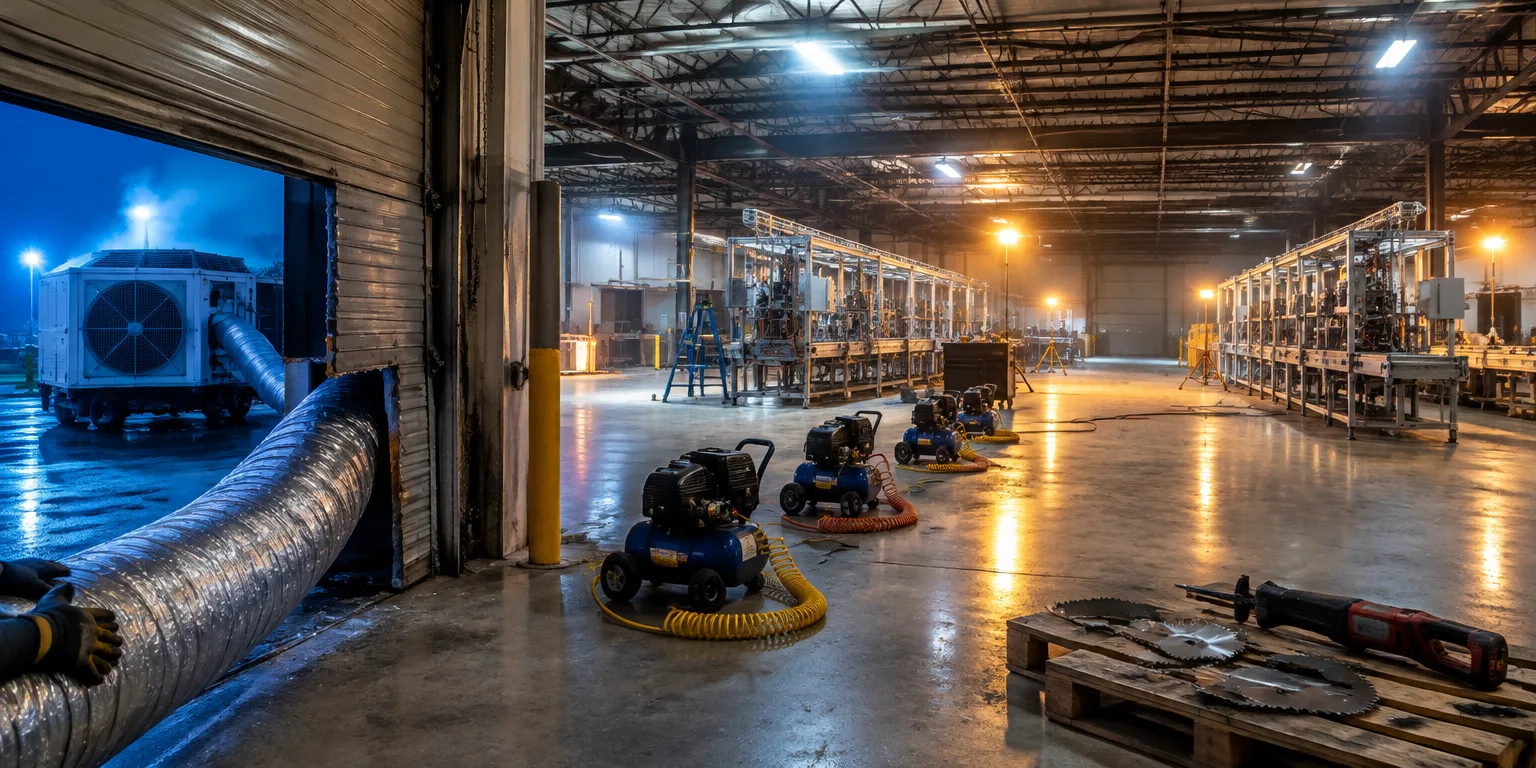
The shortcut started with heat. The cooling tower infrastructure had sat unused for seven years, and it was about 95 degrees inside. The normal fix was a $1 million retrofit that would take seven months to arrive, which made no sense for a site the company expected to use for only about thirteen months, so Ross skipped the normal factory playbook.
He called local rental companies and parked rented chillers outside. The loading dock doors were broken and too costly to repair, so he and another engineer cut holes in them with a reciprocating saw to run ducting inside. He stayed with the rental crew until about midnight that Friday, and by Monday, he said, everybody was happy not to be dying of sweat.
He did the same for air power. When the leftover 1980s compressor system would not work, he went to Tractor Supply, bought the largest 120 volt compressors he could find, climbed into the ceiling, and ran pipe and drops to power air tools and the first test machines. Those were his words, his "hacky redneck" fixes, as Ross put it.
He did not stay a crew of four for long. The factory team grew to 134 people, and 80 percent of the salaried staff are people Ross had worked with before, people willing to hear him ask, "You want to go do something crazy," and say yes.
"We had no factory, we solved that problem, we got a factory," Ross said. "We had no team, we were solving that along the way."
Questions people ask
Can you really cool a factory with rented chillers?
Yes, for a short time. Rental companies deliver trailer-size cooling units with flexible ducts that blow cold air inside. It costs a lot to rent for long, but it is much faster than repairing an old central plant or waiting months for new equipment.
Why does a factory need compressed air?
Many factory tools run on compressed air rather than electricity, including wrenches, lifts, and machines that press parts together. A central compressor feeds pipes around the building, with hoses that drop down to each work station. A small electric compressor can stand in for early tests, but it cannot support full production.
Why hire people you have worked with before?
In manufacturing, trust saves time because the team already knows how each person solves problems and handles night and weekend work. That matters when equipment arrives late or designs change. The tradeoff is less fresh thinking, which is why fast startups often mix trusted veterans with new hires.