Test Your Soil Before Adding Lime or Fertilizer
A few dollars and a one-to-two-week wait can save on fertilizer and keep extra nutrients out of waterways.
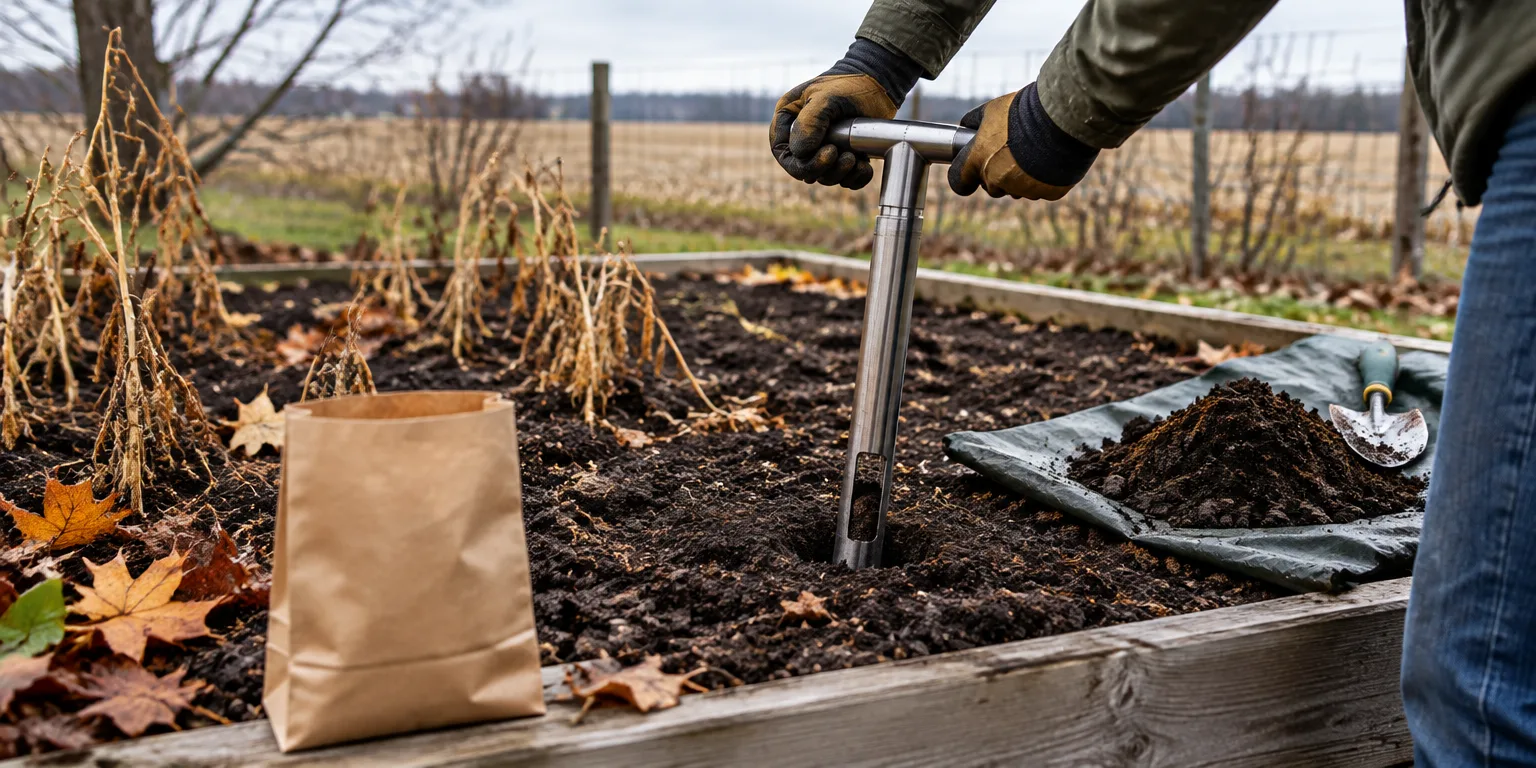
Save this Illinois guide for next fall. Before you buy a bag of anything for lime, phosphorus, or potassium, a soil test is the cheapest first step.
Order it through your local extension service or a trusted private lab. For a few dollars and about one to two weeks of turnaround, you learn pH, available phosphorus and potassium, an estimate of organic matter, and whether you need lime.
In the August 2025 Illinois guide, the test window was late August through September. Separately, the guide says to plan other fall work by local first freeze dates in the north, center, and south. That window has passed, so a test done now is a spring job, not fall work.
The reason for fall testing is that lime is slow. A fall application has winter and early spring to move pH toward the 6.0 to 7.0 range many vegetables prefer, while many garden soils run slightly acidic. Add lime only when the report says it is needed.
Use the same discipline for phosphorus and potassium, and add them only when results show a shortage. Spreading general fertilizer just in case wastes cash and can pollute streams and lakes.
If pH is already too high, the fix is slower. Sulfur used to bring pH down works over several months, so follow the lab result and local extension rates rather than guessing.
If testing is not possible this season, stay conservative. Assume slightly acidic soil, keep any lime modest, prioritize organic matter, and favor a light, all-purpose feeding in spring over a heavy fall dose.
Questions people ask
How do I take a good soil sample?
Collect small scoops from several spots in the bed, mix them, and submit the mix as one sample. For depth, follow your extension office directions, often the top six to eight inches for gardens, and avoid unusual spots like old fertilizer piles or fire pits.
If my test says I need lime, how much do I use?
The lab report usually lists pounds per area or per bed size, and your extension office can translate it to cups or bags. Because lime acts slowly, fall application gives it months to react before spring planting.
Why not add plenty of nitrogen in the fall too?
Nitrogen moves quickly and can leach away over winter, so a big fall dose often feeds weeds and runoff more than next spring's crop. The test-led approach is to handle pH, phosphorus, and potassium in fall, and save most nitrogen for the growing season.