Texas Regulator Said Leaks Could Be Linked to Shallow Disposal
Its October 2023 slide used hedged language on field breakouts and listed drinking-water harm as a hazard of rising reservoir pressure.
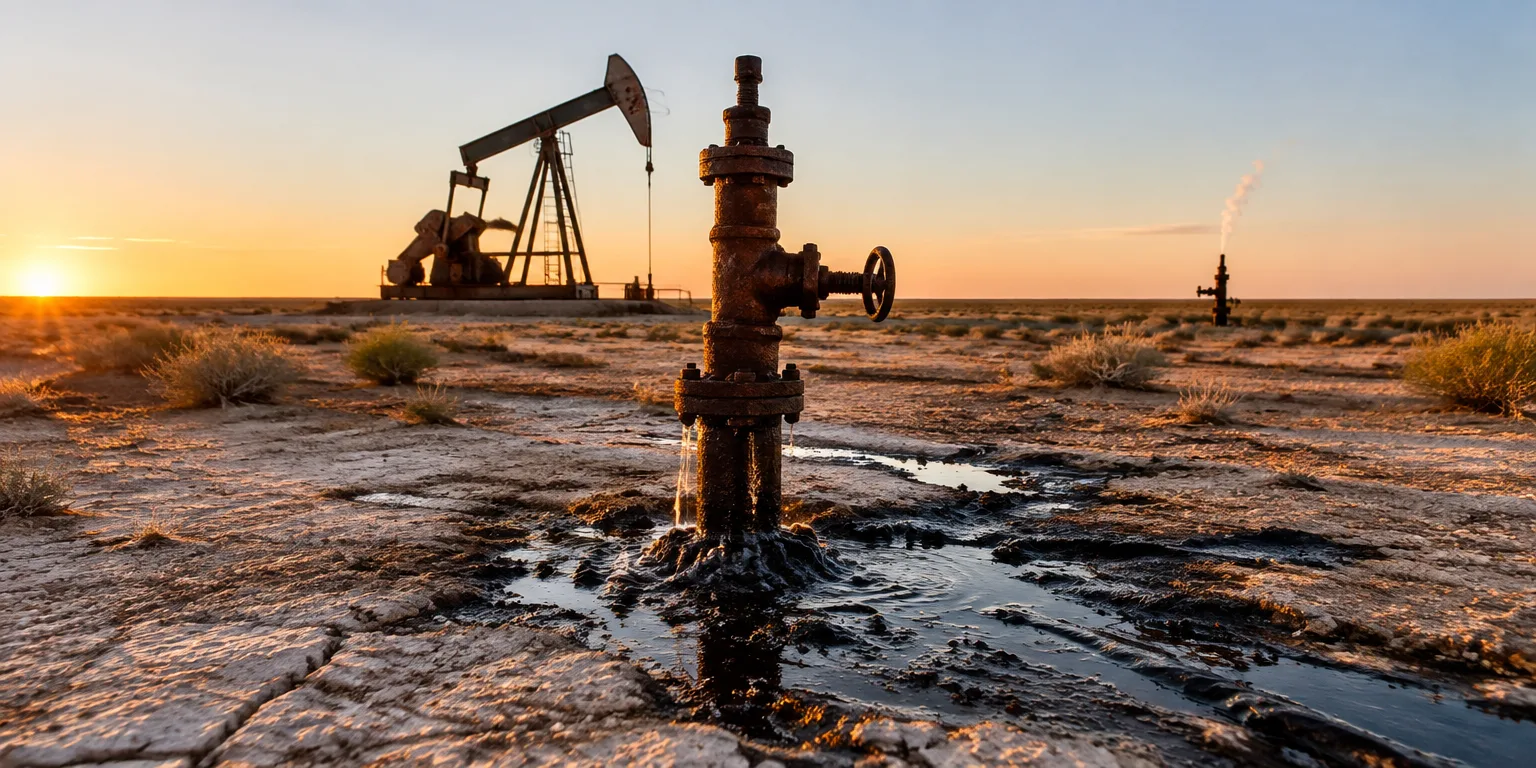
 Bloomberg Originals · The Looming Disaster Under America’s Biggest Oil Field
In October 2023, regulators from the Railroad Commission of Texas stood before the Texas Pipeline Association with a slide deck about wastewater. One slide stated the worry in plain, bureaucratic language.
The Railroad Commission, which regulates oil and gas in Texas despite its name, said in that slide that “breakouts reported by field operations could be linked to shallow disposal.” It was not a public warning. It was an industry briefing.
The slides surfaced after the reporter investigating what the regulator knew filed public records requests about balancing earthquakes against water disposal. What came back was a large volume of material that built a timeline of that tradeoff.
The stakes were large. For every barrel of oil produced in the Permian Basin, the vast West Texas oil field, three to five barrels of wastewater come up with it. That water can reach up to five times the saltiness of seawater and holds oil residue, heavy metals, and radioactive materials.
Most of that water is pumped back underground. The reinjection changed underground pressures and reactivated old faults, helping drive a couple hundred earthquakes a year from 2021 to 2023.
Industry operators and the regulator concluded they needed to act on the shaking, and the idea they pursued was shifting wastewater disposal from deep wells to shallow ones.
In mid-2023, the Commission agreed to weigh loosening limits on shallow disposal. Then came the October presentation, which acknowledged in hedged language that field crews were seeing breakouts that could be tied to that shallow disposal.
Another slide in the same set was titled Hazards from Increased Reservoir Pressure. It listed, in the Commission's words: “drilling hazards; well damage; tubular corrosion; harm to legacy production; confinement failure; surface flows; and harm to underground sources of drinking water”.
That list raised the question the same reporter pressed in an interview: “Why proceed when you know that there are clear and present dangers?” That same reporter said in an interview, “If we want to continue to produce oil and gas in Texas, in the United States, we have to find a solution to the water problem.”
Questions people ask
What is the difference between deep and shallow disposal?
Deep disposal pumps wastewater thousands of feet down into porous rock, far below drinking water. Shallow disposal puts it into layers much closer to the surface, where pressure can push fluid up through old wells and cracks. The shift to shallow wells was meant to ease earthquakes, and field breakouts could be linked to shallow disposal, in the slide's hedged wording.
How dangerous is this wastewater?
Produced water is the briny fluid that comes up with oil and gas. In the Permian it can be five times saltier than seawater and can carry oil, heavy metals, and naturally occurring radioactive material. It cannot be dumped into rivers or onto fields without extensive treatment.
What does the Railroad Commission actually do?
Despite its name, the Railroad Commission of Texas is the state's main oil and gas regulator. It issues drilling permits, oversees wells, and sets rules for wastewater injection. Its decisions shape how Permian operators handle billions of gallons of brine.