That person walking a robot dog is teaching it to walk alone
A San Francisco startup paid walkers $20 an hour, with no experience required, to build lessons for machines.
 The Headlines · Flávio Bolsonaro Flees Brazil for the U.S., and How ChatGPT Laid Out a Dangerous Medical Plan
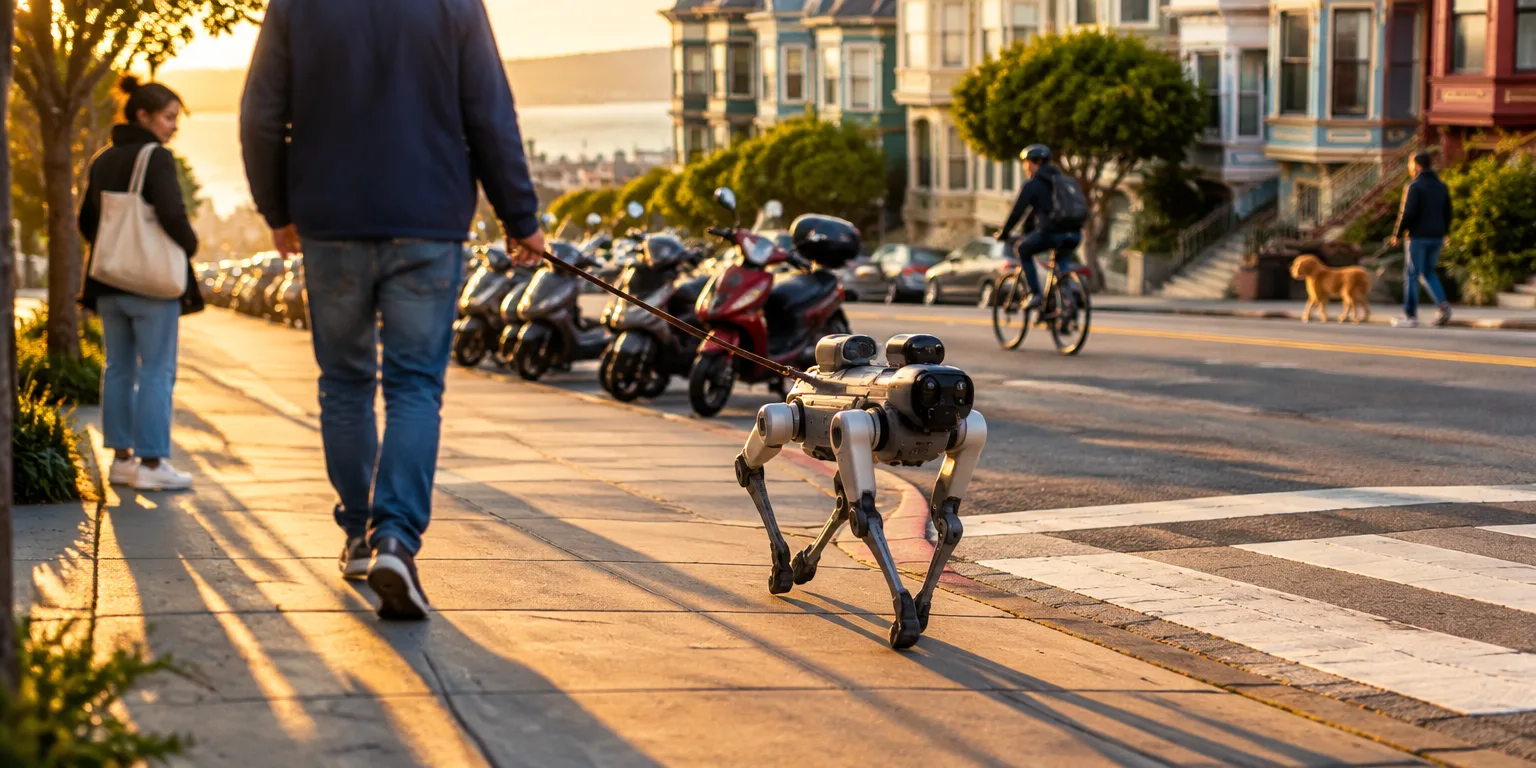
Earlier this month, a San Francisco resident sent a friend a video of something odd in the neighborhood: a man out leading a four-legged machine along the sidewalk.
The dog walker was making $20 an hour. Kashmir Hill, a technology reporter, tracked the sighting to a job posting from a city startup that was hiring people to walk four-legged machines. No experience was necessary.
The job was not about exercise. The company was paying for what happened during the walks.
Every accompanied stroll through a real neighborhood creates a record of city life as a robot experiences it: curbs and crosswalks and crowds, stairs and scooters, dogs that bark and people who stop to stare. By collecting enough of those walks, engineers can use them as lessons so that future machines can make the same trip without a human holding the leash.
It is the same reason a student driver needs hours on real roads. A laboratory or a parking lot cannot reproduce the mess of a sidewalk in San Francisco. The only way to learn a city is to walk it, and until the robots can do that alone, people have to walk it for them.
That is why the sight is likely to become less strange. Driverless cars are already common in San Francisco and other cities, and delivery drones are being used in Texas. The robot dog on a leash is the step before the robot dog on its own.
Questions people ask
Can't robot dogs already walk by themselves?
Yes. Most four-legged robots sold today can already walk, climb stairs, and keep their balance. What they cannot reliably do is decide where to go in a busy, changing place, when to stop, and how to get around people and obstacles safely.
Who gets hired for this kind of work?
The posting required no special skills, which makes sense for the task. The company did not need engineers. It needed ordinary pedestrians to take the machines through normal city situations so the trips would reflect how most people use sidewalks.
What would a fully independent robot dog be used for?
Security patrols, property inspections, and deliveries are among the early uses being tested. In each case, the value is a machine that can cover ground outdoors without a person beside it, which is why navigation data is so important.