The 24-Week Survival Line Came From a Courtroom as Much as Biology
The number traces to fetal-development charts considered around Roe v. Wade, and it only became real after three hospital advances.
 Radiolab · 23 Weeks 6 Days
When doctors tell a woman in early labor to hold on until 24 weeks, the point when a fetus is considered viable, meaning able to survive outside the womb, it sounds like biology drew a bright line. It did not. In Roe v. Wade in 1973, the Supreme Court wanted a medical marker for its legal balance.
The court wanted to preserve a woman's ability to end a pregnancy but also to mark a point where the government gained a stake in protecting the fetus. That is according to Nita Farahany, who teaches law at Duke.
To set the date, the court looked at charts of fetal development. At three weeks, the early brain and heart start taking shape. At eight weeks, nerve fibers form. Around weeks 13 to 16, movement and kicking start. By 23 weeks, some can react to voices they have heard before, such as their mother's. At 24 weeks, small air pockets appear in the lungs, suggesting the fetus might be able to keep breathing outside the mother, but this was only theory, and no one was testing survival at that age.
Journalist Kelly Benham, whose daughter was born extremely early, recalled that through the 1970s and 1980s, most hospitals drew the practical line further along, at about 28 weeks. Farahany explained that the reason was a fluid called surfactant that the lungs start to make around week 28 and that keeps the tiny air sacs open between breaths. Without it, a premature baby often cannot keep breathing.
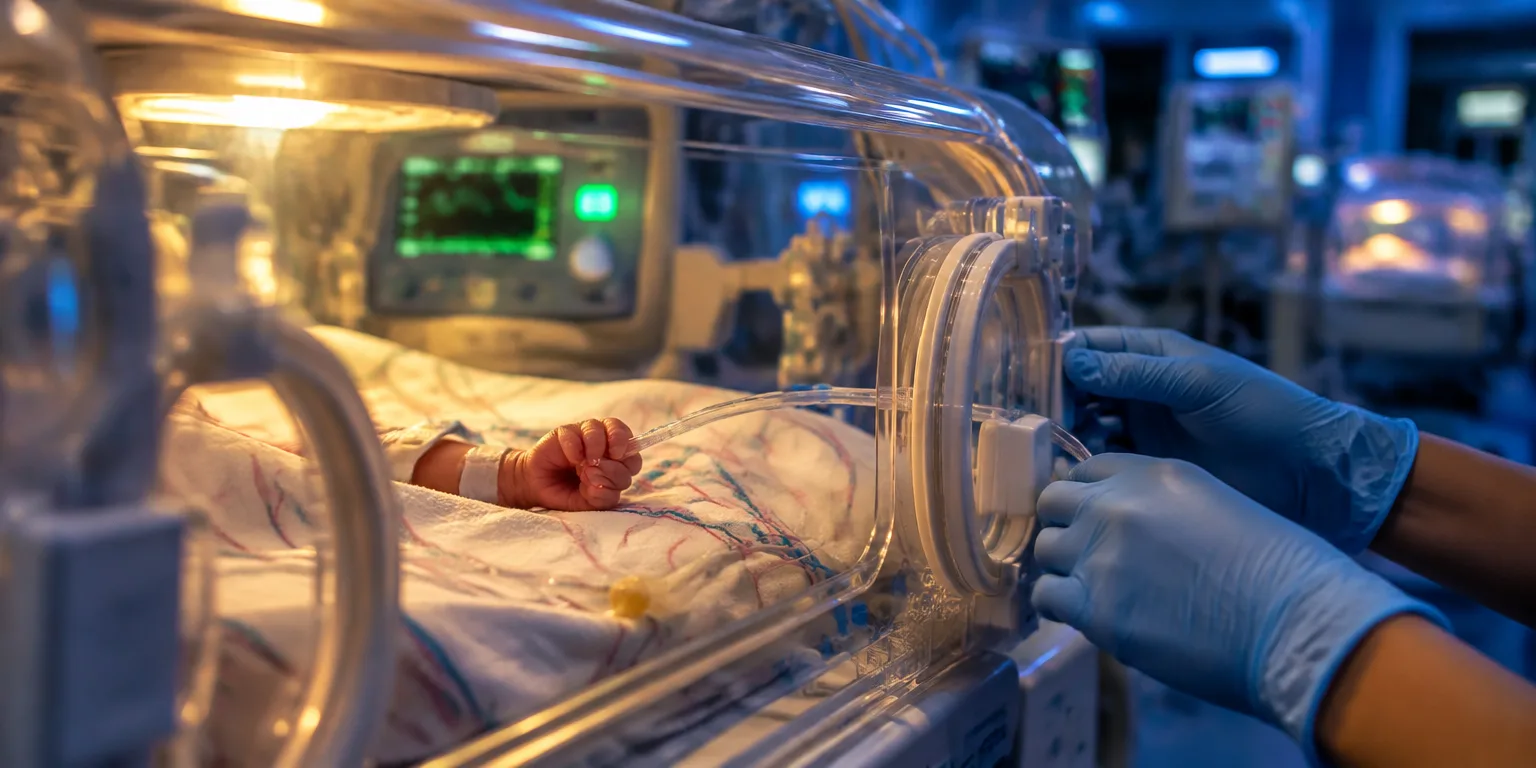
The line moved back to around 24 weeks only after three advances came together in the late 1970s and after: lab-made surfactant given down the breathing tube when a baby is born, plus nutrition delivered directly into a vein, and very small ventilators.
Even now the line is fuzzy. Depending on the hospital, and even on which doctor is on call, it can be 22, 23, or 25 weeks. Before about 22 weeks a loss is generally considered a miscarriage and doctors do not intervene. After about 25 weeks doctors generally feel morally obliged to try to save the baby. Between those points is a gray zone where parents and doctors must decide whether the baby should live, at what cost, and who decides. If scientists ever develop an artificial womb, Farahany asked, "Does viability start at the point of a fertilized egg?"
Questions people ask
What exactly does surfactant do in the lungs?
Surfactant is a mix of fats and proteins that coats the tiny air sacs and lowers surface tension. Without it, the wet walls of each sac stick together when air leaves, like a wet balloon collapsing, and great effort is needed to reinflate them. Premature babies without enough of it develop respiratory distress and tire out from the work of breathing.
How big is a fetus at 24 weeks?
It is typically about a foot long and weighs a little more than a pound, about 500 to 600 grams. The skin is thin and translucent, the eyes are often still fused shut, and the lungs, brain, and gut are unfinished. That small size is why ordinary ventilators, feeding tubes, and IV lines did not work until miniaturized versions were developed.
Is there really an artificial womb?
Not for humans yet. Researchers, notably at Children's Hospital of Philadelphia, have kept extremely premature lambs alive for weeks in a plastic bag filled with artificial amniotic fluid, with blood oxygenated outside the body. Human use remains experimental and faces large technical, safety, and ethical hurdles.