The Army Built a Honeycomb Grid for Soft Soils, and NASA Is Researching It for the Moon
The honeycomb traps loose dirt so it carries heavy loads, and the same hold might suit lunar dust.
 Practical Engineering · The Grid That Doubles the Strength of the Ground
In the 1970s, the U.S. Army Corps of Engineers pioneered a plastic honeycomb grid to put up airstrips and roads fast on weak ground during the Vietnam War. NASA has since researched similar grids for building on the moon, but only as research and concepts, with nothing built on the surface yet. The hard part is making pads and roads from moon dust rather than hauling material from Earth.
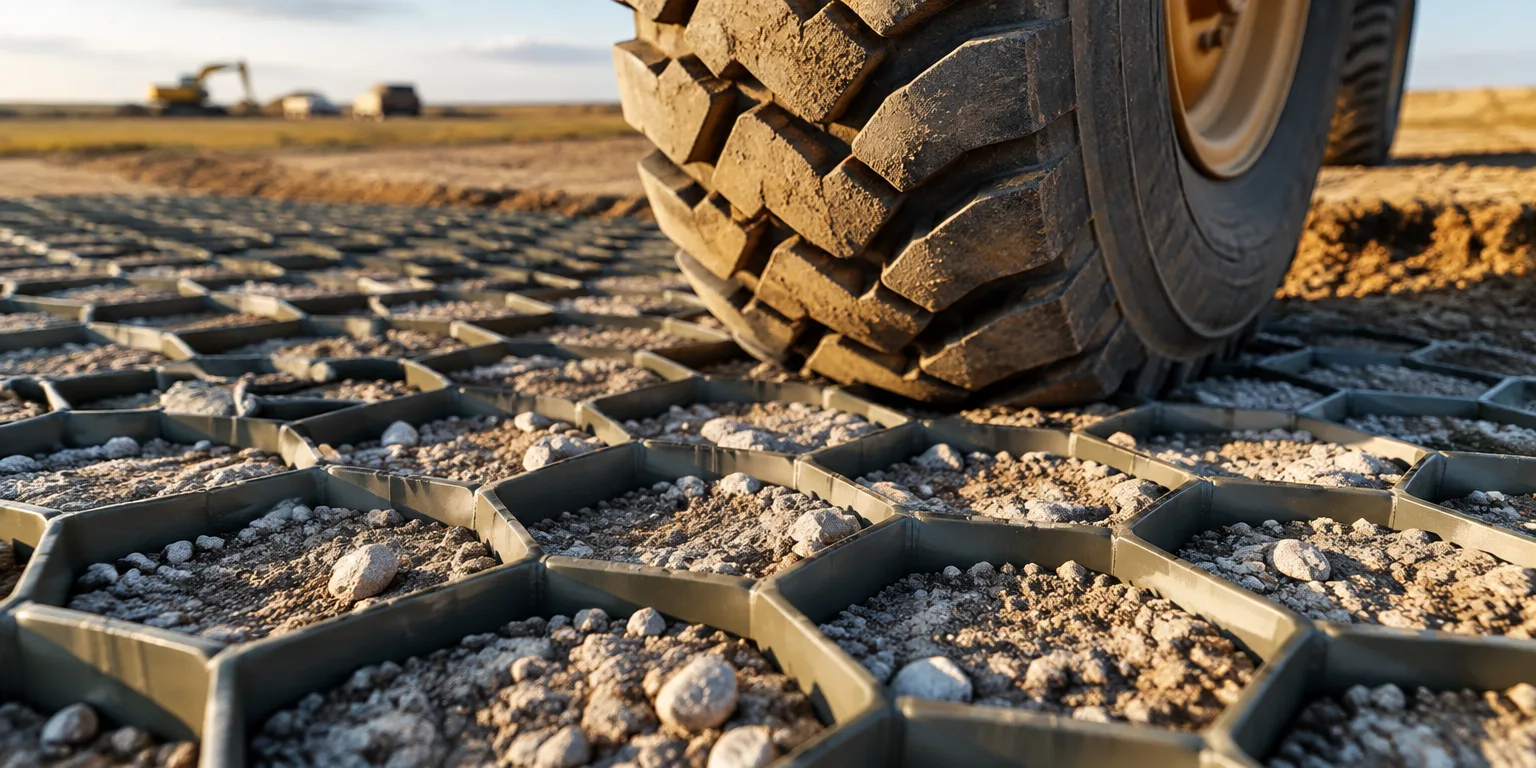
A geocell is made from plastic strips welded into a honeycomb that traps soil in each pocket. That differs from flat fabric, which mainly keeps gravel from sinking into mud, and stiff mesh, which grabs the soil above and below like rebar in concrete. Trapped soil holds weight because loose ground usually fails when grains slide past each other, but confined soil has nowhere to go. Each pocket stays stiff and spreads weight wide, like the wide base under a building that keeps it from sinking.
The moon idea uses the same hold. Researchers have studied filling sandbags with regolith, the dust and rock on the surface, to make blocks, and testing real geocells there, which could help with holding lunar soil in place.
Questions people ask
What does a geocell look like on a job site?
A geocell is made from plastic strips welded into a honeycomb, and each pocket is filled with soil or gravel. Placed side by side, the filled pockets form a stiff mat that spreads a heavy load over weak ground below.
Where are geocells used today?
Yes, on Earth engineers use them for unpaved roads, parking areas, and slopes, and to let builders use thinner layers and local soil instead of thick, hauled-in crushed rock. The benefit is less digging, less hauling, and sometimes no asphalt at all.
What is regolith?
Regolith is the broken rock, dust, and grit covering the moon. With no quarries or trucks, future builders would need to shape that loose surface material into pads, roads, and foundations.