The Average Liberian Uses Less Electricity Than Katie Auth's Fridge, Even as Poorer Countries Drive Future Demand
Emerging economies start from deep energy poverty but could add another China's worth of demand by 2060.
 Marketplace · Home improvement stores feel the pinch
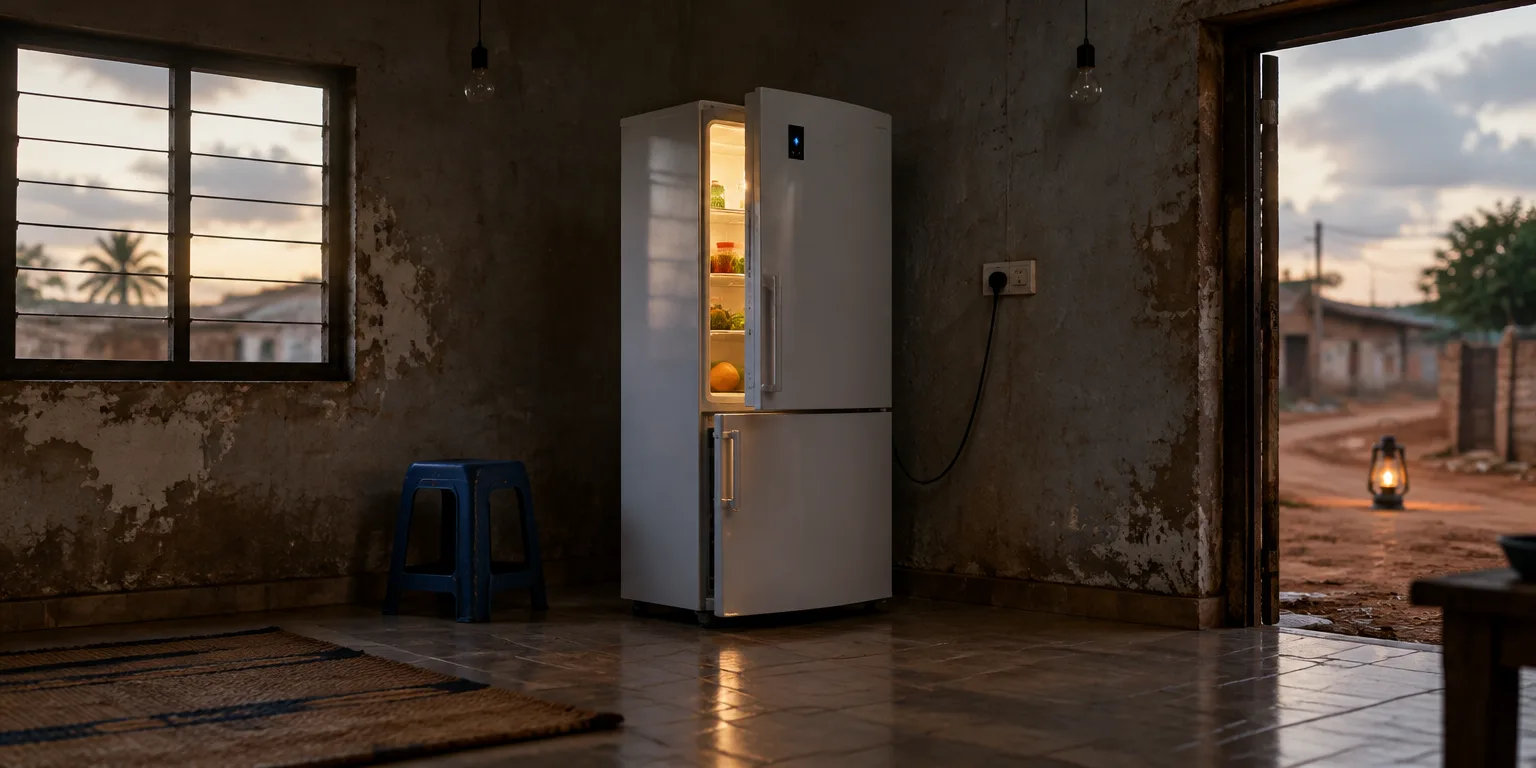
Katie Auth says, "Right now, the average Liberian consumes less electricity in a year than my refrigerator does."
Auth, an expert at a think tank that studies energy access, says, "So the scale of energy poverty is far worse than I imagine most Americans would ever think about."
That scarcity sits beside a coming jump. By 2060, growing economies such as India, Brazil, and Nigeria could lift worldwide energy use by more than three-fifths, roughly another China's worth of demand, according to S&P Global Energy.
Dan Yergin, with S&P Global, says renewables will matter, but the world could see "perhaps more coal now," with oil and gas staying longer than many expect. Auth says rising use in poorer places reflects development, higher earnings, and new jobs. S&P Global Energy analyst Atul Arya says, "The world can still try to achieve the two degree, but that's also becoming extremely challenging."
Questions people ask
How much electricity does a refrigerator actually use?
A modern, efficient American refrigerator typically uses about 400 to 600 kilowatt-hours per year, with larger or older models using more. That means the yearly average for a Liberian is below that level, just a few hundred kilowatt-hours or less.
Why is electricity use in Liberia so low?
Liberia is still rebuilding from civil wars that destroyed much of its power grid, and only a small share of households have a reliable grid connection. Most people live without steady power for lights, cooling, cooking, and machines, so the national average stays extremely low.
Does that growth mean climate goals are out of reach?
Not necessarily, but it gets harder. India already has a very large renewable power program even as oil fuels transportation, and analysts say richer countries can help poorer ones build a cleaner mix. The challenge is that developing economies cannot wait for renewables to get cheaper before adding power.