The Biggest Middleman Got Rich by Standing Next to the Railroad
From one storage building by the tracks, it grew to touch the seed, the feed, the beef, and even the salt and milkshake.
 My First Million · The oldest trick in the book to make your first million
The trick was to stand exactly where the food had to pass.
In the 1800s, as railroads spread across America, farmers had grain to sell but no easy way to store it or move it. A farmer could try to sell and transport each harvest alone, or work with a middleman. Cargill, a privately held food company, chose to be that middleman, and it made itself hard to go around.
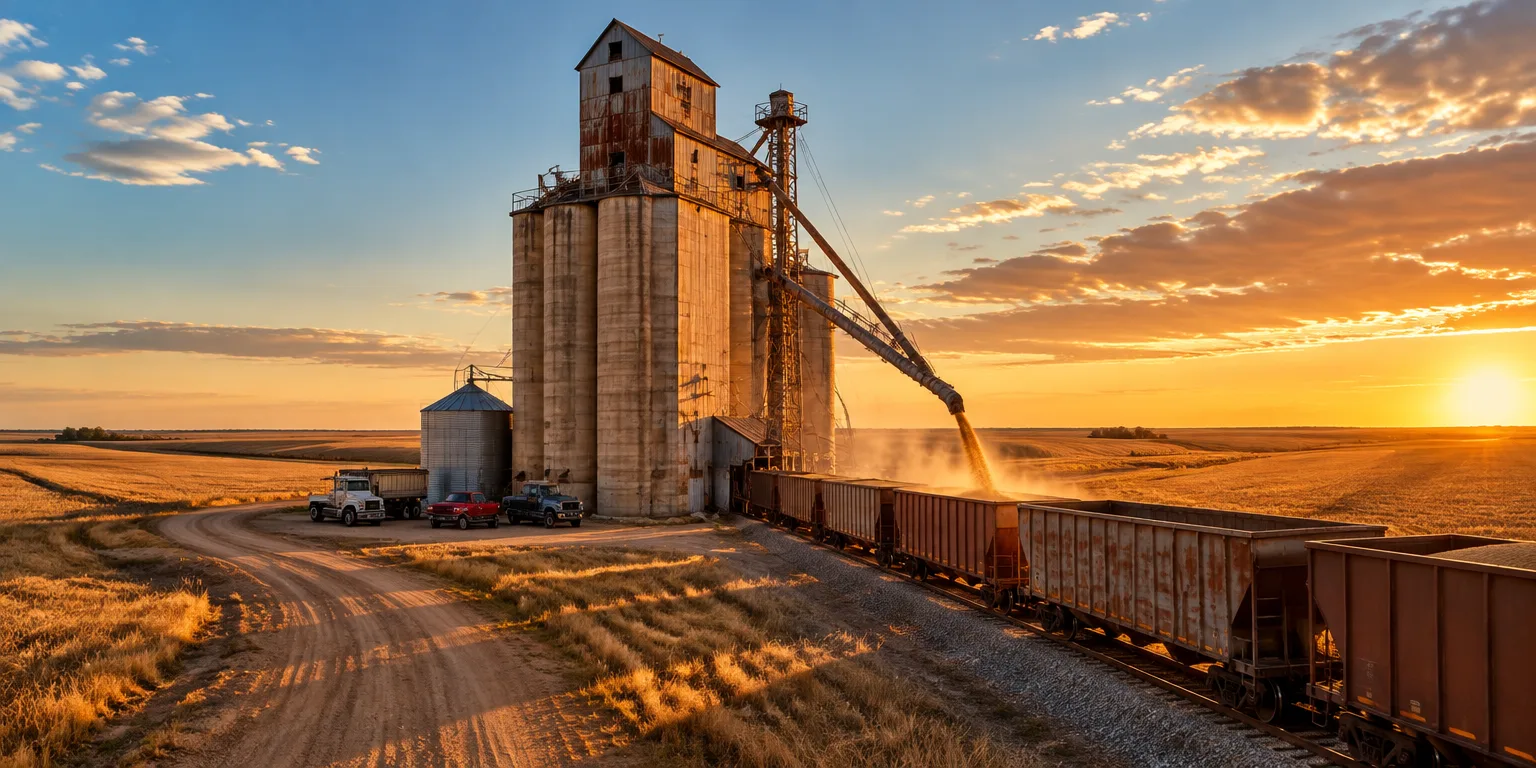
It built grain elevators right next to the tracks. A grain elevator is just a giant storage building where grain can sit without spoiling quickly. A farmer could pull up, drop off a harvest, and either sell it outright at a flat wholesale price or take what amounted to a coat check ticket, an IOU to be paid when the grain was later sold.
That building was the business. Because Cargill owned the storage at the railroad, it sat physically between the farmer who grew the grain and the buyer who needed it shipped. Conventional wisdom says to cut out the middleman, but here the middleman owned the choke point, the place where grain had to be stored before it could ride the rails.
Once it owned that step, it kept buying the steps around it. When barges for moving grain off the rails seemed inefficient, it built its own shipyards and ships, eventually even building ships for the U.S. Navy. It bought a huge poultry company and moved deep into meat.
Follow one hamburger and you see how complete the chain became. Cargill likely supplied the farmer with seed and fertilizer for growing grain, bought that grain back, stored it in its elevators, and shipped it on its own barges to be processed into animal feed. It feeds that feed to cattle, slaughters the cattle, packs the meat, and sells the beef to restaurants. It also supplies the extras around the plate, much of the salt for fast food chains, the corn syrup processed from corn for ketchup, the soybean oil for fries, and the starch that thickens milkshakes.
That is why even a meal that calls itself farm to table rarely escapes it. Cargill has a hand in the seeds, the fertilizer, the storage, the shipping, and the processing underneath.
Questions people ask
How does a grain elevator actually work?
A grain elevator uses tall bins and a bucket lift to raise grain to the top, then lets gravity move grain down into railcars or ships. The height keeps huge volumes dry, ventilated, and moving without constant handling.
How big is Cargill today?
Cargill is still privately held, mostly owned by the Cargill and MacMillan families, and it reports annual revenue around $150 billion to $180 billion in recent years. It employs more than 150,000 people across food, agriculture, and meatpacking.
Why don't farmers just bypass the middleman now?
In theory they can, and some large farms sell directly. In practice, most farms lack the storage, rail access, ships, processing plants, and global buyers that a middleman aggregates. Paying a cut is often cheaper than building that system for one harvest.