The Bloodier Version of Mortal Kombat Outsold the Tamer One
Nintendo turned red blood into gray sweat to protect its family image, while underdog Sega left the gore intact and won sales.
 Hidden Brain · Murder Mystery
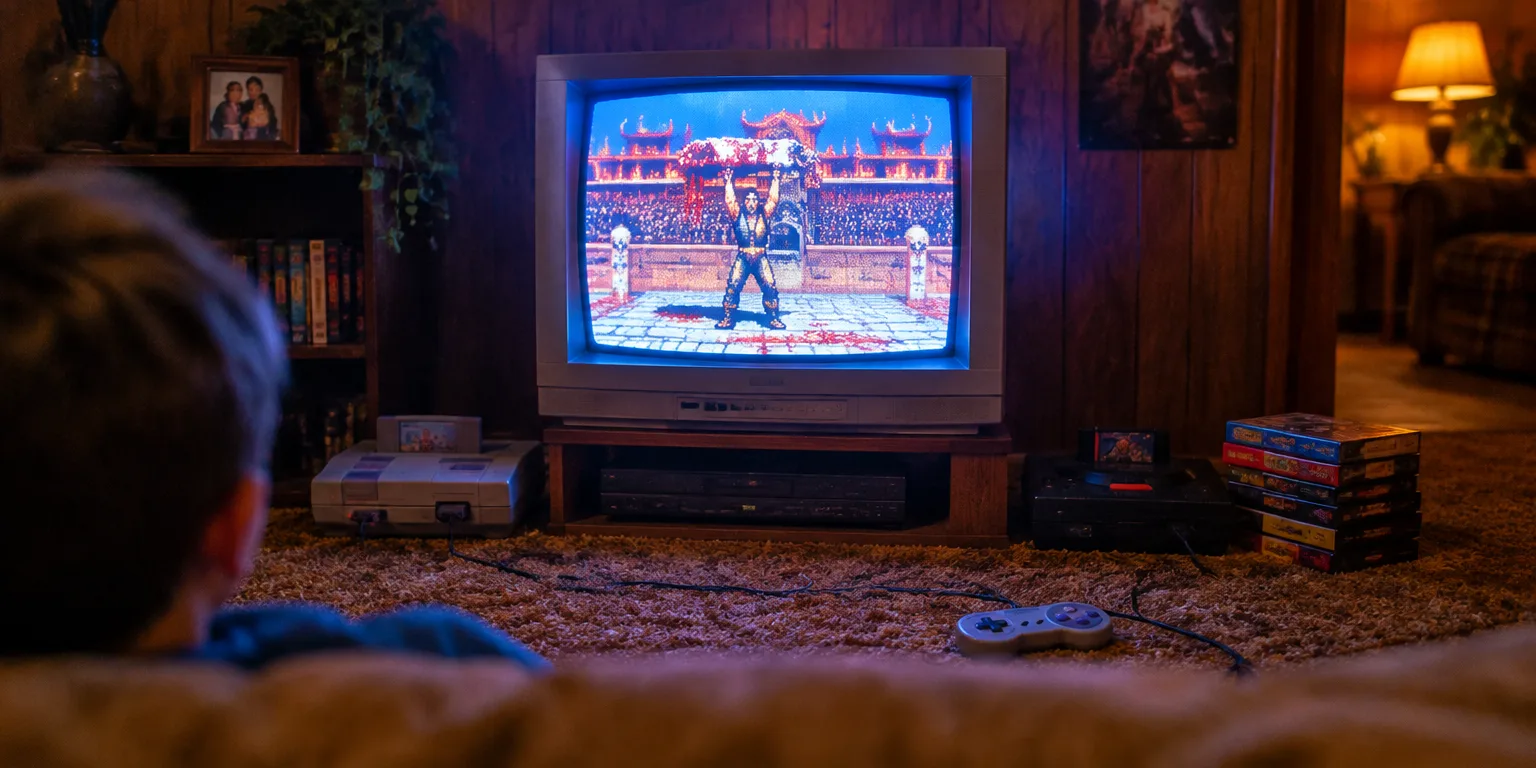
On a blocky television screen in the early 1990s, a victorious fighter tore out his opponent's spine and lifted it overhead in triumph. The graphics were pixelated, but the violence was plain to see.
That kind of scene was moving out of the arcade and into the living room, as home consoles took over where coin operated machines had left off. A super violent new game called Mortal Kombat forced Nintendo and Sega, the two console makers that carried it, to decide how much violence families would accept.
Colton Scrivener, a psychologist who studies why people like scary entertainment, says what happened next was an accidental experiment in human nature. The question put to him summed up the puzzle: many people say they are "appalled by violence," yet the more violent version of the very same game outsold the tamer one. Scrivener agreed.
Nintendo, which had built a family friendly brand around its Super Nintendo Entertainment System, blinked first. It released Mortal Kombat but changed the red blood to a grayish color, and called it sweat instead of blood. It altered or removed many of the finishing moves entirely, as if, as Scrivener put it, "the fighters were sweating instead of bleeding."
Sega, which sold the rival Genesis console, made the opposite bet. At the time, Super Nintendo systems were in roughly five times as many American homes, and Sega was much the smaller company. It decided to show Mortal Kombat in what Scrivener calls "all of its gory glory," with red blood and finishing moves intact.
The two versions were sold separately, and the bloody Sega version outsold the Nintendo version by several factors. As a scientist, Scrivener says, "that's the perfect study you could set up," and the video game industry accidentally set it up for him.
Questions people ask
What is a finishing move in Mortal Kombat?
A finishing move, called a Fatality in Mortal Kombat, is a special sequence at the end of a match that lets the winner defeat the loser in an exaggerated, gory way. In the early games it included moves like pulling out an opponent's spine or heart. The moves became the game's trademark and the main focus of the censorship fight.
Did the uproar over Mortal Kombat change how video games are sold?
Yes. Mortal Kombat and other violent games helped prompt congressional hearings in 1993 and 1994 over game violence and children. In response, the industry created the Entertainment Software Rating Board, the ESRB, in 1994. Its letter ratings, like E, T, and M, still appear on game boxes today.
Does buying the gorier game mean buyers like real violence?
Not necessarily, researchers say. Choosing a violent game or horror movie does not reliably predict support for violence in real life. Psychologists who study this argue that people often use fictional threats to explore danger, test reactions, and learn, while still condemning real harm.