The Bronze Age ran on tin carried by donkey from Afghanistan
Even Egypt, which won its big battle, withered once the trade routes that carried copper and luxury goods stopped working.
 Fall of Civilizations · 2. The Bronze Age Collapse - Mediterranean Apocalypse
Around 3,200 years ago, the great powers of the eastern Mediterranean were as entangled as nations are today. The Mediterranean Sea worked like a vast inland lake, calm enough for steady shipping, and trade was the lifeblood that tied together Egypt in the south, the Mycenaeans of Greece in the west, the Hittites in the north, Babylon and Assyria in Iraq, and small coastal ports in between.
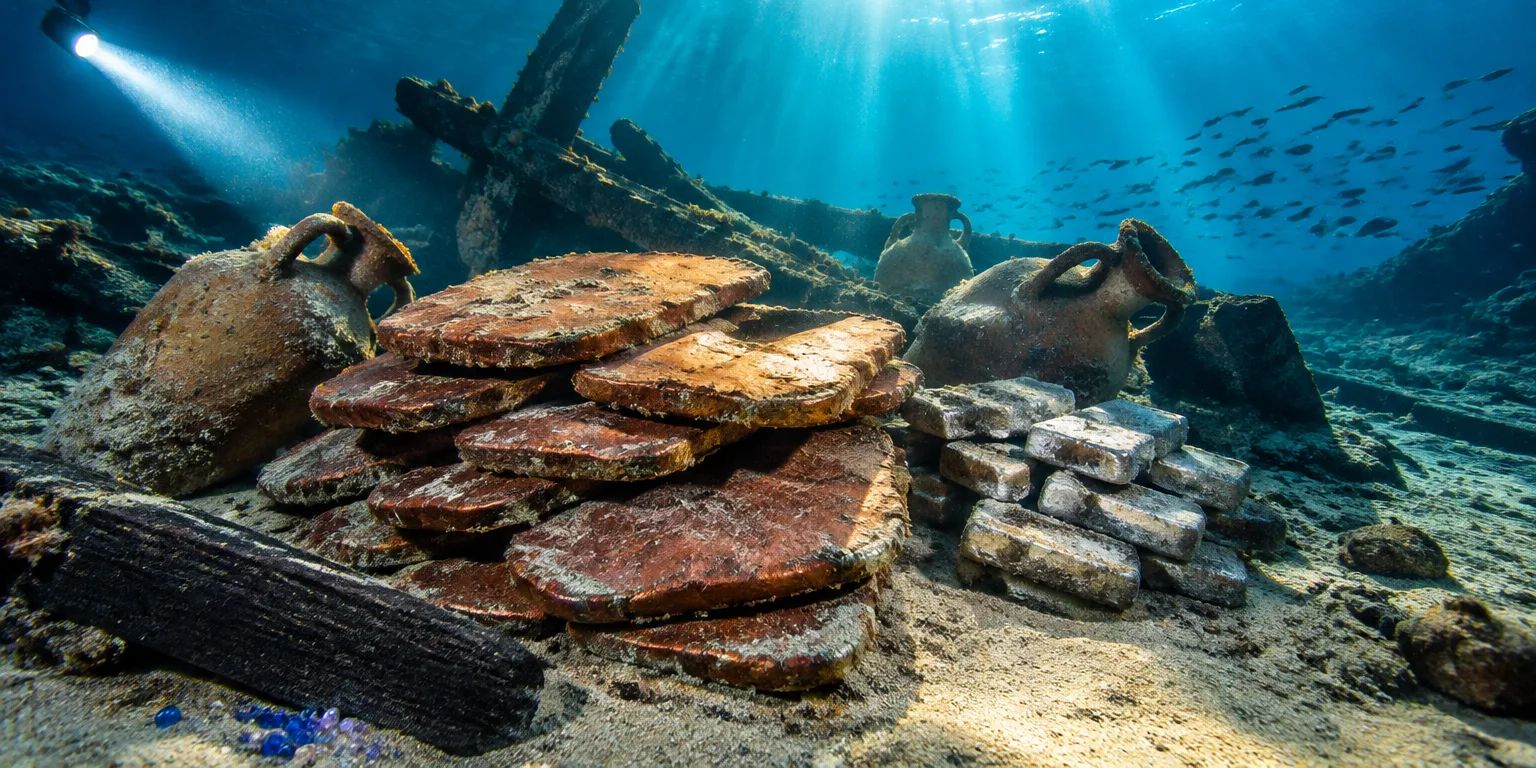
The clearest picture of that system comes from a ship that sank off what is now southwestern Turkey around 1300 B.C. Built of Lebanese cedar, it carried ten tons of copper in ingot form plus a ton of tin, along with ebony wood, tusks from elephants and hippos, glass beads, olives, figs, pomegranates, almonds, gold, pottery, turtle shells, ostrich eggs, quartz crystals, arrowheads, daggers, and blocks of raw blue and lavender glass. Archaeologists trace its cargo to at least seven different lands, including a golden scarab stamped with Nefertiti's name, the Egyptian queen.
That mix was normal because the age itself depended on mixing. Bronze is made by melting copper and tin in roughly a 10 to one ratio, and the ten tons of copper and one ton of tin on that wreck are exactly enough to make 11 tons of bronze. Once discovered, that reddish gold metal became indispensable for weapons, tools, chariot fittings, and household goods, much as steel and aluminum are today.
The problem was supply. Copper was far more widespread. Tin was rare, and the only readily available source lay in mines in Badakhshan, in what is today Afghanistan. From that distant source, it traveled by donkey caravan across land along the route later known as the Silk Road, on a long and perilous journey over mountains and rivers to the cities of Mesopotamia, then outward again across land and sea to places like Greece. The military might of Egypt, Assyria, the Hittites, Babylon, and Mycenae all rested on that thin thread.
British historian Carol Bell has argued that tin then held something like the strategic importance of crude oil today. That helps explain why even a military victory could not keep a kingdom safe once the network snapped. Egypt beat back seaborne invaders, but it was left alone in a devastated region, with those precarious trade routes broken. Its economy went into steep decline, its treasury emptied, and it never fully recovered its imperial power. The broken trade was not the only blow. Egypt was also beset by droughts and weak seasonal floods, hunger, internal turmoil, and dishonest officials, which left it weakened and far less powerful than before.
Questions people ask
Why was tin so hard to get?
Tin is geologically scarce in concentrated deposits, and the eastern Mediterranean has almost none. Ancient smiths needed fairly pure tin to mix reliably with copper, so they depended on distant mines where it occurred in workable veins.
If tin was so vulnerable, why didn't they use something else?
Iron was the substitute. Iron ore is far more widespread than tin, but making usable iron took hotter furnaces and more skill than melting copper and tin for bronze. Once people mastered that work, cheap iron tools and weapons replaced bronze and undercut the old tin network.
How do archaeologists know what one ship carried?
The wreck, known as Uluburun, was found in 1982 by a sponge diver and excavated over ten years by underwater archaeologists. Because it sank quickly and lay deep, its stacked ingots, jars, and personal goods survived together, giving a snapshot of one shipment.