The Buzz on a Packed Dance Floor Has a Name
A sociologist coined the term in 1912, and parties can now offer some of what religion once did.
 Today, Explained · We should party more
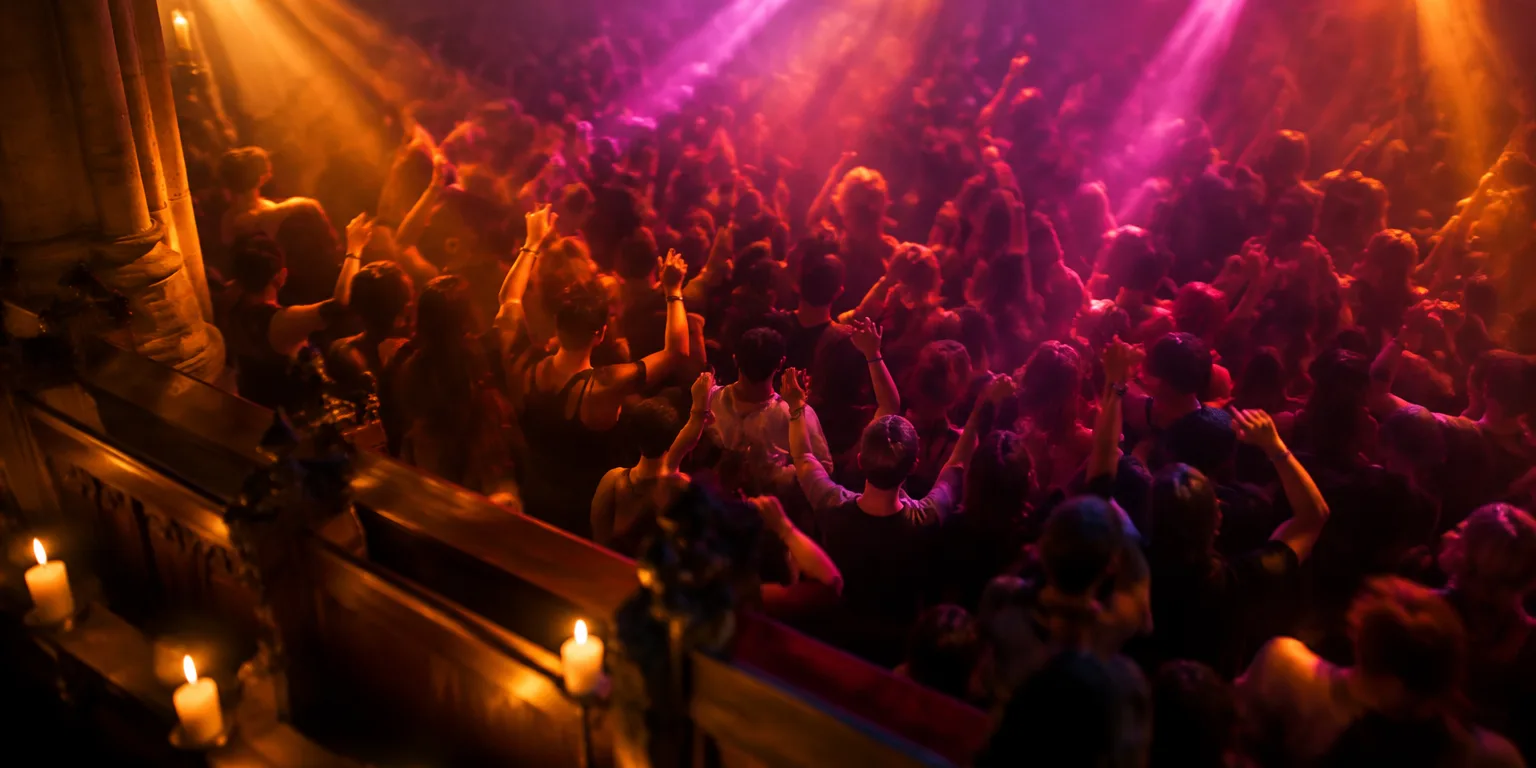
You know the lift that hits on a packed dance floor, when the beat drops and strangers suddenly move as one. A French sociologist gave it a name more than a century ago.
In 1912, Emile Durkheim called it collective effervescence. It is the surge of euphoria people feel at peak communal moments, whether in a sports stadium, at a concert, in church, or shoulder to shoulder on a dance floor.
For most of human history, that surge came wrapped in religion, says Imogen Willits, a historian who wrote Up All Night: A History of Going Out. Drinking, dancing, music, and hedonism were simply part of religion, which she describes as all-encompassing.
In medieval England, Willits says, church-going could be rowdy, with drinking and dancing on feast days. One theory holds that wooden pews were put into Wells Cathedral to quiet the revelers.
In increasingly secular societies, Willits says, "we need nightlife to have these communal euphoric experiences and feel part of something bigger than ourselves."
By one measure, that kind of night out is uncommon. In 2023, only about 4 percent of adults said they had attended a party during a weekend or holiday break. For Willits, those nights out are where people in secular societies can still find that lift.
Questions people ask
Who was Emile Durkheim?
Emile Durkheim (1858 to 1917) was a French sociologist often called a founder of modern sociology. He studied how rituals, religion, and shared rules hold societies together, and his book The Elementary Forms of Religious Life introduced collective effervescence.
Do you have to be on a dance floor to feel it?
No. Durkheim used the term for many kinds of peak group moments, including religious services, sports crowds, and concerts. The key ingredient is a crowd responding together, so singing in a choir or chanting in a stadium can produce a similar lift.