The calories you eat are not the calories you keep
Fiber traps some energy in the gut for bacteria, and protein may lose roughly a quarter of its calories in processing.
 Andrew Huberman · How Sugar & Processed Foods Impact Your Health | Dr. Robert Lustig
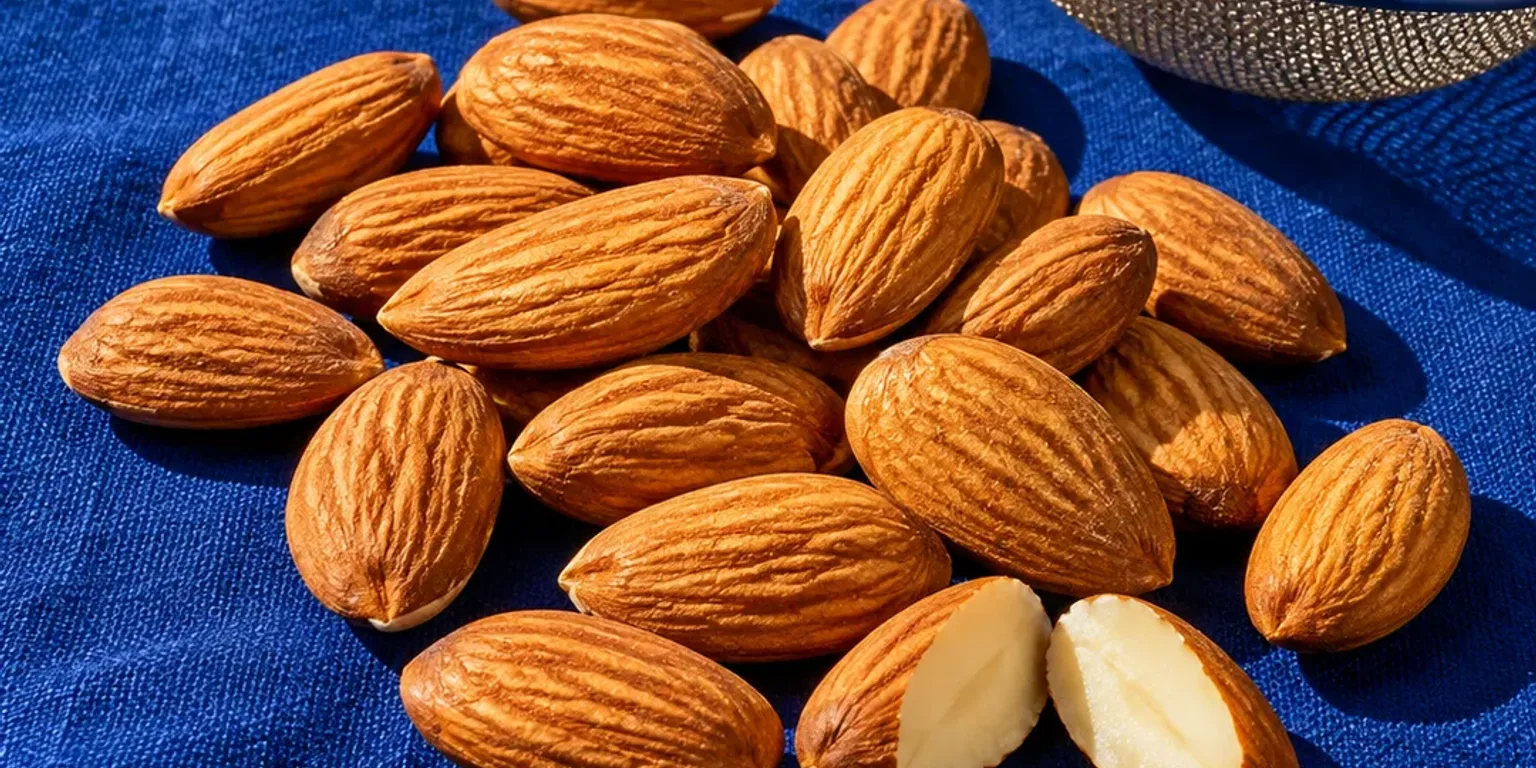
Eat 160 calories of almonds and your body keeps only about 130 of them. The other 30 never make it into you at all.
That is the example offered by Robert Lustig, a physician who studies food and metabolic disease. The reason, he says, is fiber, the tough part of plants that human digestion cannot break down. In almonds, two kinds of fiber work together in the small intestine. One forms a kind of net on the gut wall, the other plugs the holes in that net, creating a whitish gel that scientists can actually see with a powerful microscope. That gel acts as a second barrier, holding back about 30 calories so they travel farther down the gut, where the 100 trillion bacteria that live there get to eat them instead of you.
Protein cheats the label in a different way, by wasting energy as heat. When you eat extra protein beyond what muscles need, the liver must strip off part of each building block before the rest can be burned for fuel. Preparing that amino acid for burning costs about twice as much energy as preparing the sugars from carbohydrates, and fat requires almost none of it. About 25 percent of protein calories are lost in that processing, Lustig estimates, so 1,000 calories of steak protein counts as roughly 750 calories against the body's daily burn.
Fat shows that a lab measurement is not a body measurement. Heart healthy fish oils and poisonous trans fats, the artificial fats once common in packaged food, both release nine calories per gram when exploded in a laboratory burner. In the body, one supports the brain and heart and the other cannot even be broken down properly and builds up to cause disease. The calorie on the package counted energy in a machine, not what your gut and liver actually do with it.
Questions people ask
If fiber blocks calories, can I eat unlimited nuts and not gain weight?
No. The gel slows absorption but does not block everything, and nuts still deliver plenty of fat and protein your body does absorb. Fiber also fills you up and feeds gut bacteria, which is why whole nuts behave very differently from the same calories as candy.
Does the protein effect mean a steak has fewer calories than the label says?
Partly, but it is not free food. Because protein costs more energy to process, it leaves fewer usable calories than the same number of carbohydrate or fat calories, and it tends to keep people full. You still absorb most of it, and very high intakes can strain kidneys in people with kidney disease.
Do healthy fish oils really have no calories?
They still contain energy, but the body treats them more as building materials than as fuel. The brain and eyes pull these fats into cell membranes intact, so little is left to burn. That is why nutrition looks at what a fat does, not just its calorie number.