The CIA Leaned Into UFO Rumors to Hide Its Spy Planes
Its strange jets caused more than half of sightings, and officers treated the alien frenzy as a useful distraction.
 Johnny Harris · The American war machine, explained
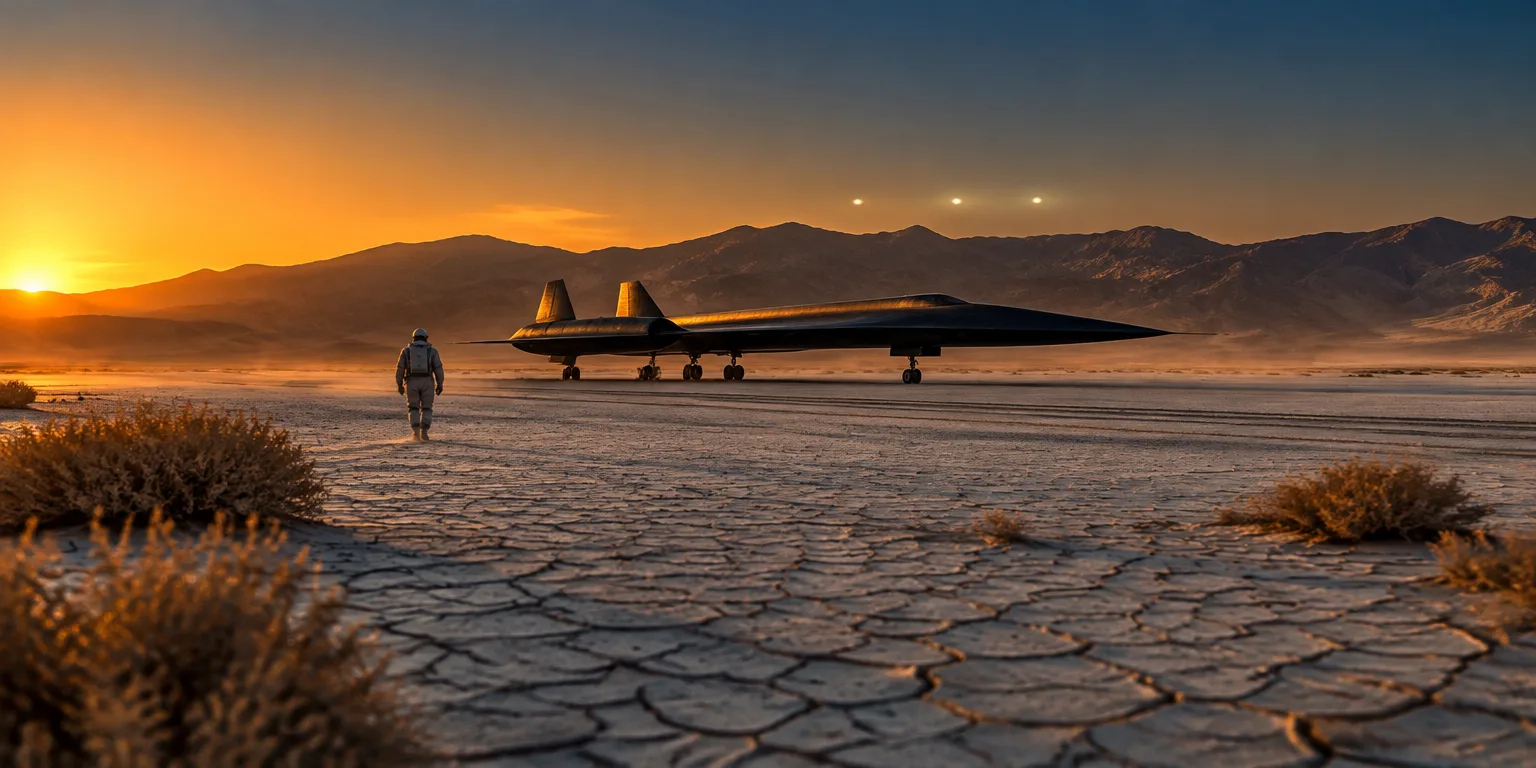
In the Nevada desert, a pilot pulled on a full pressure suit and climbed into a successor to the U-2, an airplane built to cruise at Mach 3, three times the speed of sound.
The runway was a dry lake bed. The CIA, then a young spy agency, had picked it because it wanted remote desert where crews could build a secret airplane unseen.
That first airplane was called the U-2. While an airliner of the day flew at 30,000 or 40,000 feet, the U-2 climbed above 60,000 and 70,000 feet. From that high, a pilot could see the planet curve below, almost as if in outer space. Below, Soviet military bases, missile sites, rocket test ranges, launch pads, and submarine pens were photographed from too high for Soviet defenses to track or shoot down.
It is also the story of how those secret flights helped fuel the flying saucer craze. The CIA's own conclusion, as described in the account, was that more than half of UFO sightings of that era were its spy planes tested at Area 51, and officers treated the alien rumors as helpful cover.
The secret first broke in 1960, when Francis Gary Powers, the American pilot flying a U-2 over the Soviet Union, was shot down. He faced judges in Moscow, with the wreckage and its sensors and cameras on display. The CIA knew it needed a replacement, so it returned to Nevada and built a lasting home for developing and trying secret aircraft. The construction job was called Project 51, and the place became known as Area 51.
What came next looked even less like a normal airplane. The replacements flew five times faster than the U-2 and 20,000 feet higher. On the runway they looked weird, and in the sky they looked weirder still. Air traffic controllers, airline pilots, and even military officers began seeing objects they did not understand and thought were impossible. Knowledge was divided on a strict need-to-know basis, so most people in uniform, and even inside the agency, never learned the whole program.
The flights brought an unexpected side effect, a sharp rise in UFO reports. Instead of correcting the record, the agency secretly leaned into the alien story. An engineer who worked on the program called the sightings a "bonus," a "useful distraction for a program that in order to remain useful must remain secret."
How far that encouragement went is less certain. The man who runs a site about Area 51, who said he first came "for what was supposed to be a day trip" and stayed interested for 27 years, said he believes the agency used the frenzy to study how crowds react and shape perception. He also said former workers told him that crews would stage light displays to feed the myth and confuse anyone who saw something he was not supposed to see.
The advantage faded when the Soviets caught up. Even planes that fast and high could no longer cross undetected, so work at Area 51 shifted to building airplanes that could disappear altogether.
Questions people ask
What happened to Francis Gary Powers after he was shot down?
Powers survived and was convicted of espionage in Moscow and sentenced to prison. In February 1962, the United States exchanged him in Berlin for Rudolf Abel, a convicted Soviet spy, and Powers later worked as a helicopter traffic pilot.
Why build the secret runway on a dry lake bed in Nevada?
The flat, hard lake bed worked as a natural runway in a remote desert, far from towns and roads. The surrounding land was already controlled by the military for weapons testing, so security patrols and restricted airspace drew less attention.
What were the super-fast planes that replaced the U-2?
They were the CIA's A-12 and its better known Air Force successor, the SR-71 Blackbird, built for sustained flight at Mach 3 and above 80,000 feet. Their speed, height, titanium skin, and odd shapes made them look otherworldly, even to trained pilots.