The CIA Spent 20 Years Trying to Turn Mind Reading Into Spying
Lab tests in which a young Israeli man drew hidden pictures 10 times in a row convinced the agency that seeing through walls might be real.
 The Why Files: Operation Podcast · JFK's Assassination and the CIA's Psychic Cold War
For more than 20 years, the United States government tried to turn mind reading into spying.
The idea started with Andrija Puharich, a 30-year-old physician from Chicago whose medical training at Northwestern had been paid for by the Army. He proposed that the brain worked like a wireless set. Nerve cells did not only spark, they broadcast, and anything able to broadcast might also pick up signals. If correct, thought transfer would be biology, not magic.
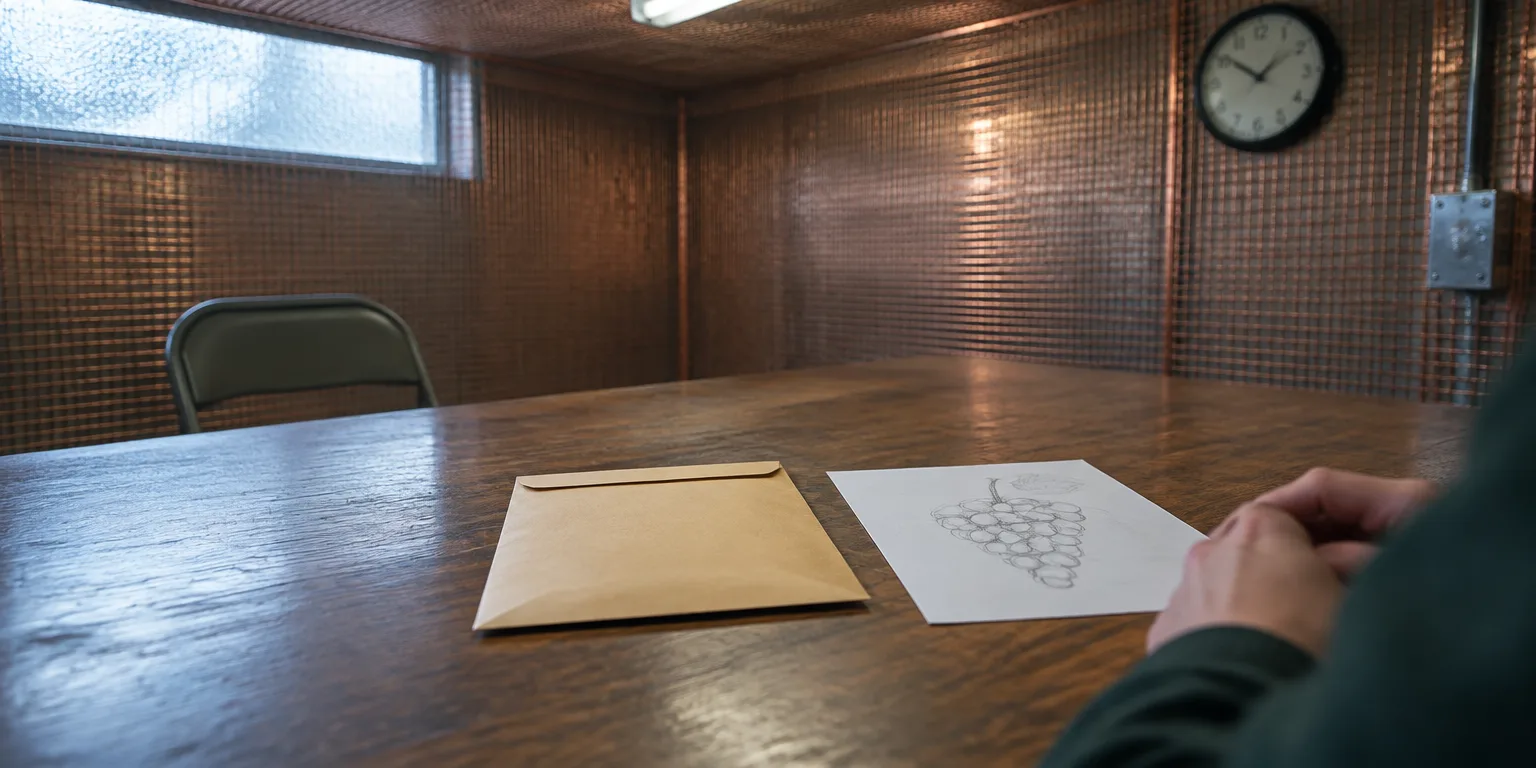
To test it, Puharich leased a 45-room estate in Glen Cove, Maine, and assembled a test chamber lined with copper mesh to shut out electrical and radio signals. The logic was straightforward. Place a person who claimed special perception inside a space sealed from ordinary transmissions, then check whether impressions still arrived. He named the effort the Roundtable Foundation of Electrobiology.
Six weeks after his early seance work began, the Army called Puharich back to active duty at Edgewood Arsenal in Maryland. There military researchers were experimenting on troops with trance methods and with drugs such as LSD and mescaline. Puharich received orders to search for a substance that could sharpen supposed powers of sensing beyond normal sight and hearing.
The program might have ended there if not for Uri Geller, a 24-year-old former Israeli paratrooper who said he could bend metal, stop clocks, and read minds. Puharich traveled to Israel to observe Geller in person, then escorted him to America, to his Ossining estate and onward to California.
At the Stanford Research Institute, Russell Targ and Harold Puthoff, both physicists, were studying remote viewing, the idea that a person could project awareness to another place and describe what was there. They placed Geller in a shielded room and asked him to sketch images sealed inside envelopes. During a week of trials in August 1973, he succeeded 10 straight times. When the hidden picture showed a bunch of grapes totaling two dozen, Geller sketched two dozen grapes. When it showed the planets around the sun, he sketched that, too.
In October 1974, Targ and Puthoff published the results in Nature, a leading science journal whose peer review gave the claim weight. The CIA noticed the paper and then launched a secret psychic spy effort that became known as Stargate, and it kept training and using remote viewers for more than 20 years.
The CIA itself once wrote that Geller had demonstrated his "paranormal perceptual ability in a convincing and unambiguous manner." In the end, that was not enough to keep the effort alive. Stargate was closed down on the grounds that it was not yielding valuable results, a reason that is still debated.
Questions people ask
What is a Faraday cage and why did it matter?
A Faraday cage is a room or box wrapped in metal mesh or sheets that blocks radio waves and electric fields. Puharich used one so that if a person inside still knew hidden information, it could not have arrived by radio, telephone, or other ordinary signals.
What did Stargate psychics actually do on a workday?
Remote viewers were given sealed photographs, coordinates, or descriptions of distant places and asked to sketch or describe what they saw with their minds. Managers then compared the descriptions to the real targets, hoping to locate hostages, weapons, or Soviet sites without sending in agents.
Why did the government shut Stargate down?
Reviews in the 1990s found the descriptions were often vague, wrong, or impossible to verify, and the few hits could be explained by chance or broad guesses. The CIA concluded the method did not produce reliable, actionable intelligence worth the cost.