The Earl of Sandwich Did Not Invent the Sandwich, He Made It a Category
Once food between bread had a name, cooks could design it on purpose, and eaters knew what to ask for.
 Eating History · Season 2 (Episode 1): Who Really Invented the Sandwich?
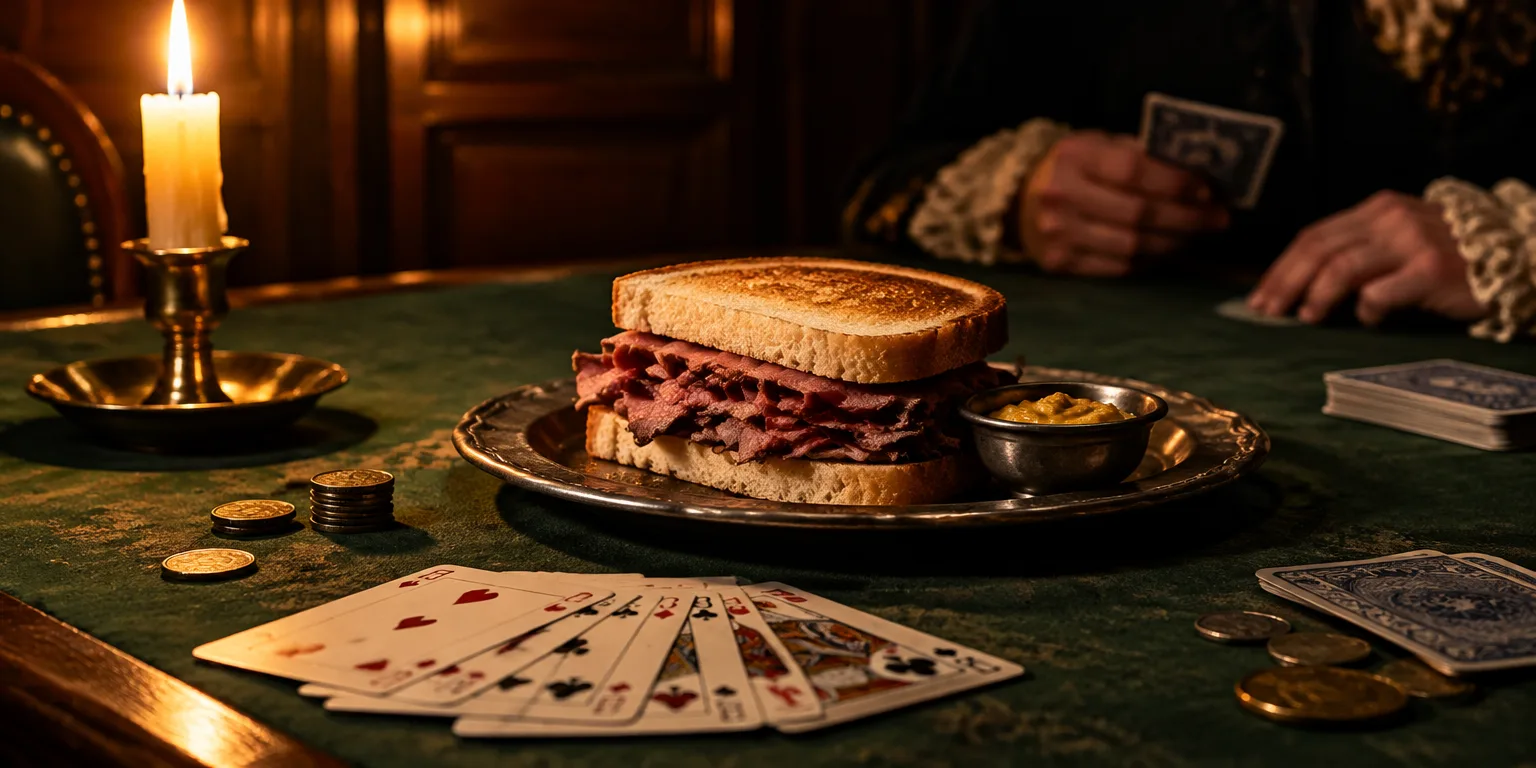
According to legend, John Montagu, an 18th-century English nobleman known as the Earl of Sandwich, asked for roast beef between two slices of bread while playing cards late into the night so he could eat without leaving the table, and the other players ordered the same thing.
Historian Stephen Bailey and chef Adrienne Cheatham say the details of that dinner cannot be proven from the earliest sources. Bailey said the "historical record points somewhere in the middle," because Montagu "really was associated with this style of meal," with gambling, and with being an extraordinarily busy politician, and those real associations were probably fused over time into one unforgettable story.
The timeline, they argue, supports a connection. Montagu was born in 1718 and died in 1792. In 1762, Edward Gibbon wrote that men at a London club, the Cocoa Tree Club, were eating, in Gibbon's words, "a bit of cold meat or a sandwich," without explaining the word, which suggests it was already everyday language while Montagu was alive and serving in government. A few years later, French traveler Pierre Jean Grosley described in print an English minister passing long evenings gambling while eating beef served in toasted bread, with the meal taking the minister's name.
After reviewing older bread traditions from many cultures, Bailey told Cheatham that historians have been asking the wrong question by hunting for the first sandwich.
What mattered, Bailey said, was this: "the technical component to the meal existed, but the category did not."
Bailey and Cheatham argue plainly that Montagu did not invent putting food between bread, because meals wrapped in bread existed for thousands of years before he was born.
Cheatham, speaking as a chef, said the difference is intention. She argues: "once something becomes a category, you stop making it by accident, and you start making it with intention." Instead of just piling leftover roast beef on bread, a cook starts choosing the bread, deciding whether to toast it and how thick to slice the meat, and, as Cheatham put it: "Does it need something acidic, crunchy, or creamy to balance it out?"
Bailey adds that, in his words, "categories organize innovation." Once people treat that kind of meal as a separate dish, they refine it, debate the best version, specialize in making it, and teach the methods to others.
To explain the shift, Bailey compares how the sandwich got named to what happened with the iPhone. Apple did not invent the smartphone, since BlackBerry, Palm, and Nokia had made them for years, but the iPhone became a reference point that shaped the category, and afterward makers were effectively making alternatives to the iPhone. Cheatham guesses the sandwich followed the same pattern.
Bailey concludes that history remembers Montagu not for inventing the meal, but for helping the world recognize it. As Bailey puts it: "Sometimes when you change how people think about something, that can be just as important as inventing something entirely new."
Questions people ask
Why did the Earl's name stick when older versions did not?
A memorable story helped, along with status and timing. An aristocratic name printed in books and repeated in London clubs gave English speakers a short, shared word for something people had done in many separate traditions. Once print, restaurants, and later mass media spread it, Sandwich was easier to copy than dozens of local names.
What did older sandwich-like foods look like?
Many used bread as plate, spoon, or wrapper. Medieval Europeans ate meat off thick slabs of stale bread called trenchers, Middle Eastern flatbreads scooped and wrapped food, and Ethiopian injera, a spongy sourdough, serves as plate and utensil. Filled buns such as Chinese bao developed separately, with soft dough steamed around savory fillings.
Do other foods become categories the same way?
Yes, pizza is often described the same way. Flatbreads with toppings existed for centuries around the Mediterranean, but pizza became a distinct category in Naples when makers, customers, and recipes converged around a recognized form. Naming and recognition then invited variation, specialization, and spread.